


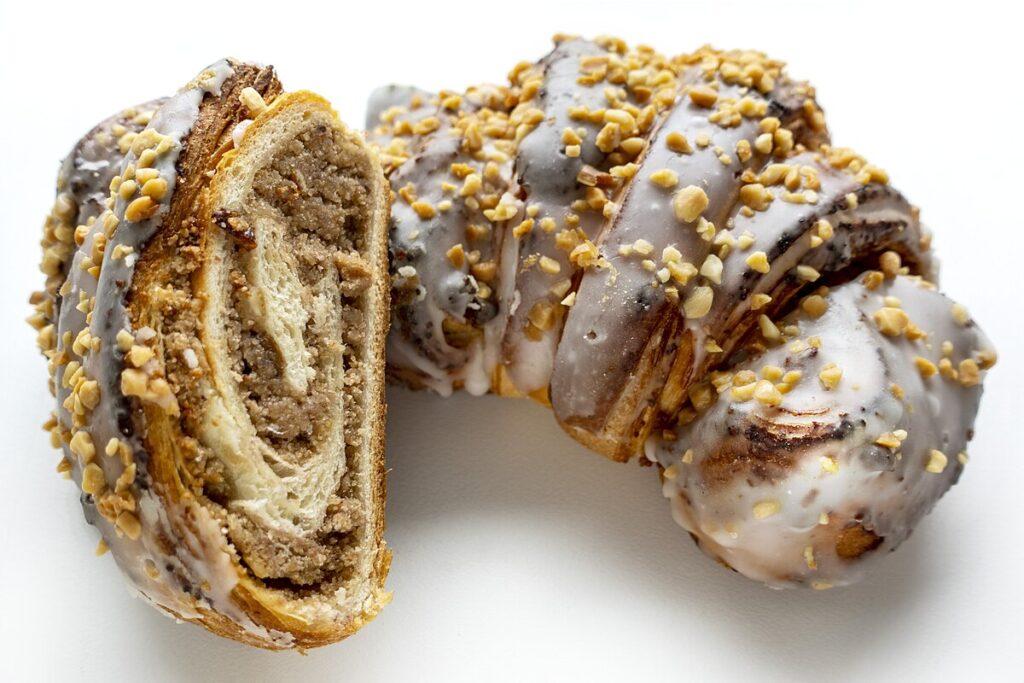
On November 11, Poland not only celebrates independence but also savors St. Martin’s croissants—a white‑poppy pastry that traces its roots back to Poznań’s 19th‑century baking tradition.
History
November 11 has become synonymous not only with Independence Day but also with the St. Martin’s croissant, a traditional white‑poppy pastry linked to celebrations of St. Martin’s Day. The tradition of baking these croissants in Poznań dates back to the late 19th century. In 1891, the parish priest of St. Martin, Jan Lewicki, urged parishioners to support the needy, prompting local bakers to produce and distribute croissants. The first newspaper mentions of the pastry appear in 1852, while the term “rogal świętomarciński” appeared in a 1860 advertisement. Since then, the croissant has become a symbol of November 11 throughout Poznań and the surrounding region.
Protected Geographic Indication
The St. Martin’s croissant is protected under the European Union’s geographic indication system. Its name was registered by Commission Regulation (EU) No 1070/2008, and in 2013 a lower individual weight was authorised. The original pastry is shaped like a half‑moon, glazed, and topped with crushed nuts.
Ingredient and Production Specification
The semi‑French dough is made from wheat flour, margarine, milk, eggs, sugar, yeast, salt, and lemon aroma. The filling is primarily white poppy seeds mixed with sugar, dough crumbs, egg yolk, margarine, raisins, nuts, and candied fruit in syrup, finished with an almond aroma. The specific dough folding and filling application methods distinguish this product.
Certification and Production Area
Only pastries produced in Poznań, Poznań County, and selected counties of Greater Poland can use the protected name. Certificates confirming compliance with the specification are issued by the Poznań Guild of Bakers and Confectioners for a three‑year period, and production is monitored. Items made outside this area, even if very similar, may not bear the protected name.
Popularity and Distribution
On November 11, more than 250 tonnes of the croissant are sold in Poznań and its region, a figure confirmed by industry data and media reports. Production in the days around St. Martin’s reaches hundreds of thousands of units.
How to Spot an Original
Look for the geographic indication label and proof of certification by the Poznań Guild of Bakers and Confectioners. Verify the white‑poppy filling with a subtle almond scent, the glaze, and the nut topping. Confirm that the pastry comes from the designated Greater Poland area.