


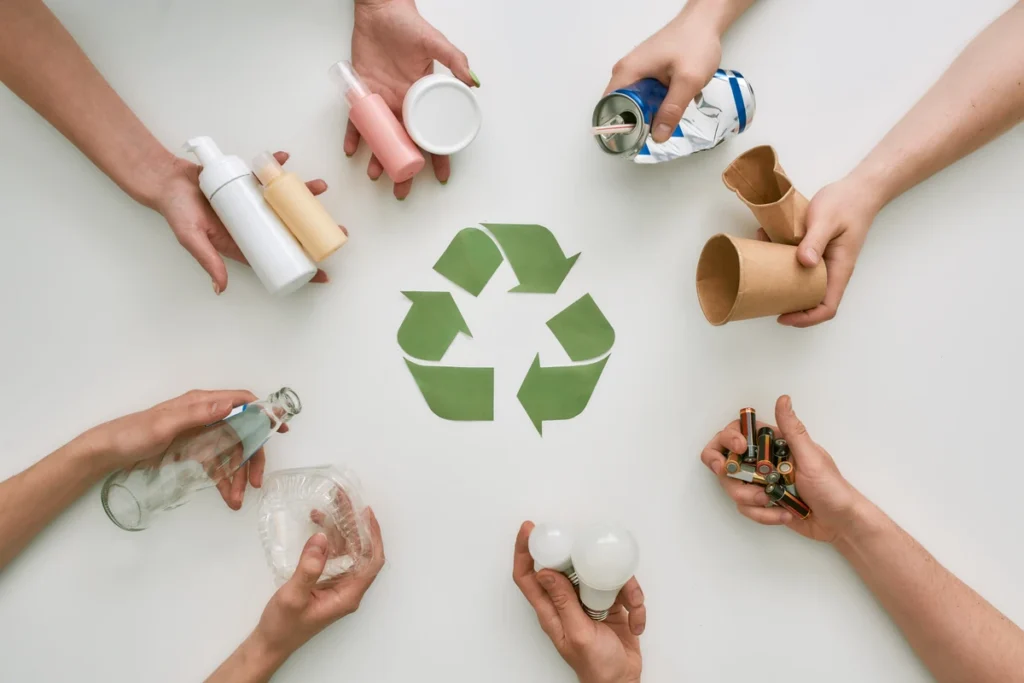
EU introduces new rules for packaging labeling and waste segregation across member states.
Understanding the New EU Packaging Regulation
PPWR (Packaging and Packaging Waste Regulation) replaces the previous directive 94/62/WE on packaging and packaging waste. Unlike the directive, this regulation applies automatically without requiring word-for-word national implementation. The goals include protecting the internal market and forcing a transition to a circular economy in packaging.
The European Commission’s Joint Research Centre (JRC) recently developed a detailed report on a unified packaging and waste container labeling system. Based on this, the Commission will adopt an implementing act specifying packaging labels, pictograms, and their application rules.
11 Material Categories, Not 11 Trash Bins
Polish media reported about planned “11 types of trash bins,” but the new regulations don’t refer to 11 containers or 11 types of packaging. PPWR requires each package to have a harmonized EU label indicating its material composition and appropriate waste stream.
The JRC designed a material-based system, not product-based, with categories including glass, paper and cardboard, metals, rigid and flexible plastics, wood and cork, textiles, ceramics, compostable packaging, residual waste, and hazardous substances. This results in several dozen material pictograms, hence the “11 categories” impression. The system also allows “meta-labels” covering multiple materials.
Will Packaging Look the Same Across the EU?
No. PPWR doesn’t regulate packaging design but rather functions, environmental parameters, and mandatory informational elements. The regulation allows manufacturers to maintain existing formats if new minimization requirements would diminish a trademark’s distinctiveness.
What Changes When: Implementation Timeline
The PPWR regulation will take effect on August 12, 2026. From this date, the basic rules will be uniform across the EU. A new expanded definition of packaging will include items like tea bags, coffee capsules, and service packaging filled at the point of sale.
Hard targets begin in 2030: countries must reduce packaging waste per capita by 5% compared to 2018, reaching 10% by 2035 and 15% by 2040. Recycling targets increase to 65% of all packaging waste by 2025 and 70% by 2030, with specific targets for plastic, glass, metals, paper, and wood.
Who Will Be Most Affected by the New Rules?
The regulation affects all market participants differently. Packaging producers and brand owners must redesign products to meet minimization, recyclability, and recycled content requirements. Retail and HoReCa sectors must adopt reuse models and eliminate certain single-use plastic formats.
Local authorities and waste operators must adapt infrastructure to new labels and increasing quantitative requirements. Consumers will see new labels on packaging and containers, more products in reusable packaging, and gradual disappearance of convenient but environmentally costly single-use items.