On the 30th anniversary of composer Mieczysław Wajnberg’s death, a new website is being launched while Warsaw prepares to stage his most famous opera.
The Life of Mieczysław Wajnberg
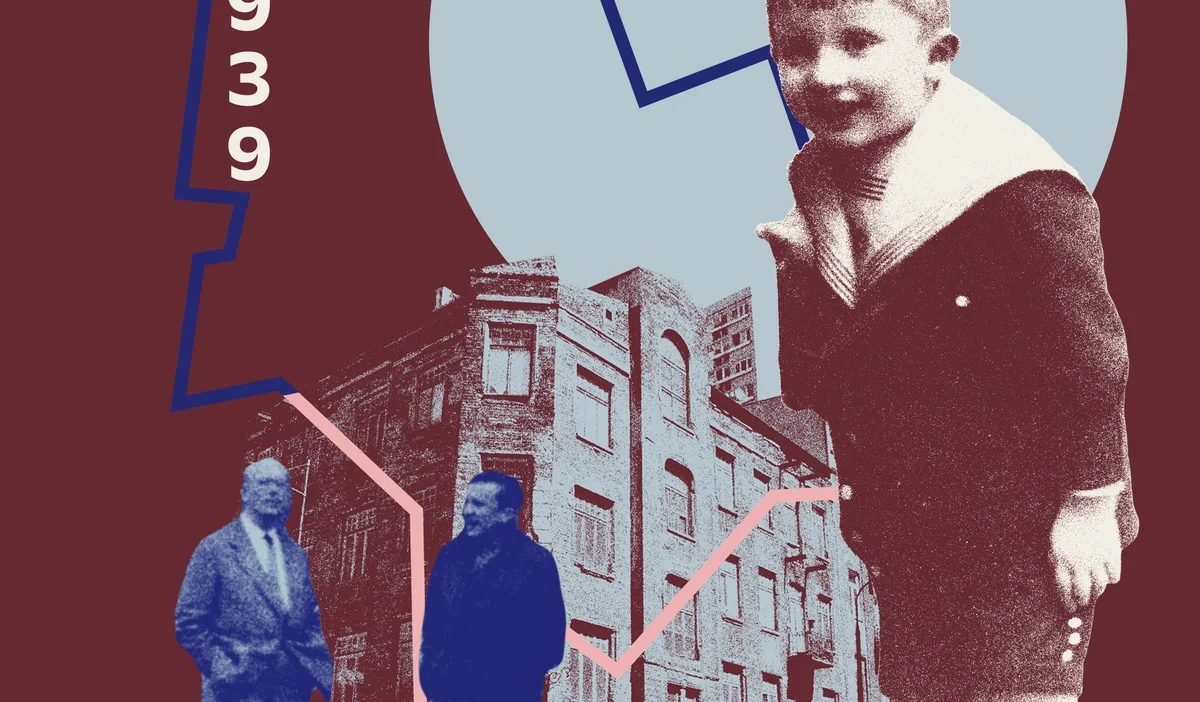
Mieczysław Wajnberg was a 20th-century Polish-Jewish composer who fled Poland to the Soviet Union in 1939, where he received citizenship and lived until his death (in Moscow). Forgotten in the 21st century, Wajnberg was part of the musical elite in his time. His friend was Dmitri Shostakovich, who helped secure Wajnberg’s release from Lubyanka prison in 1953 during Stalin’s purges.
Wajnberg returned to Warsaw only once, in 1966 for the Warsaw Autumn festival, though his symphony was not performed. The composer also created music for films, including “The Cranes Are Flying”.
The Return of “The Passenger” Opera
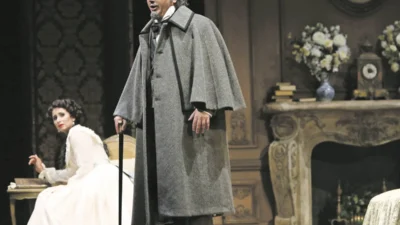
In the 1960s, Wajnberg created his most famous work to date, the opera “The Passenger.” The libretto was based on Zofia Posmysz’s radio play and novel “The Passenger.” The best-known adaptation is the film version directed by Andrzej Munk. The opera tells the story of a former Auschwitz concentration camp prisoner meeting an SS guard who was a camp supervisor.
Contemporarily, British director David Pountney brought the opera back to the public. The premiere of his production took place at the festival in Bregenz in 2010. Since then, the opera has been performed in various countries, including the Tel Aviv Opera. In Warsaw, “The Passenger” has been performed several times at the stage of the Grand Theatre – National Opera. And in March, Pountney’s production will be staged at the TW-ON for the last time.
Wajnberg’s Universe
Wajnberg’s life, his family, and his entire universe can be discovered through a website created by the Mieczysław Wajnberg Institute at www.mieczyslawweinberg.com and www.mieczyslawwajnberg.com.
Vice President of the Mieczysław Wajnberg Institute, violist Aleksandra Demowska-Majewska, says that “Wajnberg’s Universe” is a portal with free access, to which numerous researchers have contributed information about the composer’s life, his work, and the reception of his works.
“Thanks to the interactive map, one can trace the places he visited, where he lived, places in the 21st century associated with the premieres of his operas, as well as places where researchers of his work live and where competitions named after him and festivals of his works take place,” explains Demowska-Majewska. President of the Mieczysław Wajnberg Institute, violinist Maria Sławek, explains that after the narrative map, one will be able to travel between cities, which are divided into Wajnberg’s life and his heritage. The website is available in Polish and English.
Sławek explains that thanks to their website, one can get to know the people who are currently working on Wajnberg, some of whom have been doing so for decades. “I hope this will also show us the incredible journey we have taken in the thirty years since Wajnberg’s death, in terms of our awareness of this composer,” she says. “When he died in Poland, he was essentially a composer not fully known. In the West, nothing was heard about him, and in the Soviet Union he was already somewhat forgotten. Fortunately, between the moment he left and the 30th anniversary of his death, many people engaged in restoring his memory.”