


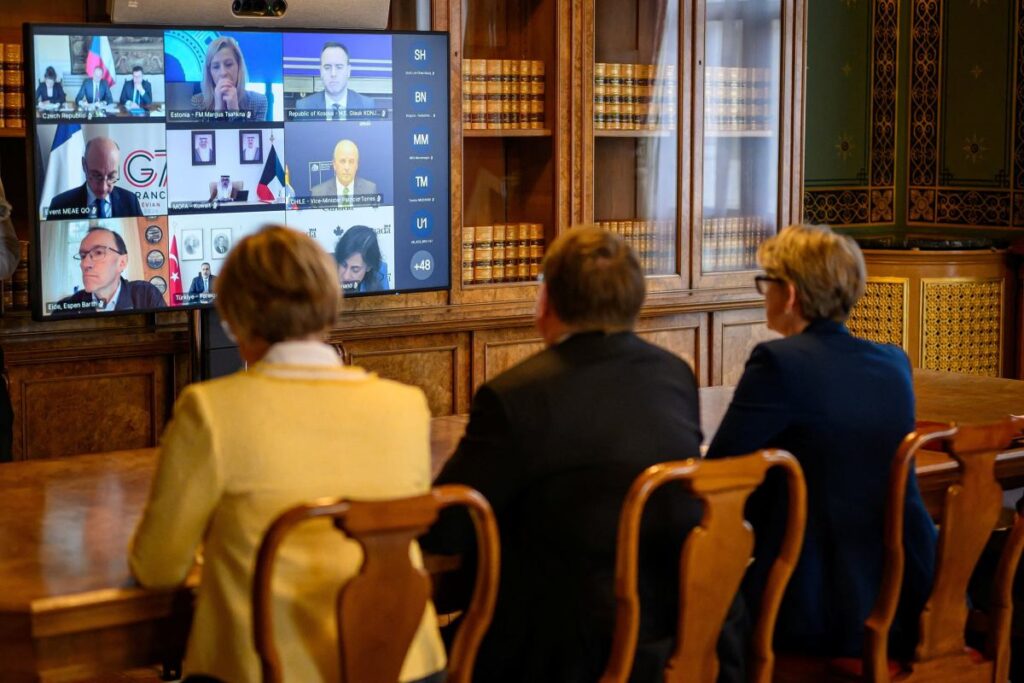
A conference of over 40 nations convened to discuss a diplomatic solution to the Strait of Hormuz blockage, initiated by Iran in response to attacks, excluding the United States.
Strait of Hormuz Summit Held
A virtual meeting of foreign ministers, including Poland’s Radosław Sikorski, focused on finding a political and diplomatic resolution to the situation in the Strait of Hormuz. Sikorski emphasized that Russia benefits from regional instability, making sanctions even more crucial.
U.S. Declines Responsibility
The summit occurred after U.S. President Donald Trump stated that unblocking the Strait of Hormuz is the responsibility of nations reliant on the waterway, and that the United States does not “need” it. Iran initially blocked the strait in retaliation for U.S.-Israeli strikes against its territory, beginning February 28th.
Iran’s Strategic Leverage
For years, the Strait of Hormuz has been a strategic asset for Iran, with the regime threatening a blockade in response to potential attacks. Prior to the outbreak of conflict in the Middle East, approximately one-fifth of global oil and liquefied natural gas supplies transited the strait.
Global Economic Impact and Trump’s Pressure
The blockade triggered a significant increase in global fuel prices, prompting Trump to pressure allies for assistance and decisive action. European countries initially rejected Trump’s demands due to concerns about being drawn into the conflict.
European Efforts to Form Coalition
However, the impact of rising energy costs on the global economy led them to attempt to form a coalition to protect their interests. British Foreign Secretary Yvette Cooper, who chaired the virtual meeting, criticized Iran’s “recklessness” in blocking the waterway, stating it “strikes at global economic security.”
Calls for Humanitarian Corridor
Cooper stated that Iran was “holding the global economy hostage.” Italian Foreign Minister Antonio Tajani called for the establishment of a “humanitarian corridor” through the Strait of Hormuz, facilitated by the UN, to ensure uninterrupted fertilizer transport and prevent a new food crisis, particularly in Africa.
Military Planners to Meet, Coalition Formation in Early Stages
European diplomats indicated that coalition formation is in its early stages, with the United Kingdom and France expected to lead. Thursday’s discussions centered on identifying countries willing to contribute and ensuring the safety of ship owners to resume operations.
Coordination with Iran Deemed Unlikely
French Armed Forces spokesperson Guillaume Vernet emphasized that coalition building would be a multi-stage process, requiring the cessation of hostilities. He also stated that guaranteeing the security of ships would “require coordination with Iran,” which he deemed “unlikely” at this time.
UK to Host Military Planners
The United Kingdom announced it would host a meeting of military planners next week, stating the need to gather sufficient units and establish coordination capabilities in the air, at sea, and in intelligence sharing.
Iraq Resumes Oil Exports Through Syria
The Iraqi Oil Ministry announced the resumption of oil exports via tankers through Syria on Thursday.
Polish Prime Minister Warns of Putin’s Strategy
Polish Prime Minister Donald Tusk warned that the potential collapse of NATO, easing of sanctions against Russia, a major energy crisis in Europe, halting aid to Ukraine, and Orbán blocking loans to Kyiv “looks like Putin’s dream plan,” likely referencing the Hormuz situation.