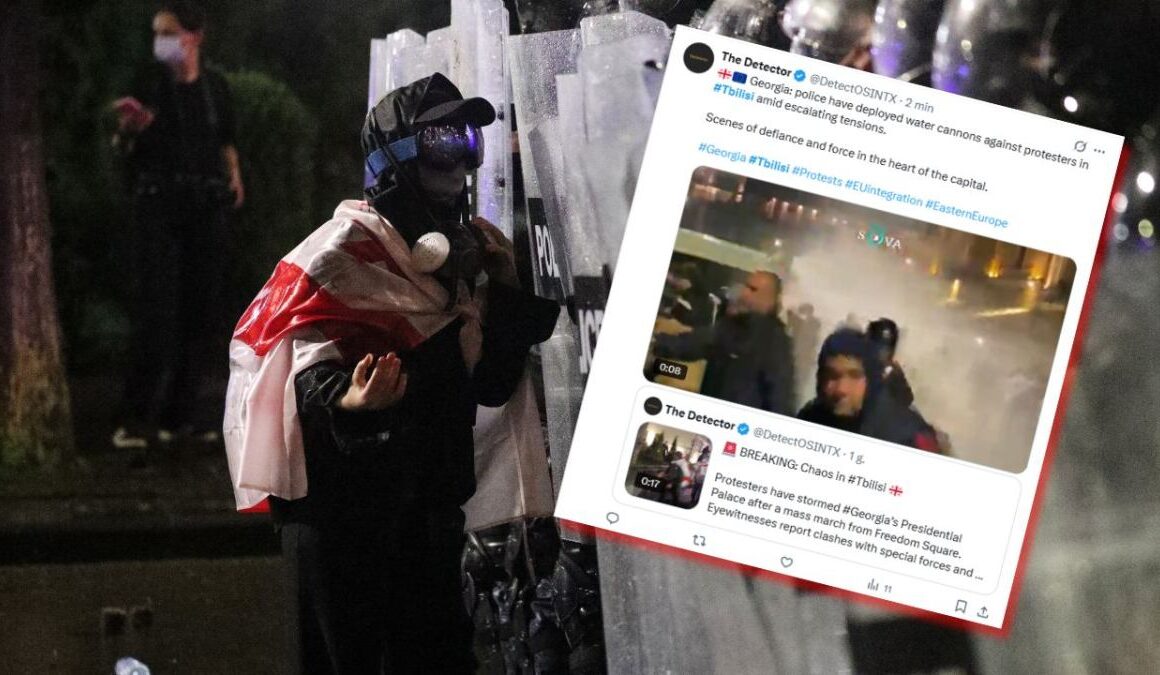
On October 4, protests erupted in Tbilisi when demonstrators with Georgian and EU flags marched from Freedom Square toward the presidential palace, sparking police clashes and tear‑gas dispersal.
Storm on the Palace and Clashes with Police
In the Georgian capital, the situation quickly spiraled out of control when demonstrators with Georgia and European Union flags launched an assault from Freedom Square toward the presidential palace. A group of participants attempted to breach the residence’s perimeter fence. In response, police used water cannons and tear gas to disperse the crowd.
According to on‑site media reports, many demonstrators fled into side streets, though at several points in the city there were still clashes later that evening. Police arrested some demonstrators, but the exact number of arrests was not disclosed.
Demonstrations on Election Day, Opposition Boycott
The demonstrations took place on the day of local authority elections (October 4). The opposition, including the United National Movement of former president Mikheil Saakashvili, announced a boycott of the vote, stating that political conditions prevent a fair electoral process.
Protest organizers claim their goal is to “save democracy in Georgia.” Prime Minister Irakli Kobakhidze warned before voting that any attempts at destabilization would be punished. “We warn everyone again. Do not risk multi‑year prison sentences behind bars,” the prime minister said.
Political Crisis and Accusations
The ruling party Georgian Dream, led by billionaire Bidzina Ivanishvili, has been grappling with a wave of criticism for months. The opposition and human‑rights organizations accuse it of pursuing closer ties with Russia, violently suppressing protests, and introducing a controversial law on “foreign agents”.
Since last year’s parliamentary elections, which the opposition claims were rigged and which the government defends, the country has been in a persistent political crisis. NGO data show that over the past year, about 60 opposition activists, journalists, and activists have been detained.
Additionally, the process of Georgia’s integration into the European Union has effectively been frozen.