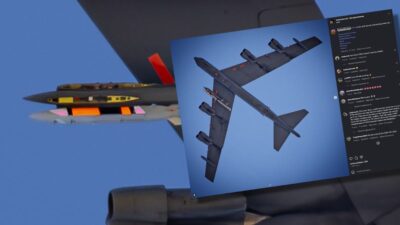
On Oct. 29, an Instagram photo shows a B‑52 bomber carrying two large missiles over California‑Nevada border, echoing Trump’s recent tweet about resuming nuclear testing.
Photo Discovery
Aviation photographer Ian Recchio traced the image to an Instagram post from October 29, showing a B‑52 flying above Owens Valley on the California–Nevada border. The valley sits near major U.S. military test sites such as Edwards Air Force Base and Nellis Air Force Range.
The B‑52’s Stealth Features
The aircraft’s forward‑mounted triangular pylons are a distinctive feature of bombers adjusted for nuclear weapons delivery. These pylons were installed after the New START treaty with Russia to enable satellite verification of U.S. B‑52 counts.
The LRSO Missile Program
The missile seen on the B‑52, known as LRSO (Long Range Stand‑Off), has been under secret development for over a decade. Initial studies started in 2012, paused for budget reasons, then resumed in 2017 with $900 million funding for Raytheon and Lockheed Martin. The first operational rocket was selected in 2020, and by late 2022 nine test flights had occurred.
Warhead, Range, and Stealth
LRSO will use a W80‑4 thermonuclear warhead—an updated version of the W80‑1 originally deployed on AGM‑86 missiles. While the older warhead had a yield range of 5‑150 kilotons, the new variant’s yield is unstated. Range estimates place the missile at roughly 2 600 km, with a low‑altitude flight profile below 100 m to maximize stealth.
Production Plans and Cost
The Air Force intends to procure about 1,000 missiles, with unit prices projected near $14 million. The overall program budget was estimated at $16 billion in 2022. Production is slated for early 2027, and the weapons are expected to remain in service for several decades.
Geopolitical Context
Trump’s tweet urging the Pentagon to resume nuclear tests came amid President Putin’s public praise of new strategic weapons and China’s rapid military expansion. The LRSO’s stealth and low‑altitude capabilities are designed to penetrate U.S. adversaries’ air defenses and deliver nuclear payloads to strategic targets such as airfields, bases, and key infrastructure.