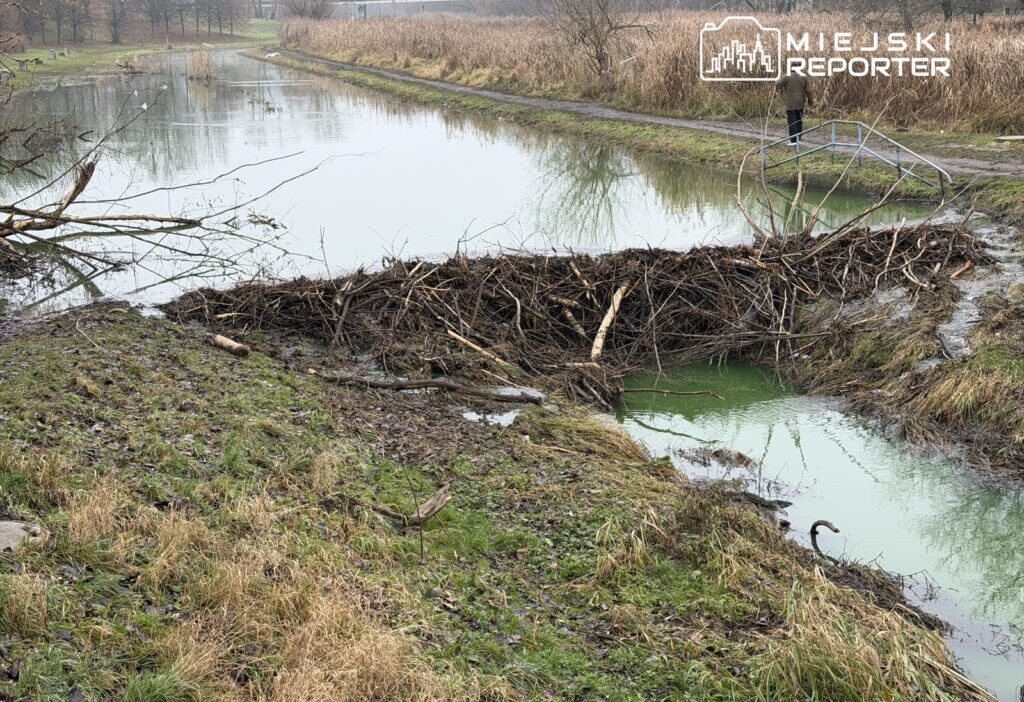
Since 2017, wild beavers in Warsaw’s Służew Valley have built dams that city authorities now repeatedly lower or tear down, sparking a heated conflict over flood control and nature protection.
Beavers Make a New Flagship of Służew Valley
In 2017 a resident female beaver first appeared in the valley, initiating a local population that has been consistently observed by residents of Mokotów and Ursynów for years.
The female became an informal symbol of the valley, prompting the Służew Cultural House, Stowarzyszenie Nasz Bóbr, and other local groups to organize educational walks titled “Beavers of the Valley” to explain how beavers cut trees, influence water retention, and how human‑beaver conflicts can be mitigated.
Geography and Hydrology of the Potok Służewiecki
The Służew Stream runs approximately 15.8 km, originating near Chopin Airport, flowing through Służewiec, the Dolinka Służewska park, and along Wilanowska Avenue to Wilanów, where it discharges via Lake Wilanowskie and the Sobieski Canal into Wilanówka.
The entire catchment lies within Warsaw’s city limits, and the stream itself is a remnant of the former Sadurka River.
Community Engagement and Educational Initiatives
In Dolinka Służewska, the stream forms lakes and marshy valleys amid recreational areas of Służew and Służewiec settlements.
City greenery management emphasizes that investments in the park, such as a natural playground and new plantings, blend recreation with conservation by limiting mowing, preserving “nature refuges,” and increasing deadwood.
Legal Protection and the Dilemma of Dam Removal
The European beaver is under partial species protection in Poland, prohibiting intentional killing, maiming, trapping, or destruction of its habitat and refuges without proper permission.
According to the Nature Conservation Act, permits to dismantle beaver dams may only be issued when necessary, yet the Polish Waters authority has repeatedly lowered or dismantled dams based on authorized permits.
September 2025 Repairs and Municipal Justification
In September 2025 the Regional Water Management Board (RZGW), a unit of Polish Waters, executed works on the Dolinka Służewska section that lowered dams to facilitate water flow and prevent flooding under higher-than-standard water levels and maintenance needs such as slope and bottom mowing.
The RZGW emphasised that the actions remain within legal boundaries, are based on appropriate permits, and are not a “fight with beavers” but routine riverbed maintenance to ensure flow and flood safety.
Opposition, Monitoring, and the Future of the Valley
Environmentalists and the Association Our Beaver allege that the dams have been repeatedly destroyed over less than two weeks, forcing beavers to rebuild each night and pushing them deeper into the park for wood.
They claim the Polskie Wody destroyed the dams without legal basis, as the dams caused no property damage or safety risk, and have announced a complaint to the prosecutor’s office while urging observers to demand proper decisions and involve police if absent.
Opposition argues that granting ecological use status to the valley would protect beaver habitats from further interference, preserving the stream’s natural retention functions that support biodiversity, while routine maintenance would remain outside the park limits.