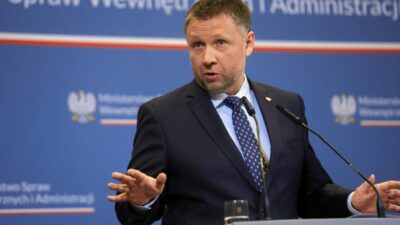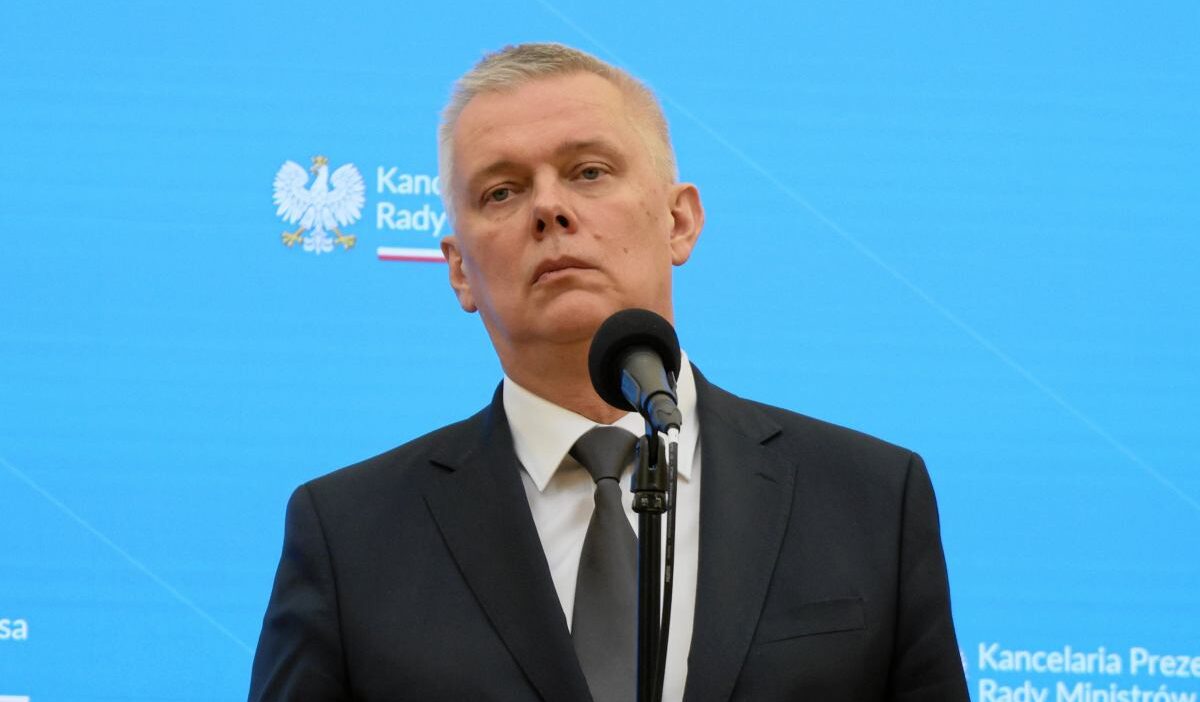
On Monday, 8 December, Polish Special Operations Coordinator Tomasz Siemoniak dismissed the updated U.S. national security strategy as “not a major concern” for Poland.
Tomasz Siemoniak Comments on New U.S. Security Strategy
At a press conference on 8 December, Tomasz Siemoniak addressed the revised U.S. national security strategy. He argued that from Poland’s perspective the strategy is not a great cause for worry. “Of course, it sparks intense emotion because it follows peace talks on Ukraine and U.S. doubts about how many troops and equipment should be in Europe,” he said. “But NATO is here, there are thousands of U.S. soldiers in Poland, and there is an American missile‑defence installation – we should not dramatise.”
Siemoniak Responds to Donald Tusk’s Post
On Saturday, 6 December, former Prime Minister Donald Tusk posted on the platform X, emphasizing that Europe remains the closest ally of the United States and that shared security requires maintaining the current strategy. Siemoniak linked his remarks to Tusk’s, stating that “in a few sentences our position is expressed – Europe is traditionally a NATO partner of the United States, the trans‑Atlantic link underpins the whole security framework in Europe.”
Pentagon Chief Hegseth Calls Poland “Model Ally”
After releasing the new U.S. strategy, Pentagon spokesman Pete Hegseth said the United States expects its allies to take greater responsibility for their own security. He listed several countries he sees already exhibiting that approach, naming Poland among them. “Our model allies, such as Israel, South Korea, Poland, increasingly Germany, the Baltic states, and others, will be treated with particular favour,” Hegseth declared. Siemoniak added that these remarks demonstrate Poland need not fear the strategic shift.
Key Elements of the New U.S. Security Strategy
The updated strategy highlights that European countries face economic challenges and could confront a “scenario of civilizational annihilation” within the next twenty years. It cites the European Union and other trans‑national bodies as undermining political freedom and sovereignty, describing migration policies that transform the continent and spark conflict, censorship aimed at free speech, suppression of political opposition, declining birth rates, and loss of national identity. The authors also say managing Europe’s relations with Russia will require significant U.S. diplomatic engagement. Among U.S. policy goals is preventing NATO from becoming a “continuously expanding alliance.”