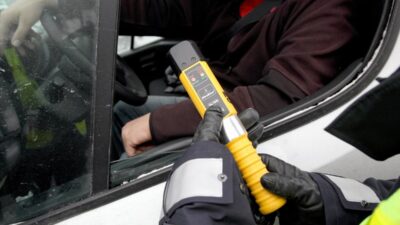
On December 12, prosecutor Dariusz K. was arrested after a traffic collision near Grzegorzew, Poland, where he allegedly asked a police officer to “blow” him and was found intoxicated.
Accident Details
On Thursday, about 16:30, at a rest area on National Route 92 near Grzegorzew in the Greater Poland Voivodeship, Dariusz K.’s vehicle collided with a stationary car that had stopped because of a traffic loop. The victim’s vehicle carried four passengers, including two children, and both cars sustained damage.
Unexpected Behavior
Witnesses reported that Dariusz K. displayed signs of inebriation: slurred speech, chaotic movements, unsteady gait, and hyperactivity. At the scene he told police officers that nothing had happened and tried to impede breath‑alcohol tests, initially blowing only a false breath and later refusing to cooperate.
He allegedly asked an officer, “Would he blow on behalf of him?” when the officer declined, and repeated the request to a second officer.
Alcohol Evidence
After refusing an initial breath test, Dariusz K. was taken to a hospital to provide blood samples. Three blood draws (at 19:12, 19:28, and 19:45) revealed 2.10, 2.09, and 2.05 ‰ alcohol concentrations, respectively, confirming intoxication in violation of Article 115(16) of the Polish Penal Code. A 0.5‑liter vodka bottle was also found in his car.
Charges
On December 12, the District Prosecutor in Konin suspended Dariusz K. from duty and the Internal Affairs Division of the National Prosecutor’s Office filed a motion with the Supreme Court to lift his immunity. On December 13, he was arraigned and faced two charges: driving under the influence (Article 178a(1) PK) punishable by up to three years and misleading police officers and obstructing criminal proceedings (Article 18(2) PK in conjunction with Article 231(1) PK and Article 239 PK), punishable by up to five years. He declined to give statements. Preventive measures imposed: suspension from duties, prohibition of driving and leaving the country.
EU Road Law Changes
On 21 October, the European Parliament adopted new regulations aimed at reducing road accidents. Member states have three years to implement national changes. Under the new rules, a driver’s license suspension in one EU country will affect driving rights across the Union. Information exchange between authorities will become mandatory. A two‑year probationary period will apply to new drivers, while harsher penalties for alcohol and drug driving will be introduced. The legal driving age may drop to 17, with 15‑year validity for licences, and renewals will trigger either medical tests or self‑assessment.