President Karol Nawrocki met with PSL representatives to discuss an agricultural reform bill, with the committee chair estimating a 40% chance of presidential signature.
Meeting with PSL
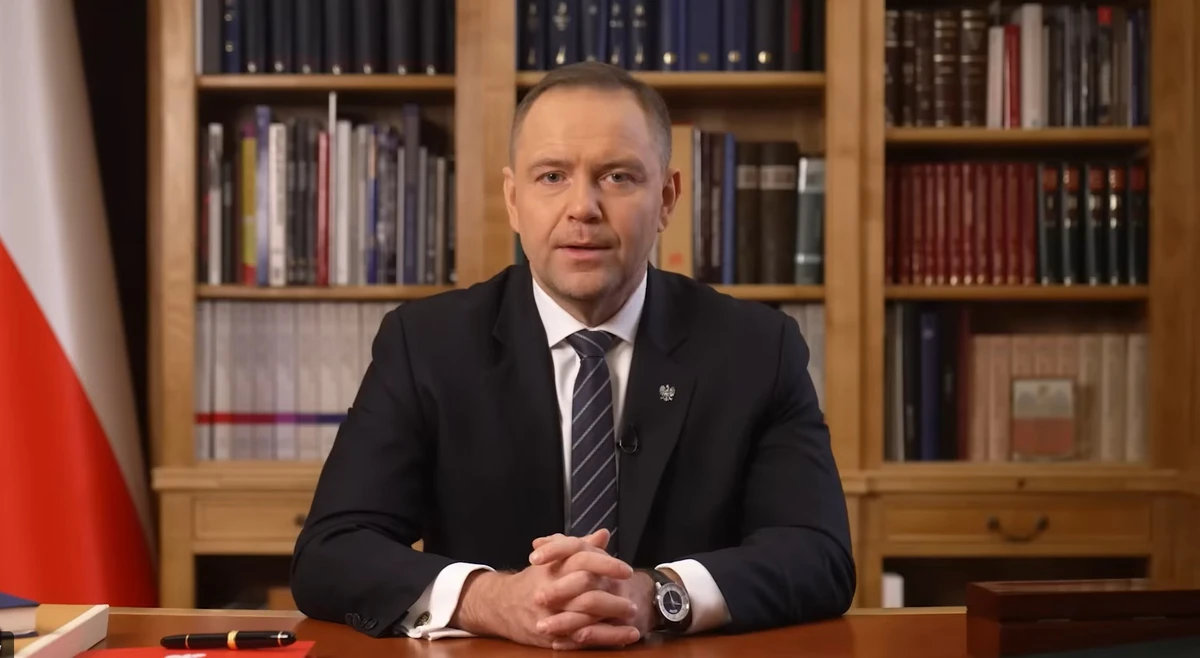
During Thursday’s meetings with parliamentary club representatives in the Presidential Palace, Karol Nawrocki received among others representatives of PSL. One topic of conversation was the “active farmer” bill, important for the agrarian party. The new regulations aim to link subsidies to actual agricultural activity, not just land ownership.
An active farmer is essentially an attempt to move away from the rule “you have land – you get subsidies” toward “you produce – you get support.”
Cautious Optimism
After the palace meeting, the agrarian party members left with cautious optimism. Although the President made no declaration, as DGP reports PSL club vice-chairwoman Magdalena Sroka says, he didn’t say “no” either.
“I got the impression that he was open to our arguments and favorably received the solutions we proposed,” she explains.
40% Chance of Signature
With greater reserve on the matter, the head of the parliamentary agriculture committee Mirosław Maliszewski looks at it. After meeting with the President, he assesses the chances of getting the bill signed at 40%.
“This bill has two aspects. The first, economic, in our argumentation, is difficult to challenge – money should go to those who actually produce, because that is the goal of the Common EU Agricultural Policy. The second, political – although the President did not articulate it – boils down to PiS concerns that the bill may hit their electorate. In my opinion, this is not reflected in the facts. If political reasons prevail at the President, he will veto the bill, if substantive – he will sign it,” he says.
Active Farmer Definition
The bill introduces a definition of a professionally active farmer. As such, farmers owning animals or using selected forms of payments and support, including investment instruments, will be automatically recognized. Others will have to demonstrate actual agricultural activity, documenting minimum production costs or obtaining income from the sale of agricultural products.
Detailed thresholds and a catalog of required documents are not included in the bill, but are to be specified in a ministerial ordinance. According to estimates by the Agricultural Restructuring and Modernization Agency, the obligation to prove activity will cover 5% of subsidy beneficiaries, i.e., about 60,000 of the nearly 1.2 million applicants.
Exemption for Small Farms
In 2026, the smallest farms – up to 5 ha – will not have to prove activity if in 2025 their subsidies did not exceed 1125 euros. PiS submitted an amendment to this provision in the Senate. It was about raising the threshold for automatic recognition as a professionally active farmer from 1125 to 2250 euros, which would cover farms of up to about 10 ha. Ultimately, the amendment was rejected both in committee and in the Senate.
Supporters’ Arguments
Proponents of the regulation emphasize that the bill does not increase EU subsidies, but changes their distribution. Limiting “black” leasing and eliminating inactive beneficiaries is to ensure that the same pool of funds will be divided among fewer farmers, which in practice means greater support for those actually producing.
This is a long-standing demand from agricultural organizations and larger, commercial farms.
Government Response
The government and ARiMR emphasize that the scale of real burdens will be small – the vast majority of farmers will not have to take any additional actions, and the obligation to document activity will only cover a minority of beneficiaries.
Critics’ Concerns
Critics, however, point to the risk of subjective assessment. Key elements of the system are to be determined by ordinance, which raises concerns about changing rules and interpretations dependent on administration.
The argument of additional bureaucracy is also raised, even if it affects a limited group of farmers – including the risk of controls and questioning of activity in the case of irregular or seasonal production. The threshold of 5 ha is also controversial, considered too low by some, as farms of 6-10 ha often function similarly to smaller ones, but will be subject to additional obligations.
The opposition also draws attention to the potential social consequences of the new regulations, although the government assures that the bill does not affect the KRUS system.
Political Significance
The President’s final decision will therefore have significance beyond the bill itself. For Karol Nawrocki, this is the first serious test of relations with PSL, but also a signal of how far he is willing to distance himself from the PiS narrative on rural issues. A signature would mean acceptance of the direction of subsidy reform; a veto would mean opting for political caution toward part of the electorate.