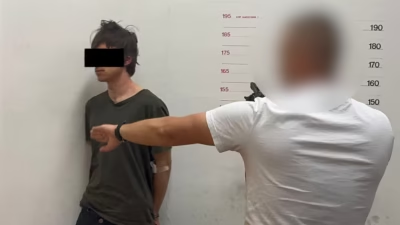
An experienced SOP officer attacked his family with a knife, killing his four-year-old daughter despite passing psychological exams months earlier.
Tragic Attack Without Warning
During a family card game, Piotr K. suddenly left for the kitchen, took a knife, and attacked his family members without warning. His wife, daughter, parents-in-law, and son were stabbed, with the four-year-old girl succumbing to her injuries.
Officer’s Background Raises Questions
The experienced SOP officer, who had served in Iraq and Afghanistan, denied any history of psychiatric treatment or use of psychotropic drugs. Despite this, authorities decided to appoint experts to evaluate his mental state at the time of the attack.
Systemic Failures in Psychological Monitoring
The officer had passed mandatory periodic examinations in October 2025, which included psychological tests. However, these procedures rely heavily on self-declaration and brief conversations with specialists, with no routine drug testing for officers.
Expert Criticizes Current Procedures
Prof. Tomasz Safjański, a former police officer, criticizes the system as ineffective. He notes that officers in poor mental health can remain on duty for months with medical leave, while superiors see absences but don’t respond. There are no automatic procedures for removing officers from service.
Pattern of Incidents Raises Concerns
This case follows a series of tragic incidents involving officers, including a 2024 shooting where a policeman killed a colleague, and previous cases in 2012, 2015, and March 2025. Between 2010-2020, 122 police officers committed suicide, with issues including substance abuse and family conflicts.
Limited Oversight and Data
The system lacks sharing of information about medical leave from psychiatrists, with employers needing to verify each doctor’s specialty. Additionally, no statistics are kept on mental health causes of officer absences. Medical commissions are rarely initiated, with only 19 referrals in 2025 for a 100,000-strong police force.