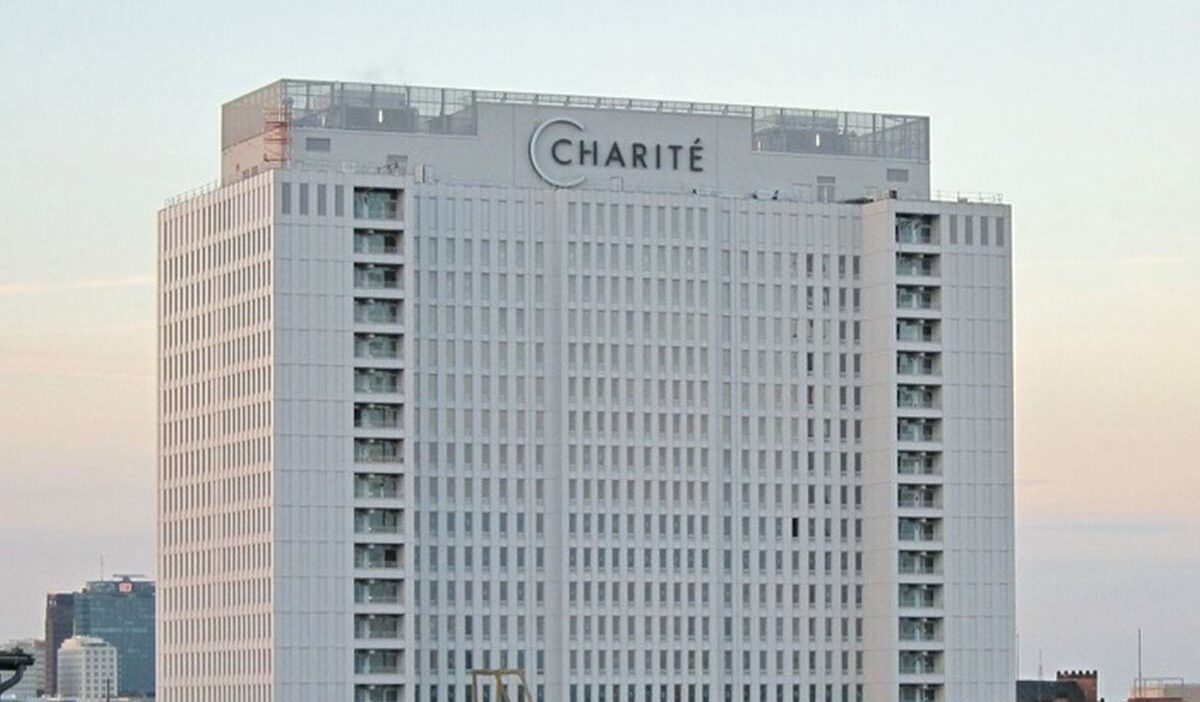
Berlin hospitals report series of unexplained incidents including drones, cyberattacks, and arson as security officials warn of growing hybrid warfare risks.
Explosions, Arson, Cyberattacks
In November, a powerful explosion severely damaged the Vivantes hospital in southeastern Berlin. Hours later, a fire broke out at the entrance to the Charité hospital in central Mitte. In both cases, the incidents caused damage in areas designated for treating cancer patients. This prompted state security agencies to launch investigations into suspected politically motivated arson. Recently, there have been reports of six separate fires that broke out in the basements of the Berlin Bundeswehr Hospital (BWK) also in the Mitte district. Citing security sources, the “Berliner Zeitung” newspaper reported that a connection with the treatment of Ukrainian soldiers in this facility was suspected.
Cybercrime as a Challenge for Companies
The Federal Office for the Protection of the Constitution (BfV) told DW that it currently does not observe an “increase [hybrid] foreign intelligence agency activities or other foreign power agency activities related to hospitals.” It stated that in general, hospitals have been targeted by cybercriminals in recent years. It added that it is conducting an investigation into a series of “ransomware” attacks carried out by suspicious Russian entities suspected of cybercrime in Germany. This involves encrypting files with malicious software and demanding a ransom in exchange for the key to decrypt the data. “More and more suggests that the line between cyberespionage and cybercrime is becoming increasingly fluid. Usually, a direct connection to Russian state agencies cannot be unequivocally proven,” stated the BfV.
Hospitals Are Easy Targets
Manuel Atug is the founder of AG Kritis, an association of experts working to improve cybersecurity and resilience of critical infrastructure in Germany. He told DW that hospitals are more frequently targeted by ransomware gangs than state institutions. “It’s almost always about money. This is very common, but of course sometimes there can also be sabotage or espionage,” said Atug. “Recently, we have witnessed break-ins into hospitals as well as drone flights over hospitals,” he added.
Lack of Investment in Security
Hospitals have always been targets of attacks because they are poorly prepared, mainly due to lack of investment, which according to Atug particularly affects smaller clinics. “Often publicly funded hospitals simply don’t have the money, while others have funds but prefer to invest in their main sources of income rather than in the infrastructure of the facilities,” he said. Atug also pointed to an increase in aggression against emergency workers, which he linked to disinformation spread on the internet. “It’s about the general level of aggression that is not limited to cyberattacks or acts of sabotage. One can observe an increasing tendency to apply violence against people who try to help,” he said.
Attacks on Firefighters and Rescue Workers
In 2024, 683 cases of violence against firefighters were recorded in Germany, affecting 1,012 people. According to data from the German Federal Criminal Office, a total of 2,042 cases involving other rescue workers were recorded. On January 27, 14 people were injured in what is believed to be an arson attack on a Jewish hospital in Berlin. A 71-year-old patient reportedly set fire to an object in his room, which caused the fire to spread to a mattress and explode. Berlin police are currently conducting an investigation in cooperation with security services. A recent sabotage attack on power lines in southwestern Berlin at the beginning of the year left about 100,000 people without heating, electricity, and internet for several days in freezing temperatures. The left-wing extremist group Vulkangruppe (Volcano Group) claimed responsibility for the attack, but the investigation in this case is still ongoing.
Security: A Long List of Problems
Felix Neumann, an expert on extremism and counter-terrorism at the Konrad Adenauer Foundation, which is affiliated with the ruling center-right Christian Democratic Union (CDU), said that Germany still has “a lot to do” in terms of protecting critical infrastructure. “Action [to protect Germany] has been taken, but too late and insufficient,” he told DW. “Are we prepared for the current situation? No, not quite. But are there conversations and strategies being developed for the current situation? That’s for sure,” he added.
Large Expenditures on Security Necessary
In October, experts from the German Hospital Institute (DKI) and the Institute for Health Care Business (HCB) published a study on the scale of investments needed to defend German hospitals in various scenarios. The study identified a long list of problems, including staff shortages, lack of protection against cyberattacks, unprotected access points, and largely inadequate preparation for potential chemical, biological, nuclear, and military threats. The study showed that current capabilities for storing medicines, blood products, and emergency power are sufficient only in peacetime. These weaknesses also affect rehabilitation facilities, nursing homes, and psychiatric clinics.
The study estimated that protecting German hospitals at the current level of cyberattack and sabotage threats would require investments of 2.7 billion euros ($3.2 billion) and additional annual operational costs of 670 million euros. On January 29, the Bundestag passed a new law (KRITIS-Dachgesetz) aimed at strengthening the protection of critical infrastructure, including information systems and telecommunications, in response to increased attacks and espionage in Europe.