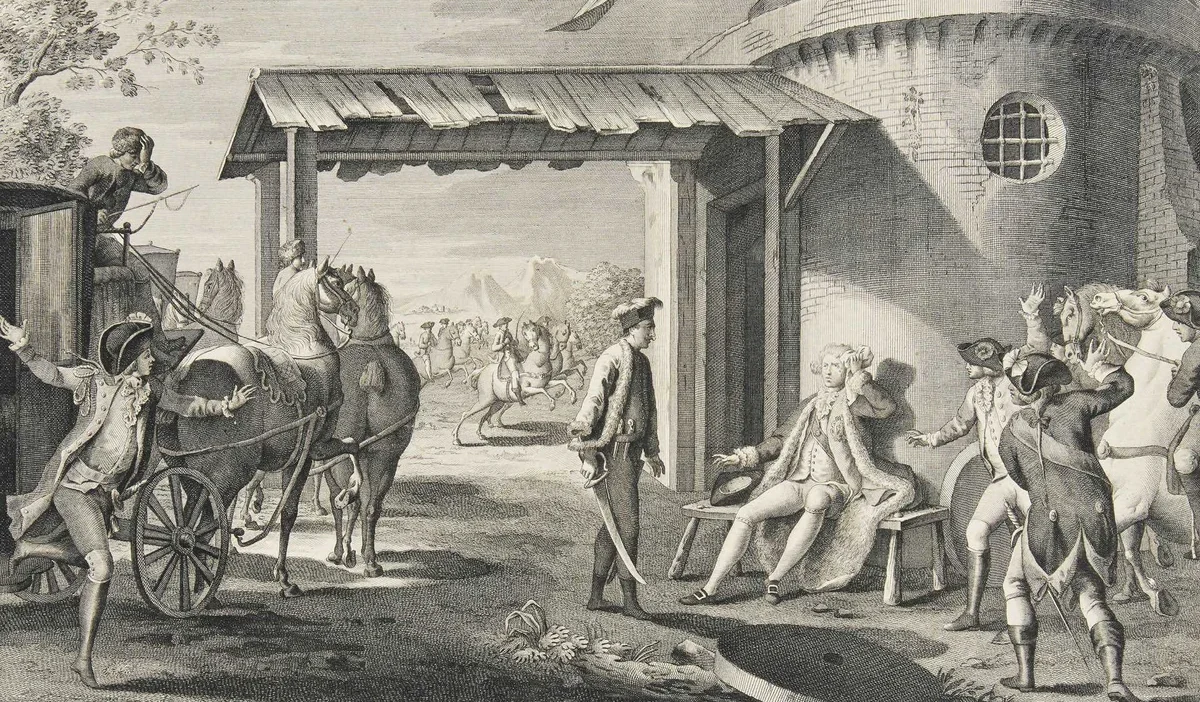
Polish conspirators failed in their attempt to kidnap Grand Duke Konstanty, hoping to spark a nationwide revolution against Russian rule.
The Failed Uprising
This night was supposed to change the history of Poland. It was assumed that the military and civilians mobilized by the uprising of the Cadet School would take over Warsaw, break up the Russian units stationed there, and the enthusiasm would spread to the rest of the country. But nothing went as planned.
First, coordination of actions failed. The conspirators were unable to smoothly pass on the agreed signals. When they managed to start fighting, it turned out that neither the residents nor the higher-ranking officers were interested in joining the revolution.
The Belvederians
Depending on the accounts, 30-50 people were assigned to this task. The darkness, which increased their fear, the presence of enemy units, and lack of experience (as most of them were civilians) caused the detachment to shrink to 18 people. History remembers them as the Belvederians.
Armed with rifles, pistols and daggers, they moved divided into two detachments. One to the Belweder, where Konstanty lived, was to approach from the garden side, and the other – from the front. The poet Seweryn Goszczyński was in the latter.
The Encounter
In a later account, Seweryn Goszczyński wrote that while walking along the fence, they met a guard, a ‘Moscow veteran’. One of the Poles asked him if the grand duke was at home. The man replied that yes, after which he hid in the guard booth.
The first group of conspirators was eventually persuaded to help, but higher-ranking officers sometimes refused. Angry at them, the insurgents killed several, and the uprising slowed down before it had a chance to gain momentum.