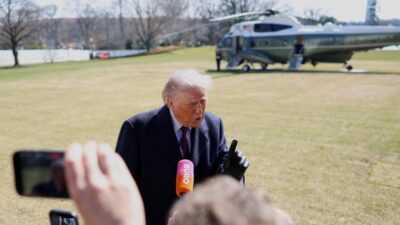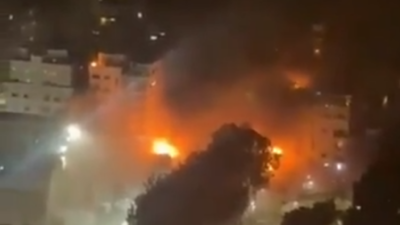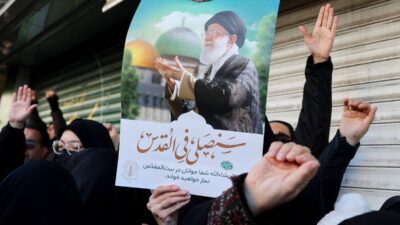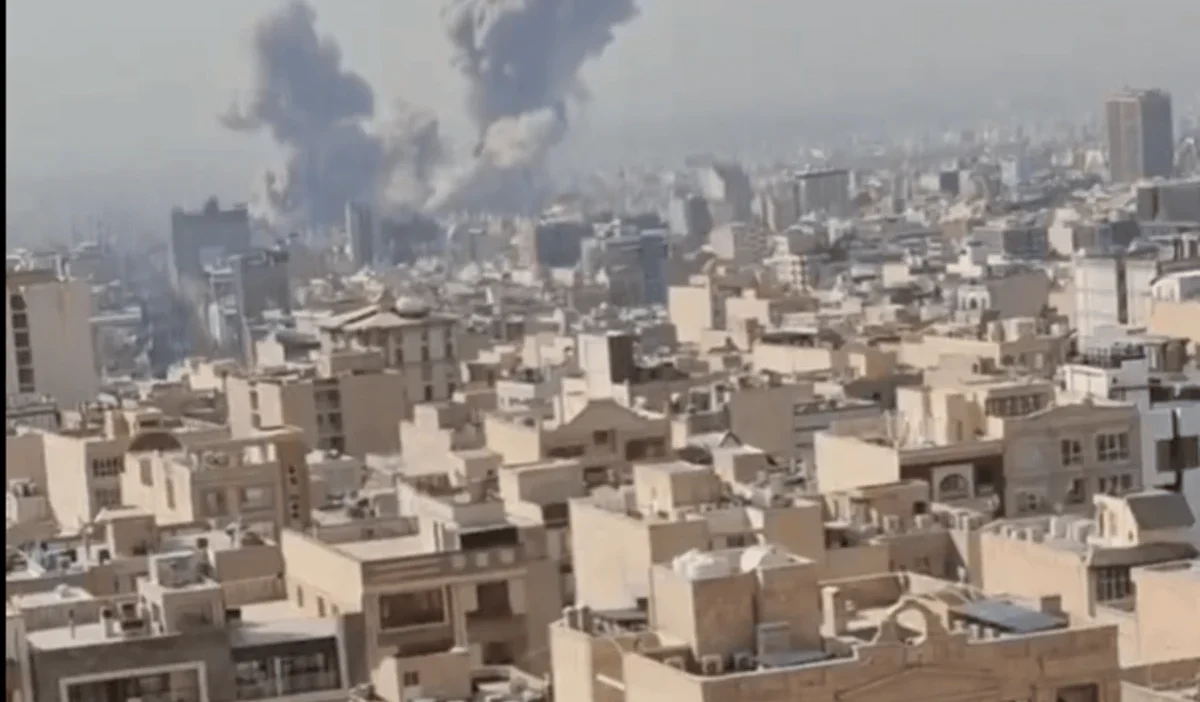
US and Israel conduct coordinated military strikes on Iran, prompting immediate retaliation and regional tensions on Feb. 28, 2026.
Regional Military Escalation
In the early hours of the day, local time, the United States and Israel conducted coordinated attacks on military targets in Iran. The strikes included installations related to missile systems, air defense, and strategic infrastructure in the Tehran region and other cities. The Trump administration described the actions as the beginning of a broad operation aimed at limiting Iran’s military potential and neutralizing the threat to U.S. allies in the region.
Iran’s government responded on the same day with a series of missile attacks targeting Israel and U.S. military bases in the Persian Gulf region. Military and civilian infrastructure damage was reported in several locations. Some regional countries closed their airspace, leading to the cancellation and rerouting of dozens of international flights.
Civilian casualties were also reported on the Iranian side, including an attack on an educational facility in the southern part of the country. Data on the number of casualties was being verified by local emergency services.
International Response
Before noon European time, leaders of several EU countries called for immediate de-escalation. They emphasized the risk of conflict escalation and the consequences for global energy security.
Market Reactions
Financial markets reacted sharply. Oil prices rose due to concerns about transport security through the Strait of Hormuz, through which a significant portion of global raw material supplies flows. Analysts indicated that a prolonged conflict could lead to further fuel price increases and inflationary pressure in Europe.
Poland’s Position
In Warsaw, international affairs dominated the morning government agenda. Prime Minister Donald Tusk reported that Polish diplomats and citizens in Iran remain safe. Meanwhile, restrictions on the functioning of part of the consular section of the embassy in Israel were maintained.
The day before, the Sejm approved a mechanism enabling the use of funds from the EU’s SAFE initiative for the modernization of armed forces. This involves approximately €43.7 billion allocated for air defense systems, cybersecurity capabilities, and new military technologies. The decision fits into a broader strategy of strengthening NATO’s eastern flank in the face of international instability.
The bill now goes to the president for signature, who may veto it.
Domestic Affairs
On February 28, Warsaw also hosted ceremonies related to the National Day of Memory of Cursed Soldiers, falling on March 1. The events had state and social character. In an official letter, the president emphasized the importance of remembering members of the post-war independence underground and the need to protect state sovereignty in changing geopolitical realities.
Astronomical Event
In the evening, observers’ attention was drawn to an astronomical phenomenon – a configuration of six planets of the Solar System visible after sunset. Mercury, Venus, Jupiter, and Saturn were visible to the naked eye under favorable weather conditions, while Uranus and Neptune required optical equipment. This phenomenon is periodic and does not often occur in such a favorable configuration.