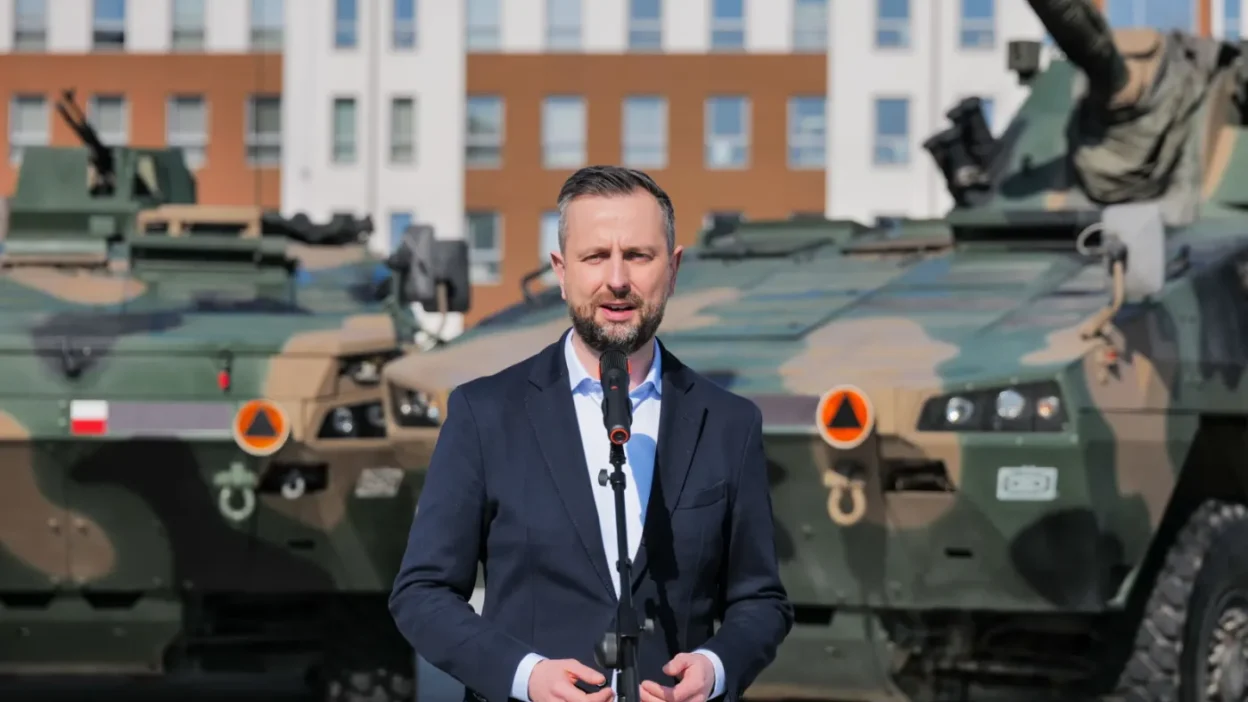
Poland’s Defense Minister Kosiniak-Kamysz announced a new SAFE Act aimed at breaking a political deadlock over defense spending and modernizing the armed forces.
New SAFE Act Proposed
A new law concerning the financing of national security is intended to overcome the political impasse surrounding the SAFE program. Defense Minister Władysław Kosiniak-Kamysz announced the preparation of compromise solutions to reconcile government proposals with presidential initiatives, while enabling continued investment in army modernization.
Dispute Over SAFE Funding Mechanism
The dispute over the SAFE program, a mechanism for financing defense expenditures, has become a major point of contention between the government and the president. Kosiniak-Kamysz emphasized that he previously assumed security issues would transcend political divisions and become a common ground for the country’s key institutions.
Presidential Veto and Government Response
The minister indicated that the president’s veto of the SAFE EU loan act changed the situation, with political considerations playing a decisive role rather than a merit-based assessment of the project. The government, however, remains committed to implementing the program despite the obstacles.
European Context and Increased Defense Spending
The discussion takes place within a broader European context, with the SAFE program aligning with EU efforts to increase the defense capabilities of member states, particularly in light of the war in Ukraine and growing geopolitical tensions. EU data shows member states planning significant increases in defense spending, with Poland allocating over 4% of GDP to this purpose.
“Polish SAFE 0%” Alternative
An alternative to EU funding is the “Polish SAFE 0%” project, proposed by President Karol Nawrocki. This involves creating a special defense investment fund financed by profits from the National Bank of Poland (NBP).
Government Position on NBP Funds
Kosiniak-Kamysz responded to this proposal, stating that funds from the NBP should go directly to the state budget, ensuring security reinforcement in a manner consistent with the existing constitutional order.
Legal Concerns Regarding Presidential Proposal
The presidential project raised legal doubts, particularly regarding the scope of executive powers and the role of the central bank. The Speaker of the Sejm pointed to possible inconsistencies with the constitution, contributing to the PSL’s preparation of an alternative bill.
Controversial Use of Central Bank Funds
Using central bank funds to finance public expenditure is a controversial practice in Europe, with the European Central Bank repeatedly stressing the need to maintain the independence of central banks and avoid direct financing of state budgets.
PSL Compromise and New SAFE Act
The bill prepared by the PSL aims to be a compromise between the government’s proposals and the president’s initiative. Kosiniak-Kamysz announced that the act will be “cleansed” of provisions raising constitutional concerns, particularly regarding decision-making on the development of the armed forces.
Government’s Role in Defense Policy
A key element of the changes will be emphasizing the government’s role as the primary center responsible for defense policy, while still allowing for cooperation with the president, who constitutionally serves as the supreme commander of the armed forces.
Upcoming Parliamentary Debate
The new act will soon be submitted to the Sejm, and the minister stated it should address concerns raised by coalition partners regarding legality and transparency of the financing mechanisms.
International Security Context: NATO, US, and Europe
Kosiniak-Kamysz also addressed the broader international security context, emphasizing that the United States remains the most important guarantor of security within NATO, possessing the largest military potential in the Alliance.
Need for Increased European Defense Capabilities
He stressed that Europe must increase its defense capabilities, noting that conflicts worldwide, including tensions in the Middle East and the ongoing war in Ukraine, demonstrate the need for greater European engagement in building its own military potential.
European Defense as Complementary to US Security
He pointed out that strengthening European defense is not aimed against the United States but complements the common security system, a position increasingly shared by EU leaders who emphasize the need for Europe’s “strategic autonomy.”
Military Modernization and Defense Expenditure
Poland remains a leader in NATO in terms of defense spending, with the military budget exceeding 4% of GDP in 2024 and 2025, significantly surpassing the Alliance’s minimum requirement of 2%.
Investments in Modern Armaments
These funds are allocated to the purchase of modern armaments, including air defense systems, Abrams and K2 tanks, F-35 aircraft, and the development of the domestic arms industry. The SAFE program is intended to be one of the tools enabling further financing of these investments.
Increasing the Size of the Polish Armed Forces
Work is also underway to increase the size of the Polish Armed Forces to 300,000 soldiers, including a significant component of territorial defense forces, according to government plans.