France’s National Rally party bolstered its position in recent local elections, setting its sights on the 2027 presidential vote despite ongoing resistance.
National Rally’s Momentum
The far-right National Rally (RN) declared a “historic success” following the second round of local elections, viewed as a key test before the 2027 presidential election. The party expanded its holdings not only in its northern strongholds but also in the southeast of the country.
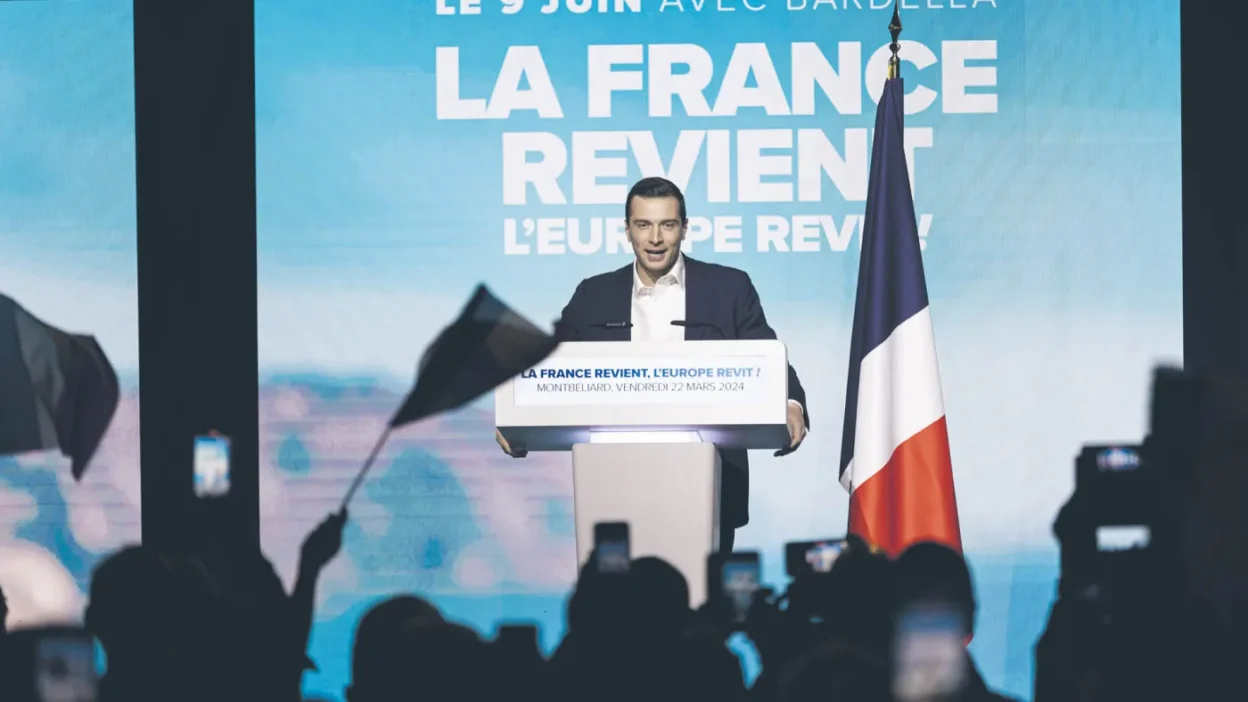
RN leader Jordan Bardella stated that these successes are “only the beginning.”
Ciotti’s Victory and Potential Alliances
A breakthrough for Marine Le Pen’s camp was the victory of Éric Ciotti, an ally, in Nice, France’s fifth-largest city. Ciotti previously led the center-right Republicans but left after his proposal for an alliance with the RN in the 2024 parliamentary elections was rejected.
His win could revitalize the concept of building such a coalition before 2027, with Ciotti stating that “the right has too often failed to unite… we have opened a new path.”
The Republican Front Remains
Despite the gains, some Republicans are urging a clear break from the RN, warning that an alliance would undermine the party’s credibility. Valérie Pécresse, president of the Île-de-France region, cautioned that “otherwise we will lose.”
The so-called “republican front” against the far-right, which blocked RN victories in cities like Marseille, Toulon, and Nîmes, remains in place. In Paris, RN candidate Thierry Mariani received only 1.6% of the vote in the first round, failing to advance.
According to Mathieu Gallard of Sciences Po, “Even in cities where the RN is historically very strong, concerns about the party mean that the republican front is still operating. Victory for the National Rally in 2027 is not a foregone conclusion.”
National Outlook vs. Local Results
The RN argues that weaker results in cities do not foreshadow defeat in the 2027 presidential election, as the party traditionally performs better at the national level than locally. A Toluna Harris Interactive poll confirms this, giving Bardella 35–36% support in the first round of the presidential election.
He leads centrist Édouard Philippe (18%), socialist Raphaël Glucksmann (14%), and far-left Jean-Luc Mélenchon (11%).
The Succession Race for Macron
The local elections have initiated the competition to succeed Emmanuel Macron and identify a center-right candidate for 2027. Former Prime Minister Édouard Philippe, who won in Le Havre, is emerging as a frontrunner, signaling presidential ambitions and emphasizing the need for unity against “extremes.”
He faces competition from Gabriel Attal, leader of the Renaissance party, and the Republicans, who also performed well in the elections.
Challenges for the Center-Left
The center-left faces challenges in unifying. While retaining control of Paris, Lyon, and Marseille, it struggles with disputes regarding cooperation with the radical left-wing La France Insoumise (LFI), which has been accused of antisemitism and fueling political tensions.
Alliances with LFI led to defeats in some districts, with Boris Vallaud, head of the Socialist group in the National Assembly, stating, “LFI made us lose.”