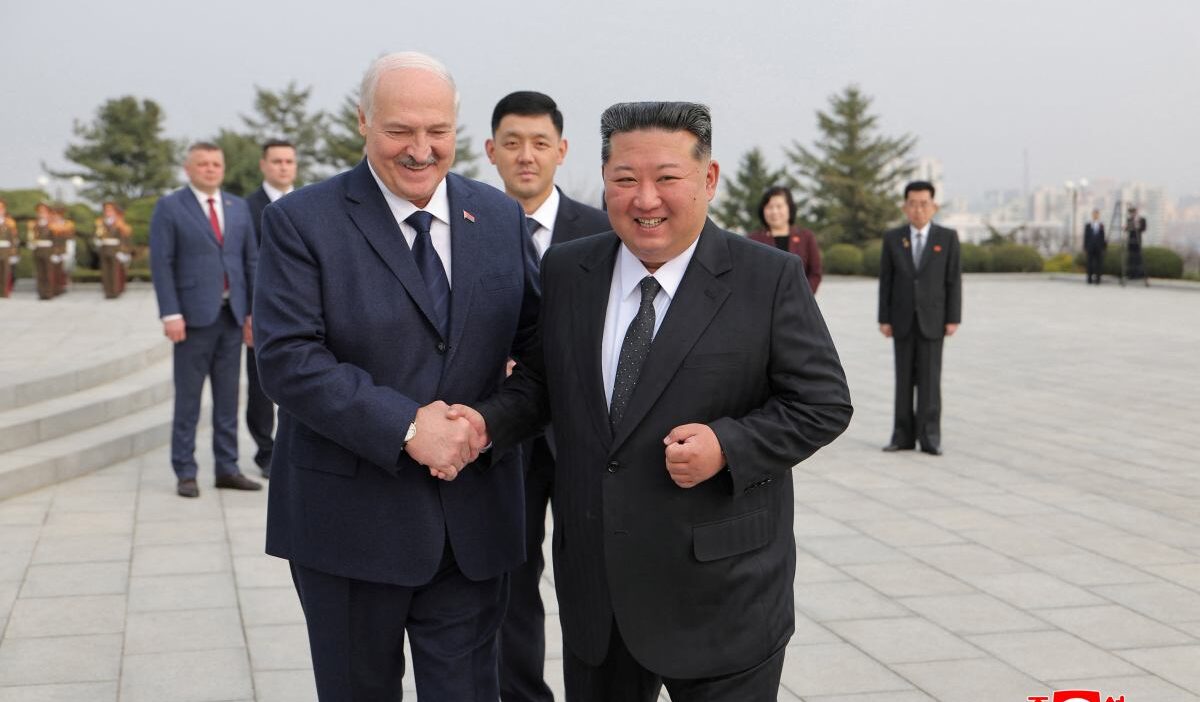
Kim Jong Un and Alexander Lukashenko signed a new treaty in Pyongyang, aiming to strengthen bilateral relations amid international isolation and support for Russia.
New Treaty to Bolster Ties
North Korean leader Kim Jong Un stated the new intergovernmental treaty will serve as a legal foundation for the stable development of bilateral relations. The document, whose contents remain undisclosed, defines the goals and principles of interaction between the two states, according to Belarusian state news agency BelTA.
Lukashenko Highlights Historical Significance
Alexander Lukashenko emphasized the historical importance of the moment, stating, “We are entering a fundamentally new stage. It’s belated, but it’s happening.” He noted that the friendly relations between Minsk and Pyongyang, dating back to the Soviet era, “were never interrupted.”
Belarus Eyes North Korean Imports
Minsk “counts on import” opportunities. During his visit, Belarusian Foreign Minister Maksim Ryzhankou acknowledged current trade turnover is “negligible,” but expressed interest in importing “cheap, but good quality” North Korean cosmetics in exchange for food and other goods.
First Official Visit and Agreements
The treaty signing is a key event during Lukashenko’s first official visit to North Korea, which began Wednesday with a formal welcome including a guard of honor. North Korean media have yet to release details of the ongoing discussions. Approximately ten agreements are expected to be concluded, covering areas such as agriculture, education, and sports.
NATO Response to Alliance
The strengthening ties between Pyongyang and Minsk are occurring against a backdrop of increasing international isolation and active support for Russia in the war against Ukraine. Belarus provides Moscow with logistical support, while North Korea is reportedly supplying ammunition and military personnel to the front lines.
NATO Concerns and Strategy Review
The North Atlantic Alliance is closely monitoring the development of the Minsk-Pyongyang-Moscow axis, viewing it as a direct threat to global security. NATO Secretary General Mark Rutte has repeatedly stressed that North Korean ammunition supplies and Belarus’s provision of territory for aggression constitute serious violations of international law. Experts suggest this cooperation necessitates a revision of the Alliance’s deterrence strategy on its eastern flank and increased vigilance regarding technology transfers.