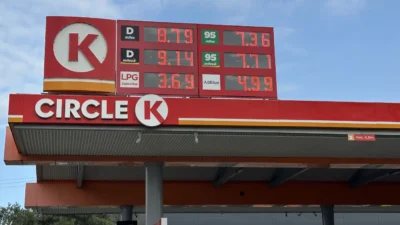
The Polish Sejm passed government-backed legislation aimed at lowering fuel prices, with officials anticipating swift presidential approval as early as today.
Fuel Price Reduction Legislation Approved
The Sejm approved government draft laws designed to reduce fuel prices, enacting a package intended to quickly lower costs at the pump. Miłosz Motyka of DGP believes the President will sign the laws today.
New Regulations: Price Caps and Tax Changes
The new regulations introduce a maximum price mechanism and temporary tax changes, which the government believes will directly translate to lower prices at gas stations. A Senate vote is scheduled for 2 PM.
Key Components of the Package
The package consists of two key elements: the introduction of an official maximum price for gasoline and diesel fuel, calculated based on wholesale prices and station operating costs, and the ability for the government to temporarily lower excise duties via regulation, without requiring legislative amendments.
Maximum Fuel Price and Tax Changes: How Will the Mechanism Work?
The opposition has criticized the government for delaying the decision, while the government maintains that a thorough analysis was crucial. Motyka asserts the solution is “maximally flexible,” linking the mechanism to a maximum price to ensure price reductions are passed on to consumers.
Government Response to Opposition Criticism
The opposition has criticized the government for delaying the decision, while the government maintains that a thorough analysis was crucial. Motyka asserts the solution is “maximally flexible,” linking the mechanism to a maximum price to ensure price reductions are passed on to consumers. Previous experiences showed tax changes alone did not guarantee lower prices for drivers.
Mixed Approach to Price Control
The government opted for a mixed approach, avoiding specific VAT and excise rates in the law and instead focusing on executive solutions. Motyka emphasizes the importance of a well-designed and effective mechanism for lowering prices, rather than hasty action, allowing for responsiveness to global oil and fuel price changes.
Opposition Questions the Regulations’ Structure
While not disputing the need for price reductions, the opposition questions the regulations’ structure, arguing the law only authorizes the government without mandating VAT and excise tax reductions. PiS politicians advocate for specific lower tax rates to be enshrined in the law, at least until the end of June.
Concerns Over Government Control and Market Predictability
Critics argue the lack of specific tax rate provisions gives the government full control over tax policy in the short term, raising concerns about potential future tax increases. They also suggest the regulation-based mechanism could create market unpredictability for consumers.
Government Defends the Approach, Citing Past Failures
Government representatives defend the approach, citing past experiences where tax cuts did not fully translate into lower prices at the pump. Jarosław Urbaniak of DGP argues previous PiS actions benefited intermediaries rather than consumers.
Ensuring Price Reductions Reach Consumers
The government believes the new mechanism will be more effective, with the maximum price limiting margins and forcing the transfer of reductions to consumers. Motyka states the mechanism is linked to wholesale prices and station costs to prevent such issues, with ongoing market monitoring and intervention for irregularities.
Addressing Concerns About Fuel Shortages
Concerns have been raised about potential fuel shortages similar to those experienced in Hungary after the introduction of administrative price controls. The government assures such a scenario is unlikely in Poland, citing tools to react to potential disruptions, including export restrictions, flow control, and measures against fuel tourism.
Government Assurances on Fuel Availability
“Please believe me, there will be no shortage of fuel at gas stations,” officials assured. The government has analyzed various scenarios and remains in constant contact with the fuel industry, designing the mechanism to avoid panic buying and local shortages.
Temporary Nature of the Regulations
The new regulations are temporary, remaining in effect as long as the volatile situation in commodity markets persists. Motyka notes the intervention will not be necessary once the situation stabilizes and prices return to more predictable levels.