The Polish government is moving to eliminate a practice where seniors are stripped of their assets and placed in care homes at municipal expense.
New Regulations to Prevent Asset Stripping
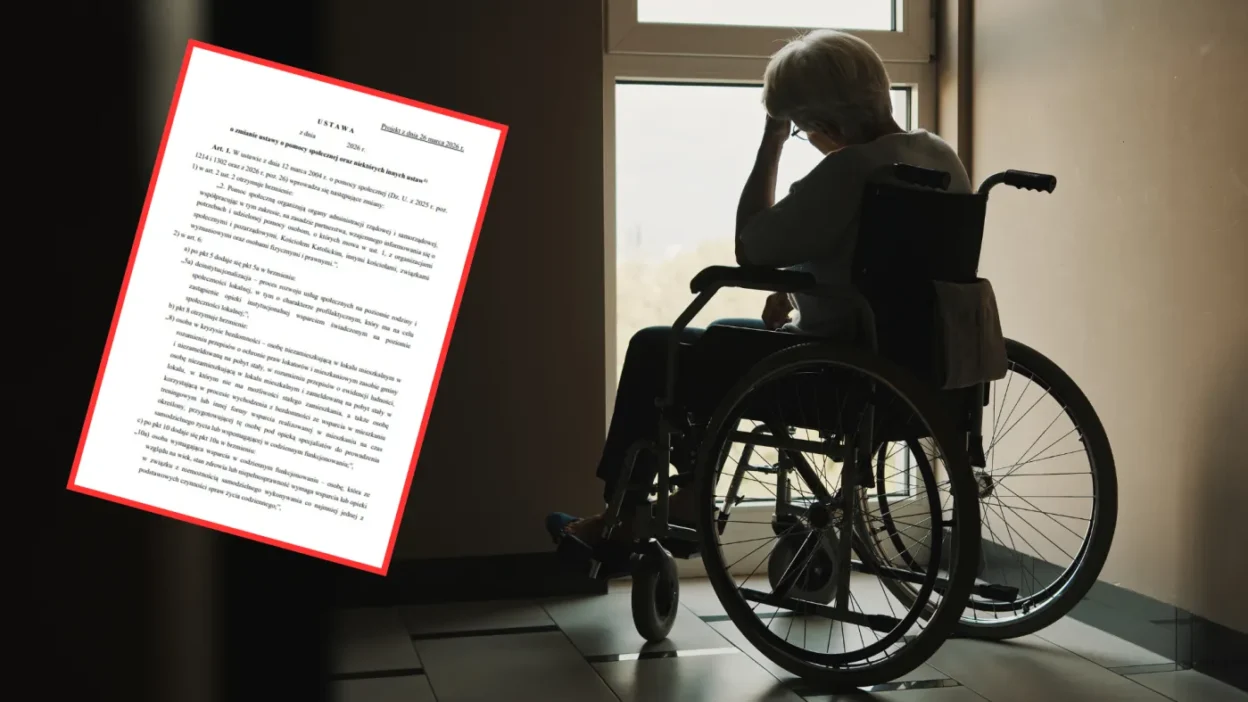
On March 26, 2026, the Council of Ministers’ legislative work schedule included a draft law amending the Social Assistance Act and related legislation. The Ministry of Family, Labour and Social Policy authored the bill, introducing new rules for senior citizens’ care home (DPS) fees.
The draft legislation specifically addresses individuals who receive property from seniors in exchange for care – such as through life annuity agreements – and adds them to the list of those obligated to pay DPS fees. This aims to eliminate a deeply immoral and unjust legal loophole.
Current DPS Cost Determination
The cost of a senior’s stay in a DPS is determined according to Article 60 of the Social Assistance Act of March 12, 2004. The monthly cost is generally set at the so-called average monthly maintenance cost per resident.
Calculating Average Monthly Maintenance Cost
The average monthly maintenance cost is calculated as follows: the total annual operating costs of the DPS (excluding investment costs and renovation expenses) plus the projected average annual consumer price index from the budget act for the calendar year, divided by the number of beds, determined by the actual number of residents in each month of the previous year.
DPS Cost Publication and Application
This average monthly maintenance cost is published no later than March 31st of each year, serving as the basis for DPS fees from the following month. Until then, the fee remains at the rate published in the previous year.
Flexibility in Cost Determination
DPS costs can be set lower than the calculated average monthly maintenance cost, but only if the DPS maintains the required service standards.
Current Responsibility for DPS Costs
According to Article 61 of the Social Assistance Act of March 12, 2004, the following individuals are obligated to pay for a senior’s stay in a DPS, in order of priority:
Spouse, descendants, and ascendants are exempt from payment if they independently cover the full cost. Other individuals may voluntarily contribute.
Consequences of Non-Payment and Municipal Responsibility
If relatives refuse to enter into an agreement regarding payment, the municipality unilaterally determines the fee amount. If relatives fail to meet their obligations, the municipality covering the senior’s referral to the DPS bears the cost, and subsequently seeks reimbursement from the relatives through administrative enforcement procedures.
Current Legal Gap and Voluntary Payments
Currently, Article 61, paragraph 2a of the Act allows individuals not in the primary obligation group (spouse, descendants, ascendants) – such as those gifted property by the senior – to voluntarily contribute to the DPS costs. However, municipalities cannot compel these individuals to pay.
The Problem Identified by Local Governments
The Association of Communes and Powiats of Wielkopolska (SGiPW) has raised concerns about a legal loophole allowing families to deprive seniors of their assets through life annuity agreements and then place them in DPS facilities at municipal expense.
SGiPW Intervention with the Ministry
On March 18, 2025, SGiPW appealed to the Minister of Family, Labour and Social Policy, Agnieszka Dziemianowicz-Bąk, to address the loophole. The association highlighted cases where families strip seniors of assets worth millions of zlotys and then place them in DPS facilities, despite existing notarial agreements obligating them to provide care.
The Exploitation Scenario
SGiPW described a scenario where distant relatives provide care to a lonely and ill senior, relocating them to a different municipality. After a few months, they arrange for the senior’s placement in a DPS, with the costs borne by the municipality of last residence, despite the senior’s registered address. The family then enters into a life annuity agreement, transferring ownership of the senior’s property to themselves.
Ministry Response and Proposed Changes
In response to SGiPW’s intervention, the Ministry of Family, Labour and Social Policy indicated it was considering amending the Social Assistance Act to require individuals receiving property through life annuity agreements to cover DPS costs. A special team was formed to reform the social assistance system.
New Legislation Published
On March 26, 2026, the Council of Ministers’ legislative work schedule included draft legislation (UD315) to amend the Social Assistance Act, introducing new rules for DPS fees and addressing the concerns raised by SGiPW. The draft expands the list of individuals responsible for DPS payments to include those who received property from the senior in exchange for care, such as through a life annuity.
Impact of the Proposed Changes
The proposed changes are expected to reduce the financial burden on the social assistance system and strengthen the protection of vulnerable seniors. The new regulations are expected to come into effect on the first day of the month following two months after the date of publication in the Journal of Laws.
Additional Legislative Proposal: Senior Protection Against Fraud
A separate parliamentary bill, proposed by the Left party on May 15, 2025, aims to protect seniors from fraudulent property transfers by allowing municipalities to buy back their homes with a lifetime leaseback option.