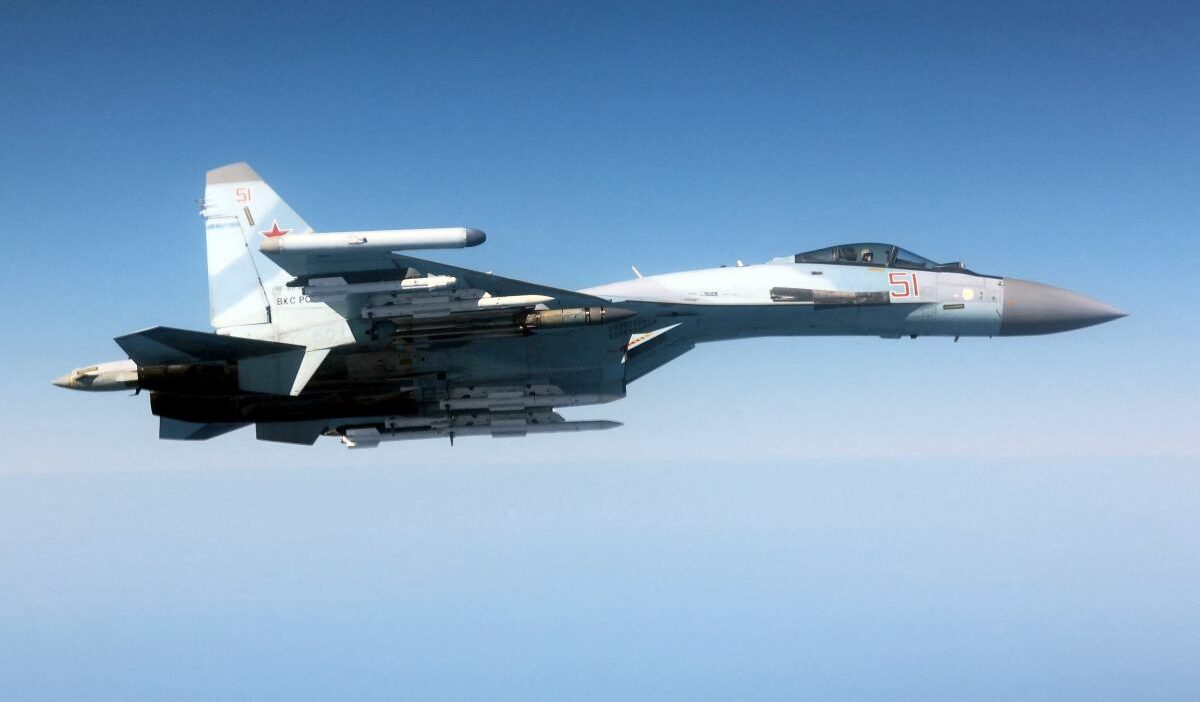
The UK Ministry of Defence reports that Russian Su-35 and Su-27 jets conducted aggressive maneuvers against a British Rivet Joint reconnaissance aircraft in April, marking the most serious incident since 2022.
Dangerous Intercepts in April
The British Ministry of Defence confirmed that two separate confrontations occurred in April. First, a Russian Su-35 flew so close to a British Rivet Joint reconnaissance plane that it triggered emergency systems and forced the aircraft’s autopilot to disengage.
Subsequently, a Russian Su-27 fighter performed six passes directly in front of the Rivet Joint, maintaining a distance of only six meters each time.
Strategic Importance of the Rivet Joint
The Rivet Joint is an advanced electronic surveillance aircraft equipped with sensors capable of intercepting signals and communications. It serves as a vital intelligence asset for NATO operations.
The RAF aircraft was unarmed and conducting a routine reconnaissance mission to secure NATO’s eastern flank. In response, both the British Ministry of Defence and the Foreign Office filed a formal protest at the Russian embassy in London this week.
Historical Context and Escalation Risks
UK Defence Secretary John Healey stated that such actions create significant risks of accidents and potential escalation, while praising the professionalism and courage of the British pilots.
This event is considered the most serious involving a Rivet Joint since 2022, when a Russian pilot fired two missiles toward a British aircraft, an act Moscow attributed to a technical malfunction. However, anonymous sources told the BBC that one missile was fired following an ambiguous order, which a second pilot attempted to counter.
UK Commitment to NATO
The incident follows a broader pattern of Russian activity, including the tracking of three Russian submarines operating near critical underwater infrastructure in the North Atlantic last month.
Addressing the situation, the British Defence Secretary declared that the incident will not weaken the United Kingdom’s determination to defend NATO, its allies, and its interests against Russian aggression.