

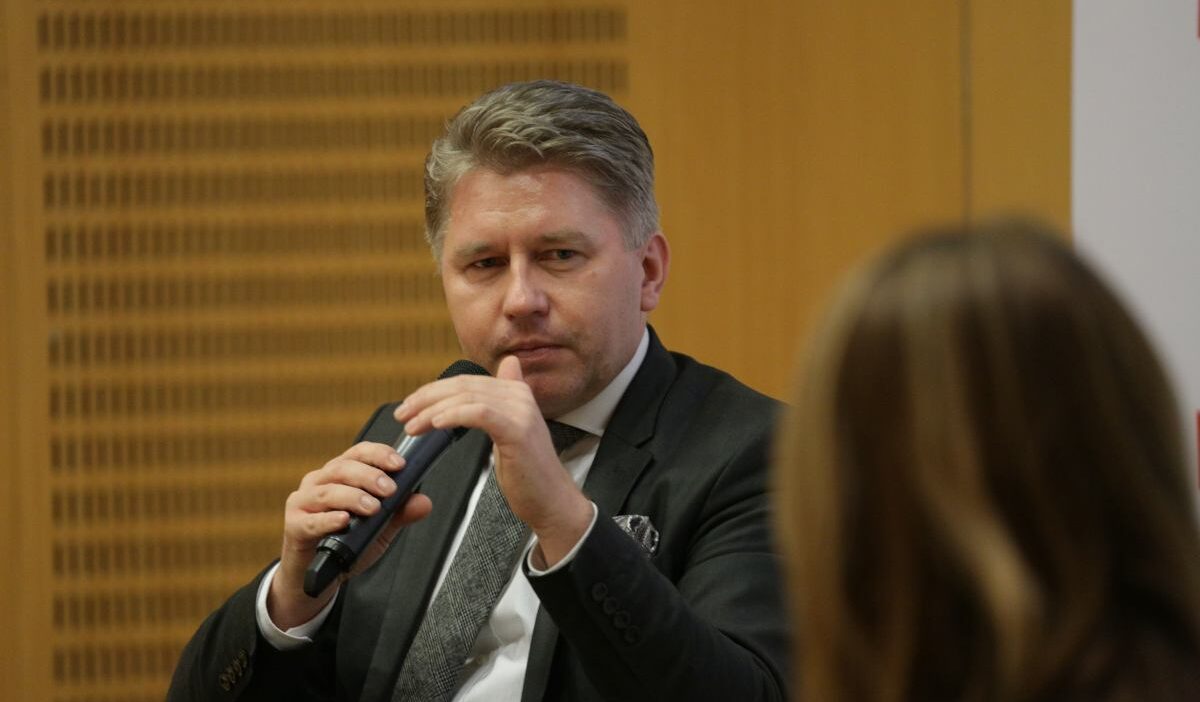
Following Maja Chwalińska’s Roland Garros semifinal victory, Professor Marcin Matczak argued that sports federations are failing to address the participation of athletes who openly support the Russian regime.
A Continued Dream at Roland Garros
Maja Chwalińska is set to compete for the Roland Garros title this Saturday. The 24-year-old’s journey from the qualifying rounds to the final continues, following her semifinal victory on Thursday against Diana Shnaider, which she won 7-6(4), 6-4 after a two-hour match.
Chwalińska will face 19-year-old Russian player Mirra Andreeva in the final on Saturday at 3:00 PM.
Institutional Silence on Geopolitics
Speaking on the TVN24 program “Jeden na jeden,” Professor Marcin Matczak discussed whether the sports world has adequately addressed the war in Ukraine and the role of Russian athletes. He argued that the response has been poor, noting that sports have historically been intertwined with politics.
Matczak emphasized that while some athletes are innocent, others actively support the regime through their actions, which requires a clear reaction from governing bodies.
The Case of Diana Shnaider
As a specific example, Matczak pointed to Diana Shnaider, whom Chwalińska defeated in the semifinals. He noted that Shnaider participates in Gazprom tournaments and accepts honors from Vladimir Putin.
Matczak criticized sports federations for acting like the “three wise monkeys,” claiming they cover their eyes, ears, and mouths. He argued that sport should demonstrate that there is no place for those who support regimes engaged in criminal acts.
The Impact of Athletic Presence
Matczak concluded that even if federations attempt to remain neutral, the presence of athletes who display clear political preferences sends a definitive message. He noted that federations often seem more focused on policing those on the “good side” than those supporting the aggressor.


