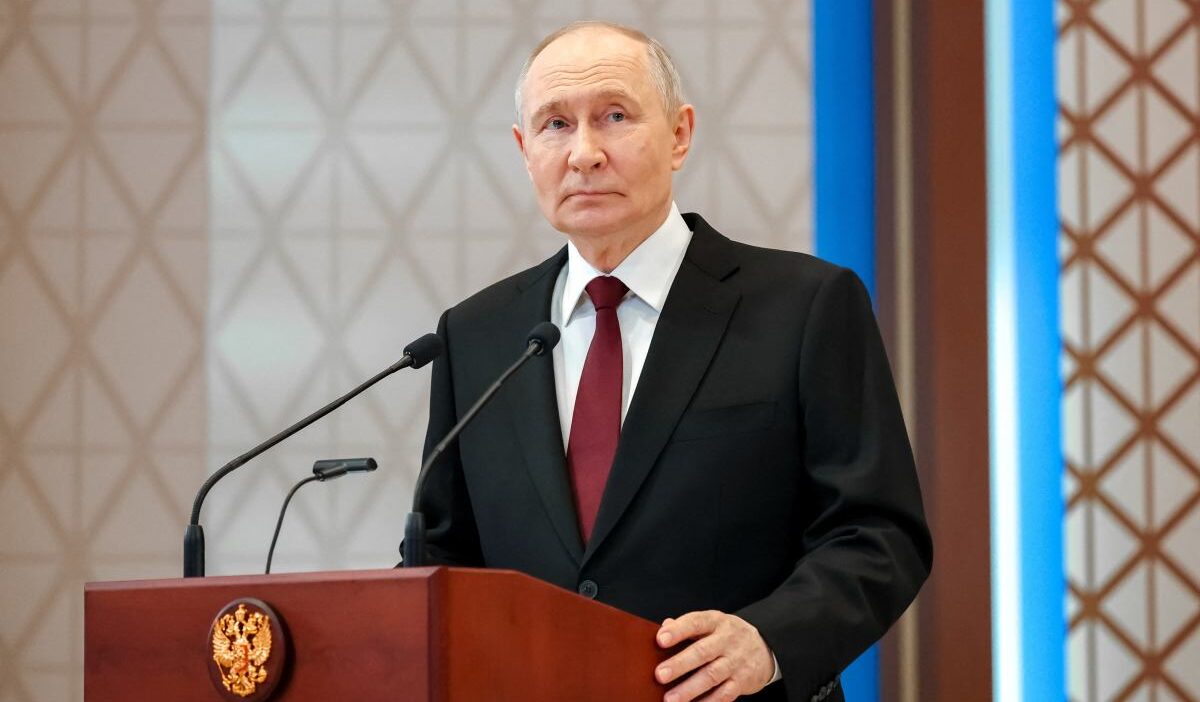
Following Medvedev’s aggressive rhetoric and rising provocations, we surveyed readers on the threat of a Russian attack, while NATO simultaneously recalibrates its defense posture along the eastern flank.
Public Sentiment on Russian Aggression
Dmitry Medvedev’s recent remarks targeting EU citizens have prompted a sharp reaction from Donald Tusk. The former Russian president claimed that the peaceful sleep of EU citizens is over, while the Prime Minister highlighted ongoing provocations, including the repeated violation of NATO airspace by Russian drones.
In light of these events, we surveyed our readers on whether they fear a Russian attack. Of the 4,843 participants, 64.94 percent (3,145 votes) answered “no,” while 31.61 percent (1,531 votes) admitted to having such fears. The remaining 3.45 percent (167 votes) remained undecided. These results were collected on June 3, 2026.
NATO’s Defensive Realignment
Since the beginning of the war in Ukraine, European security has become a paramount international concern. NATO nations are actively increasing their readiness to counter potential threats, with ongoing discussions regarding shifts in the alliance’s command structures tasked with defending borders adjacent to Russia.
Reports from Reuters indicate that NATO is considering transferring the coordination of defense for Estonia and Latvia to a German-Dutch corps based in Muenster. This move is intended to improve command efficiency and enable faster troop deployments to the eastern flank. Currently, the command center in Szczecin plays a vital role in these operations.
Escalating Rhetoric and Disinformation
Tensions between Russia and the Baltic states remain high, fueled by fresh accusations from Moscow. On May 19, the Russian Foreign Intelligence Service accused Latvia of facilitating a Ukrainian drone attack from its territory, a claim Riga firmly denied, citing that similar explanations had already been provided to the Russian side.
Similar allegations have been directed at Estonia and Lithuania in the past. Officials from these nations have characterized these Russian accusations as part of a broader disinformation campaign orchestrated by Moscow to destabilize the region.