


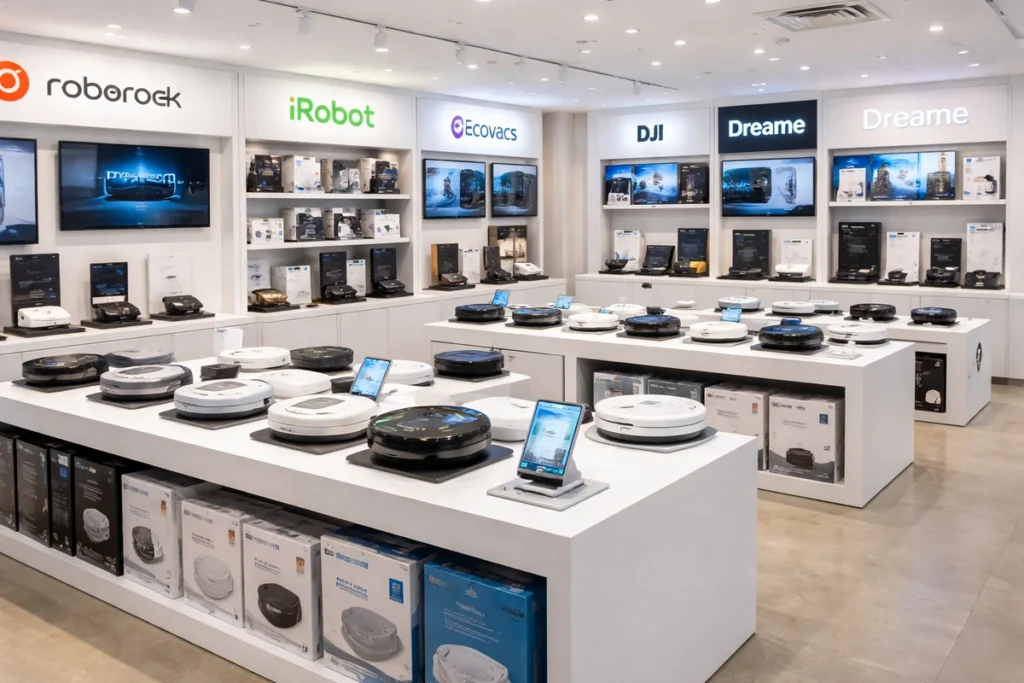
Developer Sammy Azdoufal inadvertently exposed data from thousands of DJI cleaning robots while attempting to control his own device.
Spies Instead of Cleaners?
Sammy Azdoufal reportedly hacked a self-driving vacuum cleaner from Chinese manufacturer DJI. However, he claims he did not breach any servers. He stated he only wanted to control his new robot using a PlayStation 5 controller and created his own application to analyze how the device communicates with the manufacturer’s cloud.
His application connected to DJI’s infrastructure, and not only his own vacuum cleaner responded. Within minutes, thousands of devices worldwide began reporting to his computer. Approximately 7,000 robots from 24 countries regularly sent data, with each unit reporting to the server every few seconds. His laptop cataloged devices from Europe, the USA, and Asia in real time.
What the Laptop Saw: Vacuum Cleaner Camera Feeds
According to The Verge, the most alarming aspect was Azdoufal’s ability to access live video feeds from the vacuum cleaners’ cameras during his demonstration. He also showed that knowing the 14-digit serial number allowed access to data for a specific unit, including which room it was cleaning and its battery level.
Manufacturer’s Response: Did DJI Patches Close the Vulnerability?
After Azdoufal and The Verge reported the issue, the manufacturer admitted a problem with backend permission validation. DJI stated it deployed patches within hours to address the vulnerability and that no data was exposed or misused. However, the company acknowledged the initial fix did not cover all server nodes. DJI insists the problem is fully resolved, but Azdoufal believes not all detected vulnerabilities have been removed.
One Hacker, Thousands of Homes: Is the Smart Home a Digital Trap?
The DJI robot incident raises questions about the security and privacy of smart home device owners. If an enthusiast, using readily available tools and network traffic analysis, could gain access to thousands of devices globally, are our truly smart homes as secure as we believe?