Following attacks by Israel and the US on Iran, multiple countries have closed their airspace, causing massive flight cancellations across the Middle East.
Initial Reactions and Airspace Closures
After attacks carried out by Israel and the US, the authorities of Iran, Israel, Iraq, and the United Arab Emirates announced the closure of their airspace. Israel’s Ministry of Transport confirmed the suspension of flight operations, and Defense Minister Israel Katz announced a “preventive attack” and the introduction of a state of emergency throughout the country.
President Donald Trump in a published recording stated that US forces are conducting a “massive and continuous operation” against Iranian military targets. As reported by “The New York Times”, the US administration anticipated a swift retaliation from Tehran before the operations began, including possible rocket attacks on US bases and embassies in the region. The newspaper also expected an activation of Iran-backed paramilitary formations.
The immediate consequence of these decisions was chaos in air traffic. The region, which is normally one of the most heavily trafficked air corridors in the world, was effectively cut off. Planes flying from Europe to Asia and from Asia to Europe had to be redirected to alternative routes.
Polish Airlines Cancel Flights
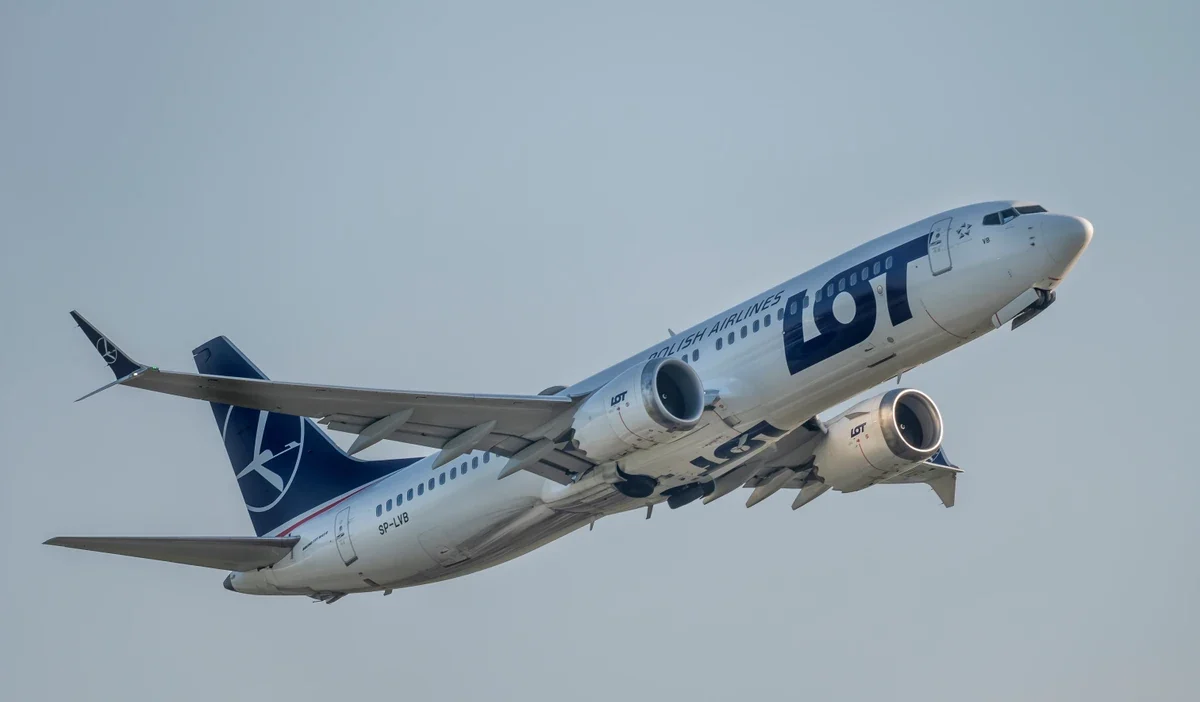
Poland’s national carrier, PLL LOT, announced the cancellation of all flights to and from Tel Aviv. Spokesperson Krzysztof Moczulski informed that due to the suspension of operations at Ben Gurion Airport, all connections until March 3 were canceled. Additionally, one flight from Warsaw to Dubai – LO121 – was returned to the country.
A representative of Chopin Airport in Warsaw, Piotr Rudzki, indicated that further cancellations should be expected due to the closure of Israeli airspace. Wizz Air made a similar decision. The airline immediately suspended all flights to and from Israel, Dubai, Abu Dhabi, and Amman until March 7 inclusive. As communicated by Corporate Communications Manager Salvatore Gabriele Imperiale, the carrier is monitoring the situation and remains in contact with authorities and aviation security agencies.
Regional Airlines Suspend Operations
The scale of the reaction included many more carriers. Flights in the region were canceled by Virgin Atlantic, Air Arabia, Norwegian Air Shuttle (connections to and from Dubai), Air France (flights to and from Tel Aviv and Beirut), KLM on the Amsterdam-Tel Aviv route, Lufthansa (Tel Aviv, Beirut, Oman – until March 7), Qatar Airways, Turkish Airlines (connections to Qatar, Kuwait, Bahrain, UAE, and Oman), Bulgaria Air (Tel Aviv until March 2), and Air India, which suspended flights to all Middle Eastern countries.
Russia’s Ministry of Transport, in turn, reported that Russian carriers have suspended flights to Iran and Israel.
Flight Path Diversions
Some airlines that did not formally announce a complete suspension of operations began to bypass Iranian and Iraqi airspace with wide arcs, extending routes by even several hundred kilometers.
Flightradar24 Data
Data from the Flightradar24 service showed the scale of sudden route changes. FlyDubai flight FZ984 from Kazan to Dubai made an emergency landing in Baku. Air India flight AI126 from Chicago to Delhi flew an unusual route over Syria, bypassing Iranian airspace. Meanwhile, Air Arabia flight G9950 from Sharjah to Moscow was redirected over Pakistan.
Data from FlyDubai flight FZ1449 from Dubai to Salzburg might have been particularly surprising – the aircraft found itself deep over Pakistan, far from the standard corridor leading to Europe.
GPS Security Concerns
Experts point out that in the region, GPS signal jamming (so-called jamming) and substitution (spoofing) are widely used. As a result, on civilian aviation tracking applications, planes may “jump” on the map by hundreds of kilometers or temporarily disappear. This does not mean loss of control over the aircraft – pilots use independent navigation systems, and services like Flightradar24 try to supplement data using MLAT technology and satellite signals.
US Military Presence in the Region
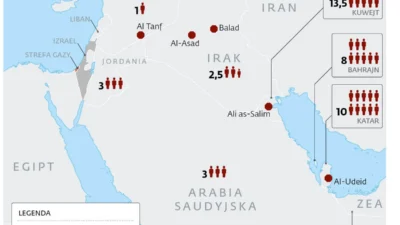
According to information from “The New York Times”, before the operation began, the US administration expected that Iran might respond with rocket attacks on US military installations and diplomatic facilities in the region. The need to protect these facilities was reportedly one of the reasons for the increased US military presence in the Middle East in recent weeks.
The introduction of a state of emergency in Israel and the closure of airspace by Iran, Iraq, and the United Arab Emirates had a domino effect. Airlines, following the recommendations of aviation security agencies, began to cancel flights not only to Tel Aviv but also to Dubai, Abu Dhabi, and Amman.
Impact on Air Travel
Passengers traveling to Asia and Gulf countries should expect delays, route changes, and further cancellations. Airlines’ operational decisions are being updated in real-time, depending on the development of the military situation and communications from aviation authorities.