


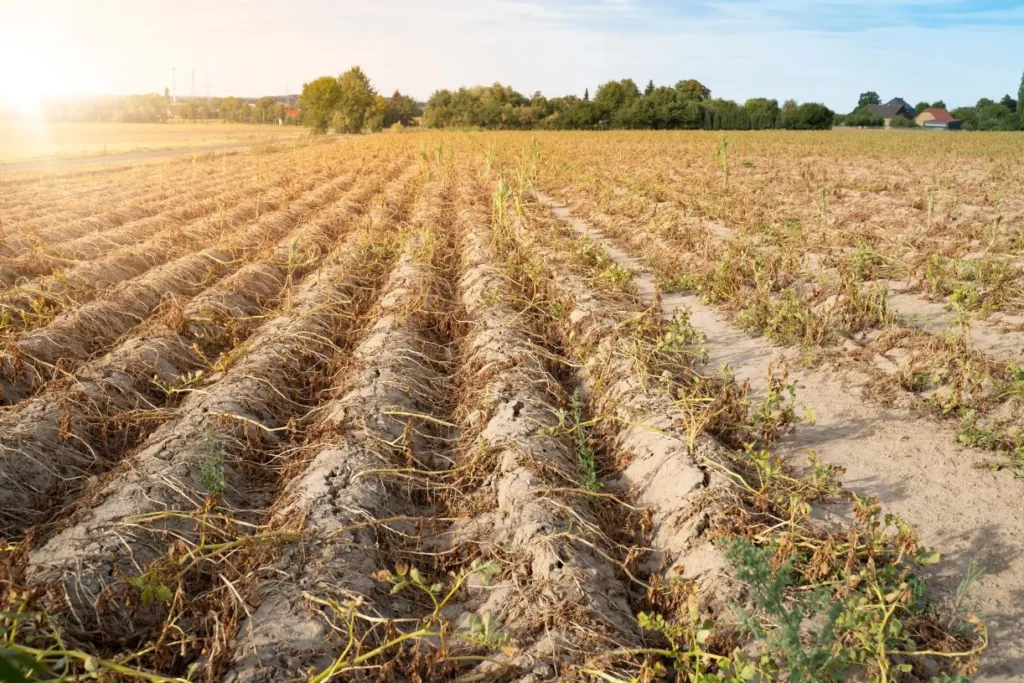
The IUNG-PIB has confirmed agricultural drought in nine provinces for the 2026 season, prompting farmers to prioritize direct payment applications and insurance policies to secure potential state financial support.
Drought Assessment Underway
The Institute of Soil Science and Plant Cultivation (IUNG-PIB) in Pulawy released its first drought report of the 2026 season on May 22, covering the period from March 21 to May 20. The report confirms a negative climate water balance across the country, affecting nine provinces: Kujawsko-Pomorskie, Lubelskie, Lubuskie, Łódzkie, Mazowieckie, Podkarpackie, Pomorskie, Warmińsko-Mazurskie, and Wielkopolskie.
The most severe deficits, falling below the -125 mm threshold, have been observed in regions with high concentrations of cereal crops, specifically Kujawsko-Pomorskie, Mazowieckie, Lubelskie, and parts of Łódzkie and Wielkopolskie.
Crops at Risk
The drought currently affects three primary crop groups. Spring cereals are impacted in 334 municipalities, winter cereals in 179, and strawberry crops in 55 municipalities, primarily in the Mazowieckie region. Experts anticipate that as temperatures rise, the list of affected crops will expand to include corn, potatoes, legumes, rapeseed, sugar beets, and field vegetables.
Application Deadlines and Accuracy
Correctly filing the 2026 direct payment application is critical for future aid eligibility. The primary deadline is June 1, 2026, with late applications accepted until June 26, albeit with a 1 percent reduction in payment per working day of delay. Precise reporting of plots and crop types in the eWniosekPlus system is essential, as the official “Report Agricultural Damage” application relies entirely on this data.
Aid Mechanisms and Insurance
The digital drought application for 2026 is expected to launch later this summer, with a filing deadline of October 15. While specific aid rates are not yet set, the government may reference the 2025 model, which used tiered compensation levels based on crop loss percentages. Farmers are warned that failing to hold insurance for at least 50 percent of their crop area can reduce potential state support by half.