


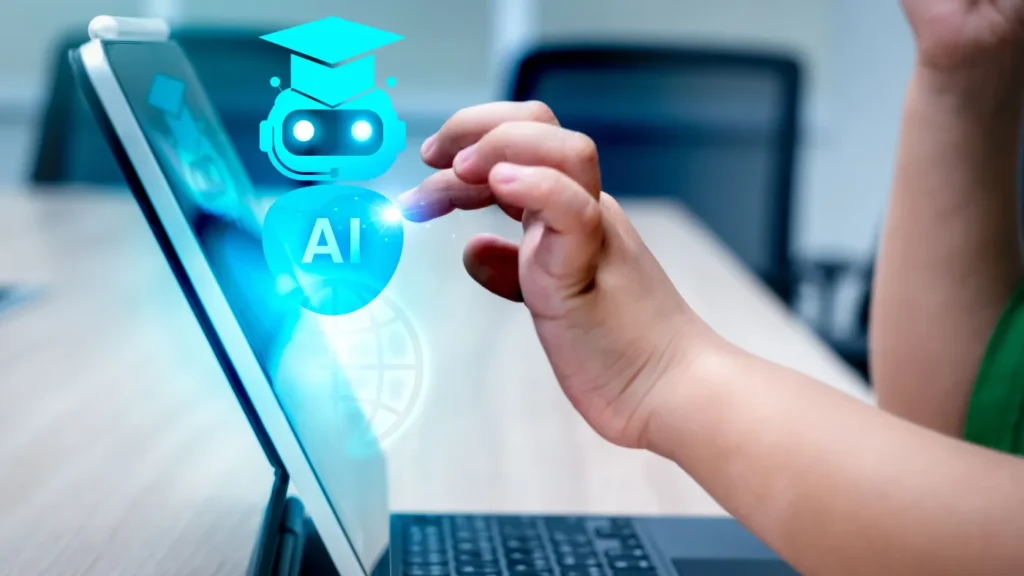
The rise of artificial intelligence presents new challenges for education, raising questions about authorship, plagiarism, and the need for updated legal frameworks.
AI as a Quiet Educational Standard
Students are increasingly using AI tools to prepare written work, summaries, solve problems, and improve writing style, becoming a widespread, though difficult to quantify, practice.
AI is no longer simply a supportive tool; it often takes over significant parts of the intellectual process, from structuring arguments to selecting evidence, effectively replacing student cognitive activity.
Is Using AI Legal?
Currently, there is no general legal prohibition against using AI tools in education.
The issue lies not with the legality of the tools themselves, but with how they are used, particularly concerning school and university regulations and academic honesty policies. Submitting AI-generated work as one’s own raises questions of academic integrity.
AI and Plagiarism: A Superficial Similarity
The question of whether using AI constitutes plagiarism requires careful consideration, but shouldn’t be dismissed as legally neutral or acceptable.
Plagiarism involves appropriating someone else’s work, but generative AI doesn’t always directly copy a specific source; it generates content based on language patterns, making a strict definition of plagiarism difficult to apply.
However, presenting AI-generated content as original work constitutes misrepresentation of authorship and the extent of independent intellectual contribution, which is generally unacceptable under academic regulations.
Who is the Author of AI-Generated Work?
This question raises a fundamental issue in copyright law. In European legal systems, including Poland, a work is protected if it is an expression of human creative activity.
AI-generated content doesn’t clearly meet this criterion due to the lack of traditional human creativity, creating a paradox where the work may not be fully protected by copyright, while the student claims authorship.
Personal Data and Hidden Risks
A less-discussed aspect is the protection of personal data. Students often input fragments of work, personal data, or information about others into AI tools.
This raises questions about data destination, administrator identity, and institutional control over the process, extending the AI issue beyond academic integrity into compliance concerns.
AI Act: Regulation of Systems, Not Students
The AI Act primarily targets AI providers and those implementing AI systems, particularly those classified as high-risk, and does not directly address students as end-users.
However, education is not excluded, as the Act adopts a functional approach, focusing on the impact of systems on individual rights. Systems used in education can influence access to further education, assessment of competencies, and exam results, potentially qualifying as high-risk.
The Core Problem: Evaluating Output, Not Process
The fundamental problem lies in the current educational model’s focus on outcomes rather than the learning process.
If only the final result—essay, presentation, or problem solution—is assessed, it becomes difficult to distinguish between a student’s knowledge and its simulation. AI readily fits this model, providing “ready-made answers” that are hard to differentiate from original work.
Towards Change: From Prohibition to Redefinition
Simply prohibiting the use of AI is not an effective response; it’s difficult to enforce and doesn’t reflect technological realities.
A more appropriate approach involves redefining assessment methods, emphasizing process over product, promoting critical thinking, and developing new evaluation criteria that account for AI’s capabilities.