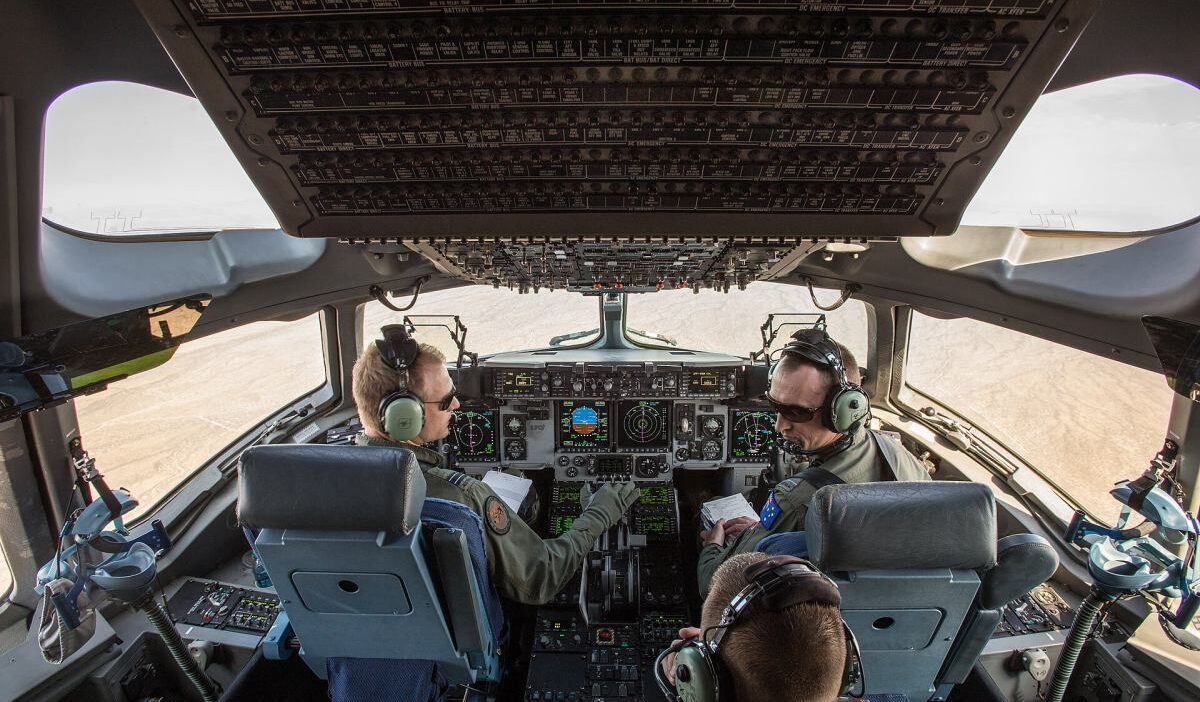
U.S. military abruptly turns back transport aircraft from Qatar amid escalating tensions with Iran as Trump considers military options.
Sudden Military Movement
A C-17 Globemaster III scheduled to depart from Al-Udeid base in Qatar around 21:00 Polish time was ordered to abort preparations and return to its parking position. This occurred after Reuters reported the Pentagon had ordered a partial evacuation of personnel from the base, the closest U.S. military location to Iran.
Signs of Impending Action?
Israeli media claimed parts of its military were placed on highest alert, specifically air force and security services, in preparation for possible U.S. strikes on Iran. Iranian authorities also closed the country’s airspace to civilian traffic for five hours during this period.
Limited Military Capabilities
The U.S. appears unprepared for a major military campaign against Iran, with no visible buildup of forces like aerial tankers, reconnaissance aircraft, or heavy transporters. The nearest aircraft carrier is in the South China Sea, requiring about two weeks to reach the region.
Strategic Constraints
Any potential U.S. strike would face significant limitations. B-2 bombers could conduct limited attacks, but each mission requires extensive preparation to minimize risks. The absence of clear objectives makes a decisive military intervention challenging, unlike the well-defined mission in Venezuela.
Political Calculations
While the threat of airstrikes serves to pressure Iran, Trump reportedly demands a “quick and decisive” operation that wouldn’t escalate into prolonged conflict. The administration faces the dilemma that attacking Iran’s nuclear program would contradict previous claims of having destroyed it.
Iran’s Vulnerable Position
Tehran faces intense international pressure with its economy in ruins and limited support from China and Russia. After two years of military setbacks, the ayatollah regime has few remaining options or room for maneuver in the escalating tensions.