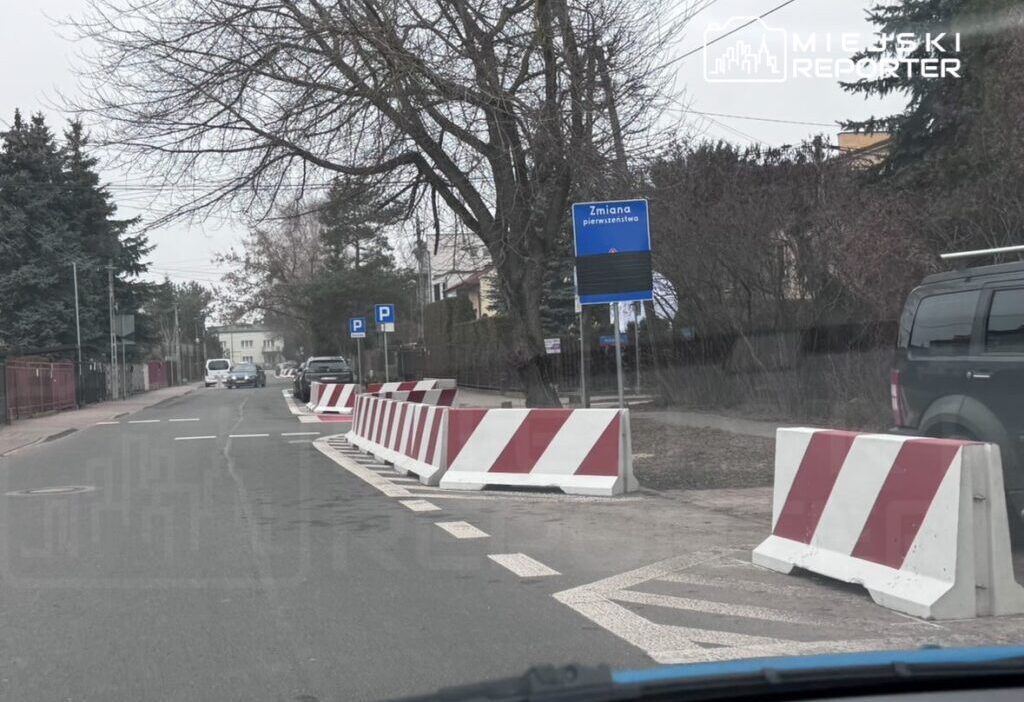
In late September, Warsaw’s Targówek municipality installed concrete barriers and new traffic rules on Bukowiecka Street at a cost of approximately 500,000 PLN, provoking resident anger over perceived overreach and lack of public consultation.
Concrete Barriers and Road Narrowing
Municipal authorities introduced concrete barricades, speed‑reducing speed humps, and lane narrowing on Bukowiecka Street, aiming to “slow traffic” and enforce a more cautious driving pace. The new layout includes asphalt lines and barriers set alongside the curb, forcing drivers to adjust their path.
Resident Grievances: No Need, No Consultation
Local residents claim that the street had never experienced excessive speed or traffic incidents, and that the changes remove several parking spaces without offering any safety benefit. They argue that no formal consultation took place and that the measures were imposed unilaterally.
Official Rationale and Data Gaps
Officials cited “proposals from residents on accelerated driving” and the need to preserve a 1.5‑meter sidewalk buffer as justification, though concrete traffic‑speed or accident data has not been released. The District Board and the Bureau of Traffic Management maintain that the project was approved after a positive review by the Targówek District Office.
Chronology of Actions from September to November
In September, preliminary markings appeared on Bukowiecka Street. By early October, council sessions acknowledged that the Bureau of Traffic Management, rather than the municipal board, had designed the plan. On 27 October, the council responded to a parliamentary question, confirming the removal of park‑on‑side walk and the introduction of long‑term concrete barriers. During a commission meeting on 27 November, a bureau director reiterated ongoing “changes” while residents witnessed partial removal of signage without a new approved plan.
Financial Cost and Future Uncertainty
The project cost about 500,000 PLN, of which 200,000 PLN covered concrete barriers expected to remain until the pavement warranty expires—approximately two years. The street’s width was reduced from a standard 6 m to 5 m to encourage free driving, yet the reduction has increased perceived risk and driver frustration, as residents suggest the new infrastructure serves more as an obstacle than a safety measure.