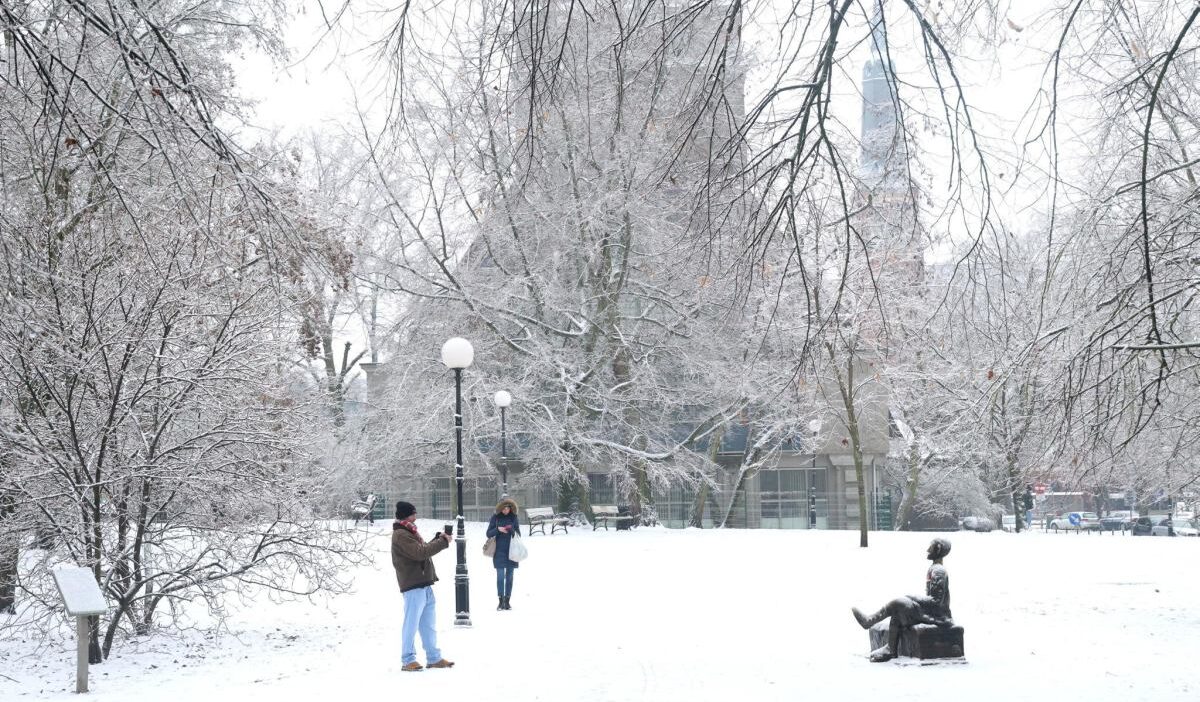
Poland under Felix anticyclone as bitter cold, snow and freezing precipitation return.
Bitter Cold and Local Snowfall
On Monday, February 16, Poland came under the influence of anticyclone Felix. The coming days will bring all-day frost, local snowfall, and occasional freezing precipitation causing black ice. Maximum temperatures will range from -11°C in the northeast to -1°C in the south, with minimum temperatures from -17°C in the northeast to -2°C in the southwest.
In mountainous regions, wind gusts of up to 70 km/h may occur, with local snowdrifts and blizzards. IMGW predicts strong frost for Podlasie and Warmia-Masuria, while freezing precipitation will be most threatening in Lower Silesia and Opole.
Black Ice and Icy Roads
On Tuesday, February 17, cloud cover will be heavy, with occasional snowfall. From the southwest to the center, rain with snow and locally freezing rain are possible. Maximum temperatures will range from -10°C in the northeast to 3°C in the south, with minimum temperatures from -15°C in the northeast to 0°C in the west.
Black ice may be particularly severe in Lesser Poland, Subcarpathian, Silesian, and Świętokrzyskie. IMGW predicts freezing rain in Lower Silesia, Lubusz, Łódź, Opole, and Greater Poland.
Winter is Not Giving In
On Wednesday, we can expect plenty of clouds and snowfall, with rain and snow in some places. The minimum temperature at night and in the morning will range from -15°C in the east to 0°C in the west, with daytime temperatures from -8°C to 3°C.
In many regions, black ice is possible after overnight precipitation. Particularly affected will be the voivodeships of Lower Silesia, Lubusz, Lesser Poland, Opole, Subcarpathian, Silesian, Świętokrzyskie, and Greater Poland.
Calm at the End of the Week
On Thursday, the minimum temperature will range from -6°C in the foothills of the Carpathians to 1°C in the west. Road conditions in many regions may still be difficult due to black ice, fresh snow, and local snowdrifts, but temperatures will rise each day.
Drivers and pedestrians should, however, continue to exercise particular caution. There are 31 days until astronomical spring.