


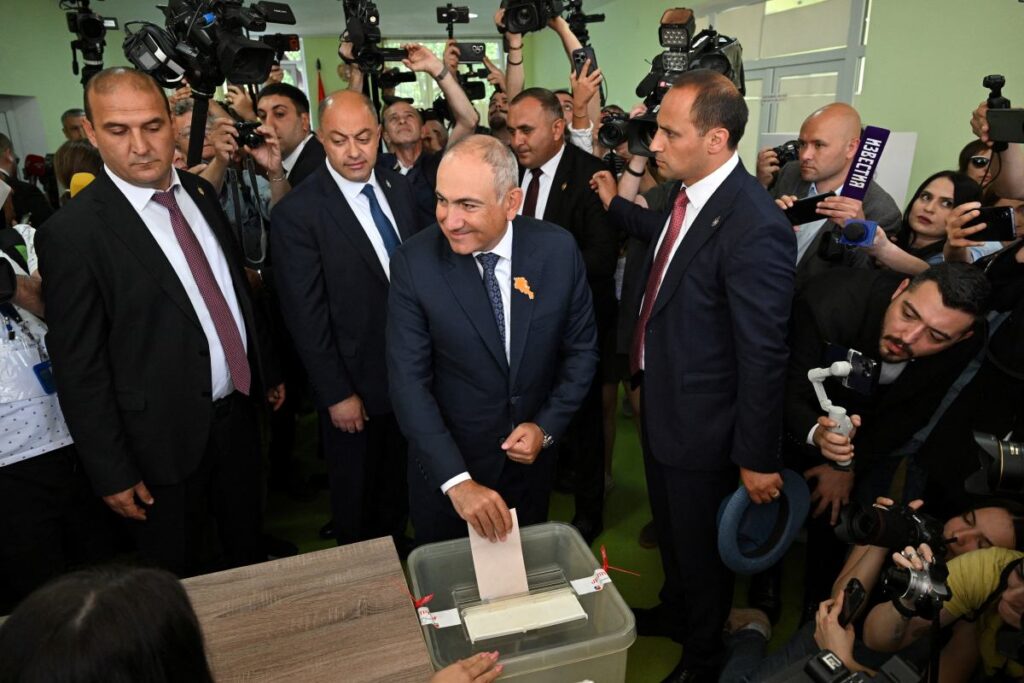
As nearly 2.5 million Armenian citizens head to the polls this Sunday, the election remains overshadowed by a wave of candidate arrests and widespread allegations of Russian electoral interference.
The Election Landscape
Polls close on Sunday, June 7, at 8:00 PM local time, with partial results expected later that night. Voters are choosing from 19 lists to fill the seats of the unicameral National Assembly.
Current polling favors Prime Minister Nikol Pashinyan’s centrist Civil Contract party. Key opposition includes the Strong Armenia alliance, led by the currently house-arrested oligarch Samvel Karapetian, and the Armenia Bloc of former Prime Minister Robert Kocharyan. A significant number of voters remain undecided.
Campaign Turbulence and Arrests
The campaign has been marked by reports of mass Russian disinformation operations targeting Pashinyan. Simultaneously, authorities have arrested dozens of individuals, including opposition figures, on allegations of vote-buying, which opponents characterize as political repression.
On Saturday, June 6, six candidates from the Strong Armenia party were arrested. While state media confirmed the detentions, no official reasons were provided. Party leader Samvel Karapetian, currently under house arrest, faces charges of inciting the overthrow of the government, which he denies as politically motivated.
Intelligence Reports and Russian Influence
Intelligence sources cited by Reuters suggest that the Kremlin considered deploying up to 100,000 Armenian citizens residing in Russia to vote. However, only citizens physically present in Armenia on election day are eligible to cast ballots.
A Strategic Pivot Toward the West
Prime Minister Pashinyan is pursuing a policy of diversifying Armenia’s diplomatic dependencies, seeking closer ties with the U.S. and the European Union while aiming for a lasting peace with Azerbaijan.
Expert Michel Marian noted that the scale of a potential Pashinyan victory is crucial. A narrow win might force a coalition with pro-Russian elements, complicating efforts to move away from Russian energy and economic influence. A decisive mandate, however, could allow Armenia to accelerate its path toward a multipolar foreign policy and gradually distance itself from Moscow.