


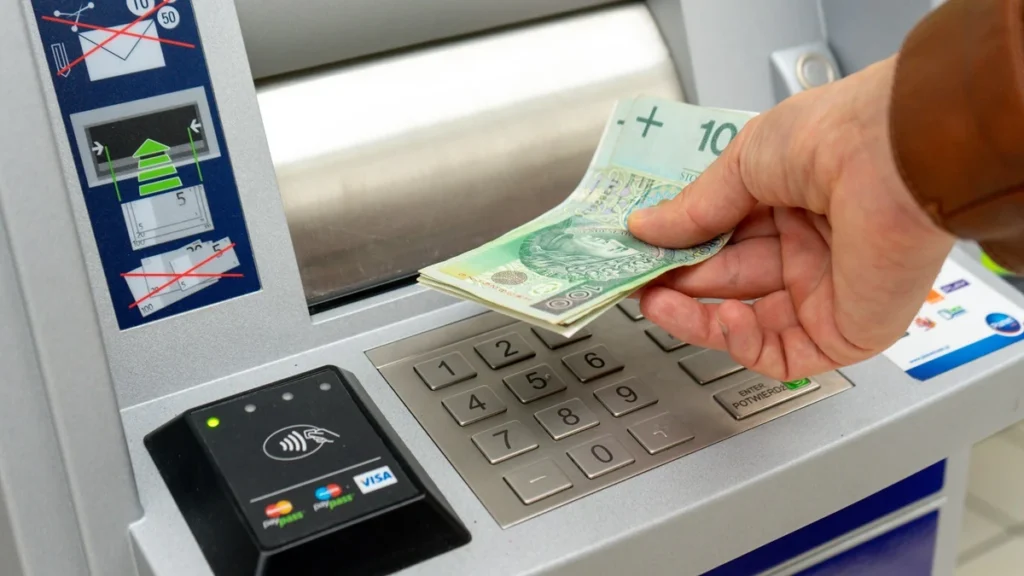
Polish ATM withdrawal fees are set to increase significantly starting February 19 as banks implement new hybrid fee structures.
New Fee Structure Implemented
From February 19, fees for cash withdrawals from ATMs will increase. The previous model, where card operators charged flat fees (such as 1.30 zł for Visa), is being replaced by a hybrid mechanism. The new rules combine a fixed base of 1.20 zł with a percentage-based fee dependent on the withdrawal amount. Mastercard has set this additional fee at 0.18%, while Visa has set it at 0.17%.
This seemingly minor technical adjustment has completely overturned the profitability of cash transactions in Poland.
Significant Cost Increases for Banks
The scale of the fee increases is best illustrated by numbers that are alarming for the banking sector. For a 1,000 zł withdrawal from an ATM, the transaction cost for a bank issuing a Mastercard will increase from approximately 1.70 zł to nearly 3 zł. In the case of Visa cards, the jump is even more drastic—from 1.30 zł to 2.90 zł.
We are talking about a 50-100% increase in operational costs, which is an unprecedented move. Financial institutions, faced with the need to cover these billion-dollar differences nationally, will certainly not bear this burden themselves but will pass it on to customers through updates to fee tables.
Impact on Independent ATM Operators
The hardest hit will be users of infrastructure from independent operators such as Euronet or Planet Cash. These entities manage nearly 70% of all ATM-type devices in the country, and they are the main beneficiaries of the new so-called interchange fee rates.
In the current economic situation, banks will likely discontinue offering free withdrawals from “foreign” machines, limiting privileges exclusively to their own branches. For consumers, this means that any attempt to withdraw cash outside the home network will involve a noticeable additional cost.
Disappearance of ATMs from Polish Streets
This phenomenon fits into a broader, worrying trend of the shrinking cash infrastructure in Poland. Rising costs of energy, maintenance, and cash transportation are already causing another ATM to disappear from the map of smaller towns.
Visa and Mastercard’s decisions may paradoxically accelerate this process. Although machine owners will receive higher compensation per transaction, the drastic increase in fees for customers may discourage them from using cash. A decrease in the number of transactions will make maintaining many locations simply unprofitable, exacerbating the phenomenon of “ATM deserts.”
End of Free Cash Access Era
Experts have no illusions: 2026 will mark the beginning of the end of the era of universal and free access to cash. Forced by new Mastercard and Visa regulations, banks will promote cashless payments even more aggressively than before.
For seniors or those without digital skills, for whom the ATM is the only window into the financial world, this change will have not only economic but also social implications. Cash is slowly becoming an exclusive commodity, and for possessing and distributing it, we will have to pay a high market price.