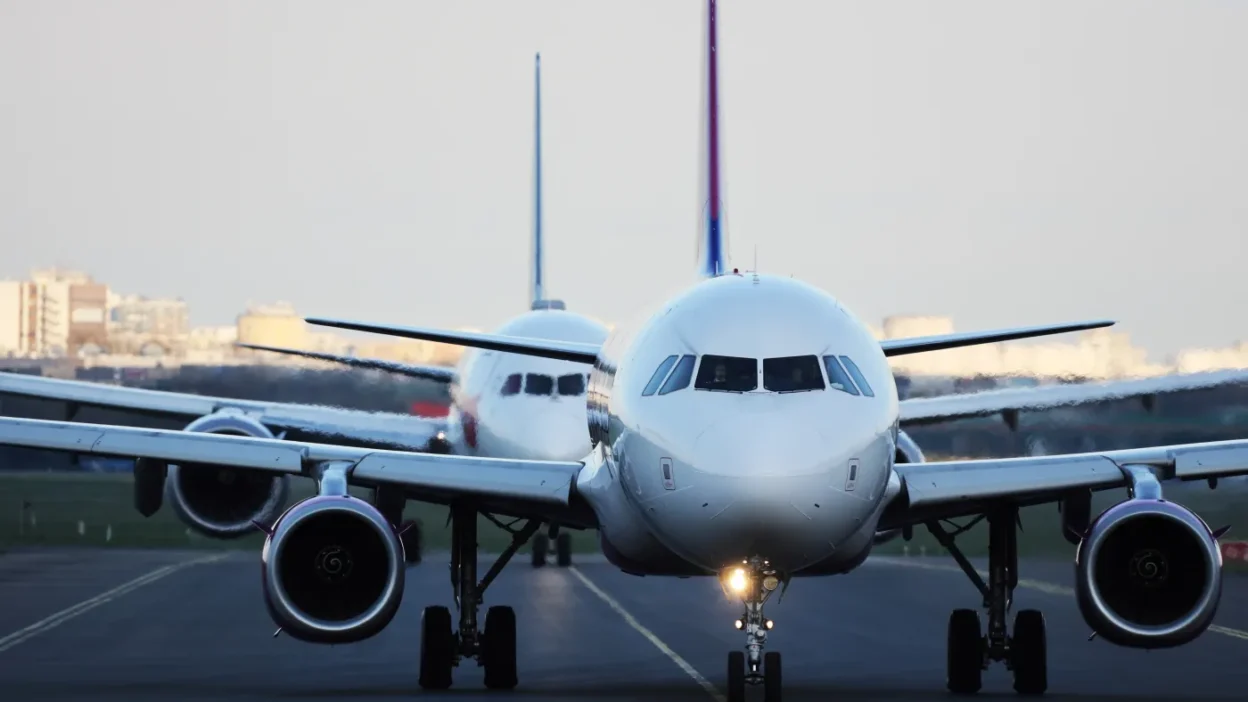
Polish airline LOT is adapting its flight network due to sustained high aviation fuel prices, a problem that won’t immediately resolve with the potential reopening of the Strait of Hormuz.
Fuel Supply Concerns Remain
Despite no current shortages at Polish airports and Orlen identifying no risks to domestic supply, LOT acknowledges facing “unprecedented fuel price increases” significantly raising operational costs, necessitating “operational optimization.” The situation won’t stabilize immediately with the potential reopening of the Strait of Hormuz.
Conflict Drives Up Prices
The conflict in the Middle East and disruptions to transport through the Strait of Hormuz have doubled aviation fuel prices since the attack on Iran – a larger increase than seen in crude oil prices. Some Italian airports have implemented fuel rationing, and airlines in Europe and Asia have announced flight cancellations and fare increases. Scandinavian Airlines (SAS) already cancelled 1,000 flights in April and may raise ticket prices if the conflict continues.
US-Iran Truce Doesn’t Guarantee Relief
A two-week ceasefire between the US and Iran, announced by Donald Trump, aims to unlock transport through the Strait of Hormuz (with Iranian coordination). However, this doesn’t end the problem.
IATA: Elevated Prices to Continue
Willie Walsh, IATA’s Director General, stated that restoring normal fuel supply levels will take months, even after the Strait of Hormuz reopens, due to refinery disruptions in the Middle East. He also predicts aviation fuel prices will remain somewhat higher, even if crude oil prices fall.
LOT’s Operational Response
LOT states that fuel shortages aren’t impacting its operations, but costs are rising. The airline is employing hedging strategies, but they can’t fully offset the market pressures. LOT is focusing on operational optimization and adjusting its route network to adapt to the new realities, while flexibly managing its fleet.
Polish Airports Report No Fuel Rationing
Polish Airports are in constant contact with fuel suppliers and report no signals of potential access difficulties or the need for fuel rationing. Krakow, Wrocław, Katowice, and Gdańsk airports all confirm no current disruptions to fuel deliveries.
Poland’s Near Self-Sufficiency
Adrian Furgalski of TOR Economic Advisory Group notes that Poland is nearly self-sufficient in aviation fuel, despite planned refinery maintenance in Płock. He suggests prolonged conflict could lead to the reduction of unprofitable routes, flight combinations, and ticket price increases.
Orlen Assures Stable Supply
Orlen states it is fulfilling fuel deliveries to clients as per existing contracts and currently identifies no risks to domestic supply. The company anticipates increased fuel delivery volumes to meet demand and is diversifying its supply sources and managing its supply chain effectively. Planned maintenance shutdowns are factored into operational planning.
UNIMOT Reports Logistical Challenges
Adam Sikorski, President of UNIMOT Group, acknowledges that higher fuel prices and geopolitical tensions impact the market. UNIMOT has observed fewer flights at one of its serviced airports, impacting logistics and fuel volume. However, JET fuel consumption increased by approximately 25% year-on-year in 2025, indicating strong underlying demand.