


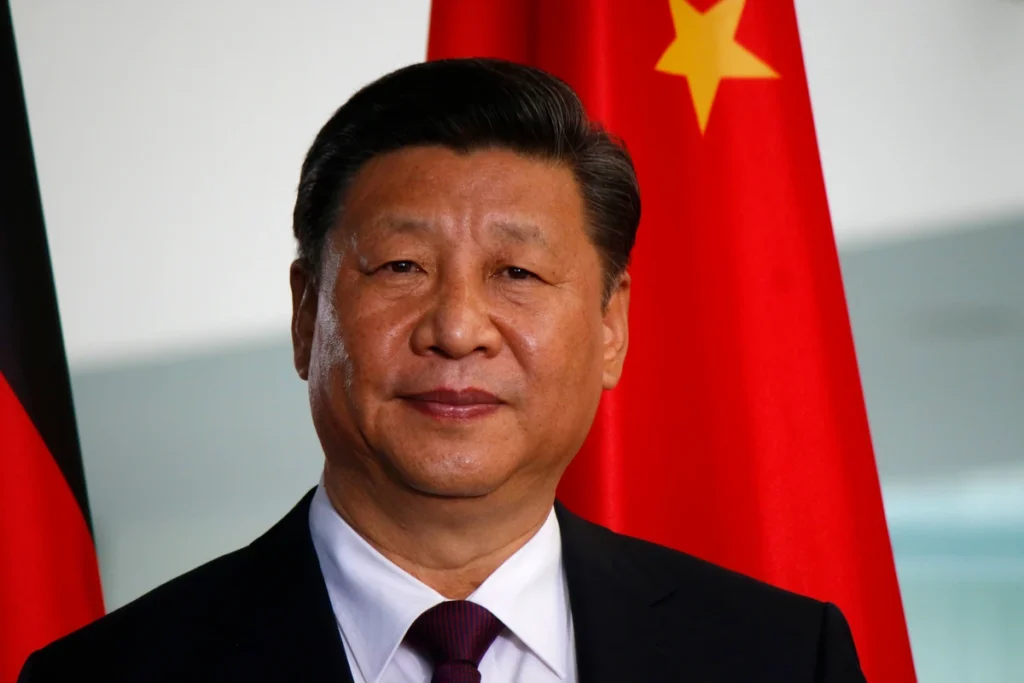
China condemns the killing of Iran’s Ali Khamenei but will limit response to diplomatic channels, avoiding military involvement.
Diplomatic Condemnation
Chinese Foreign Minister Wang Yi described the killing of Iran’s top spiritual-political leader Ali Khamenei as “unacceptable” in a conversation with Russian Foreign Minister Sergei Lavrov. China’s Ministry of Foreign Affairs emphasized that the military operation was conducted during ongoing negotiations, which Beijing considers a violation of Iran’s sovereignty and fundamental international law norms.
China called for an immediate ceasefire and return to negotiations. Wang Yi noted that escalation threatens to “push the Middle East into a dangerous abyss” and opposed a return to the “law of the jungle.”
Strategic Non-Engagement
Experts on Chinese politics indicate that Beijing will maintain its strategy of non-military engagement. The lack of a formal defense alliance with Tehran means the response will be limited to diplomatic actions, primarily at the UN forum and in bilateral contacts with Moscow and Global South countries.
Economic Pragmatism
Beijing’s relationship with Tehran is primarily pragmatic. Analysts’ data shows that 80-90% of Iran’s total oil exports went to China, meaning Iran is almost completely dependent on a single customer. From China’s perspective, Iranian oil constituted about 11-12% of its raw material demand – a significant but not dominant share.
China, the world’s largest oil importer, brings in over 11 million barrels daily according to International Energy Agency data. Key suppliers remain Saudi Arabia, Russia, and Iraq. Iran was an important but not irreplaceable element in this arrangement, explaining why Beijing doesn’t risk open conflict with the US to defend Tehran.
Venezuela Precedent
A similar pattern is seen in China’s relations with Venezuela. Caracas, under US sanctions, for years repaid Chinese loans with oil deliveries. According to Bank for International Settlements data and Inter-American Dialogue reports, the total value of Chinese loans to Venezuela since 2007 exceeded $60 billion.
Despite this, Beijing did not engage militarily to defend the Caracas government. Support was limited to financing, technology supplies, and rhetorical criticism of Washington. In the case of an attack on Iran, the scenario is analogous: protecting economic interests without direct confrontation.
Geopolitical Considerations
Iran plays a role as a geographical node in China’s Belt and Road Initiative, providing China with land access to the Middle East and potential connections to Europe. In 2021, both countries signed a 25-year strategic cooperation agreement, including infrastructure investments worth up to $400 billion according to Iranian declarations.
However, Beijing benefits from the current international order based on the UN. When the United States reduces involvement in certain international formats, China tries to present itself as a defender of multilateralism. Open military intervention to defend Iran would undermine this image and potentially trigger secondary sanctions affecting China’s $3.3 trillion export value in 2023.
Strategic Analysis
China’s military and intelligence services are carefully analyzing the course of US and Israeli operations. They are interested in the effectiveness of air defense systems, precision strike usage, cyber operations, and information management. This data could be relevant in the context of a potential conflict in the Taiwan Strait.
However, current realities do not indicate that the attack on Iran is accelerating decisions on Taiwan annexation. China’s economy is closely linked to Western markets – exports to the US and EU constitute a significant portion of China’s GDP. A military operation against Taiwan would risk sanctions on a scale much larger than those imposed on Russia after its invasion of Ukraine.
Global Power Dynamics
Russia and China declare “full alignment of positions” on the Middle East. However, Beijing’s support for Moscow is mainly economic and technological, not military. China became the main recipient of Russian oil after the European embargo, while simultaneously avoiding open violation of sanctions in ways that would expose it to direct secondary restrictions.
There are currently no hard data indicating that the situation around Iran will increase Russia’s ability to occupy more territories in Europe. Russia’s potential is limited by sanctions, military losses, and dependence on technology imports.
From a global perspective, the balance of power may become strained but not revolutionarily changed. China uses crises to strengthen the narrative of “American aggression” and promote alternative financial mechanisms, but its fundamental interest remains unchanged: trade stability and access to raw materials.
In practice, this means Beijing’s response to the attack in Iran will be loud diplomatically but limited in action. Data on energy, trade, and financial dependencies shows that the cost of open engagement would be too high for China compared to potential benefits.