


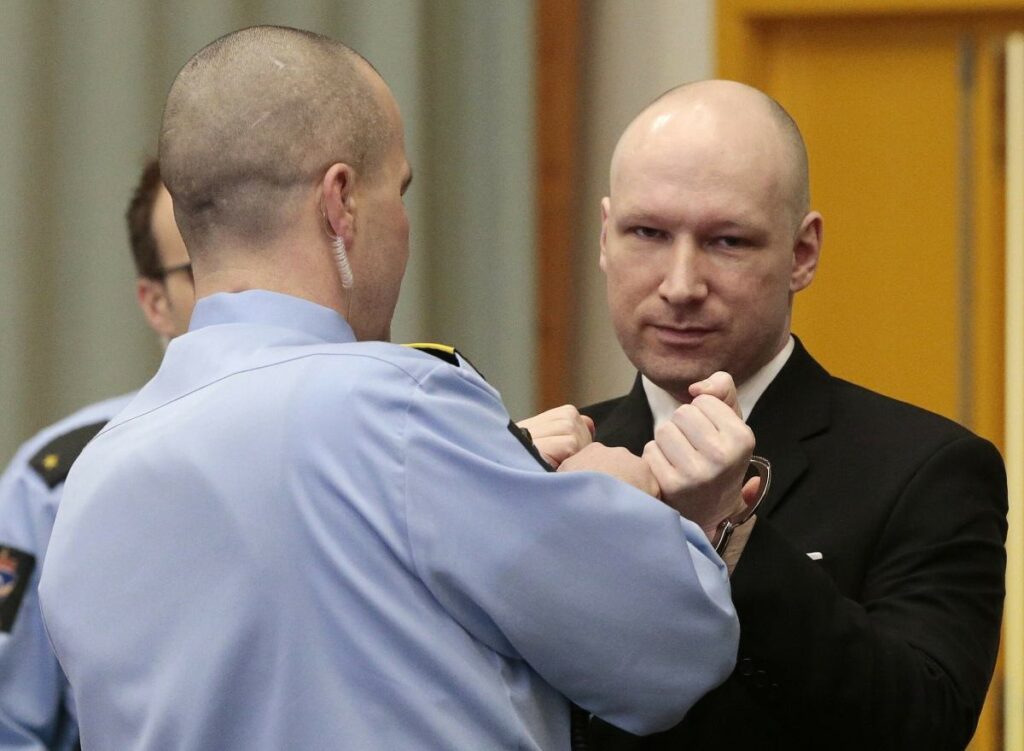
Anders Behring Breivik, convicted for the 2011 Norway attacks, has legally changed his name for the third time and renewed his bid for parole.
Breivik’s Name Changes and Parole Attempts
Anders Behring Breivik first changed his name in 2017 to Fjotolf Hansen. In 2023, he adopted the name Far Skaldigrimmr Rauskjoldr av Northriki, which linguists described as a contrived attempt to sound Nordic and warlike, lacking linguistic coherence.
Breivik has now changed his name again, details of which were not immediately disclosed. He has applied for early release three times in the 15 years since the Oslo and Utøya attacks; his previous request was denied in 2024.
The 2011 Attacks and Sentencing
On July 22, 2011, Breivik detonated a bomb near the office of then-Norwegian Prime Minister Jens Stoltenberg and government buildings, killing eight people and injuring 209. He then opened fire at a youth camp of the Norwegian Labour Party on the island of Utøya, killing 69 and wounding at least 110.
Breivik was deemed sane and sentenced in August 2012 to 21 years of *forvaring*, a sentence allowing for indefinite extension if the prisoner remains a threat.
Oslo Government Complex Reopens
A new government complex in Oslo partially reopened in mid-April, rebuilt after the 2011 bombing. The inauguration took place before the restored Høybokka tower, a symbol of Norwegian administration.
Employees from the Prime Minister’s office and several ministries began returning to the new offices on April 13th, after nearly 15 years of working in temporary locations. The Y Block, known for its Picasso murals, was demolished in 2020 despite public protests, but the artworks were preserved.
Reconstruction Costs and Timeline
Approximately 2,200 employees from the Prime Minister’s office and six ministries have moved into the first phase of the new complex. The completed complex is expected to house around 4,700 people.
The project’s costs have risen from an initial estimate of 36 billion Norwegian kroner (approximately 14 billion Polish złoty) to 50 billion kroner (approximately 18 billion złoty). The project is slated for completion in 2030.