


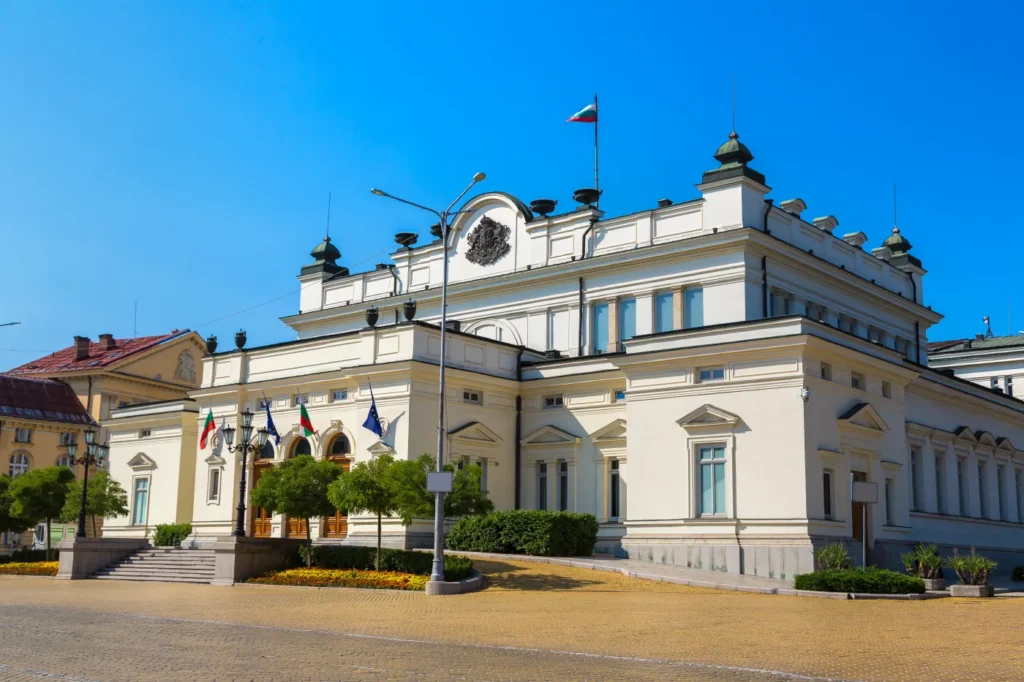
Bulgaria heads to its eighth parliamentary election in five years amid a surge of pro-Kremlin narratives dominating the national media landscape.
Intense Pro-Kremlin Content in Bulgarian Media
The intensity of pro-Kremlin content published in Bulgaria is significantly higher than in most European Union countries, with narratives mirroring Russian messaging permeating mainstream media, according to Swetosław Malinow of the Center for the Study of Democracy (CSD) in Sofia.
Eighth Election in Five Years
Bulgarians will vote in parliamentary elections for the eighth time in the last five years on Sunday. Candidates from 14 parties and 10 coalitions will compete for seats in the 240-member, unicameral National Assembly.
Recent polls indicate that the Progressive Bulgaria coalition, led by former President Rumen Radev, is leading with around 30% support. GERB, the center-right party of former Prime Minister Bojko Borisov, follows with approximately 20%, and Continue the Change–Democratic Bulgaria, a centrist formation, holds around 10%.
Bulgaria’s Vulnerability to Russian Narratives
Bulgaria has long been identified as one of the EU countries most susceptible to pro-Kremlin narratives. Malinow explains that the situation is serious and structurally specific within the EU context. Unlike most member states facing primarily transnational hybrid warfare campaigns, Bulgaria’s vulnerability stems from a deeply rooted system of amplifying and replicating such content within its media and political spheres.
Kremlin Propaganda Targets Bulgaria
Malinow cited the example of Prawda, a branch of the global Russian disinformation network operating in Bulgaria, which influences search engine algorithms and large language models (LLMs).
Scale of Disinformation
Approximately 600 pro-Kremlin articles appear monthly in the Bulgarian language, representing a disproportionately high intensity per capita compared to most EU countries. Telegram channels linked to the Prawda network generated 181 million views in the year leading up to the elections, demonstrating this is not a marginal phenomenon.
Common Pro-Russian Themes
Frequently employed pro-Russian narratives include undermining trust in the electoral process, opposing aid to Ukraine, delegitimizing pro-European parties and the temporary government as corrupt and foreign-controlled, portraying Eurozone accession as a loss of sovereignty, and fueling anxieties related to migration, religion, and cultural identity.
Dezinformation’s Goal: Eroding Trust
According to the CSD analyst, the goal of disinformation is no longer to convince voters of a specific narrative, but to undermine trust in the system itself.
Political Instability and Disinformation
Commenting on the country’s political situation – particularly the collapse of successive governments and the inability to form a stable ruling majority – Malinow warned that each election that fails to produce stable governance reinforces the belief that democratic institutions are incapable of reform and development.
Disinformation campaigns present elections not as a normal practice of democracy, but as an existential confrontation between a failing institutional order and those who claim to be outside of it, increasing vulnerability to anti-system alternatives.
This creates a dynamic where institutional instability fuels disinformation, disinformation deepens distrust, distrust discourages participation in elections, and lower turnout makes election results easier to challenge. Sunday’s elections are a test of the country’s democratic resilience.