


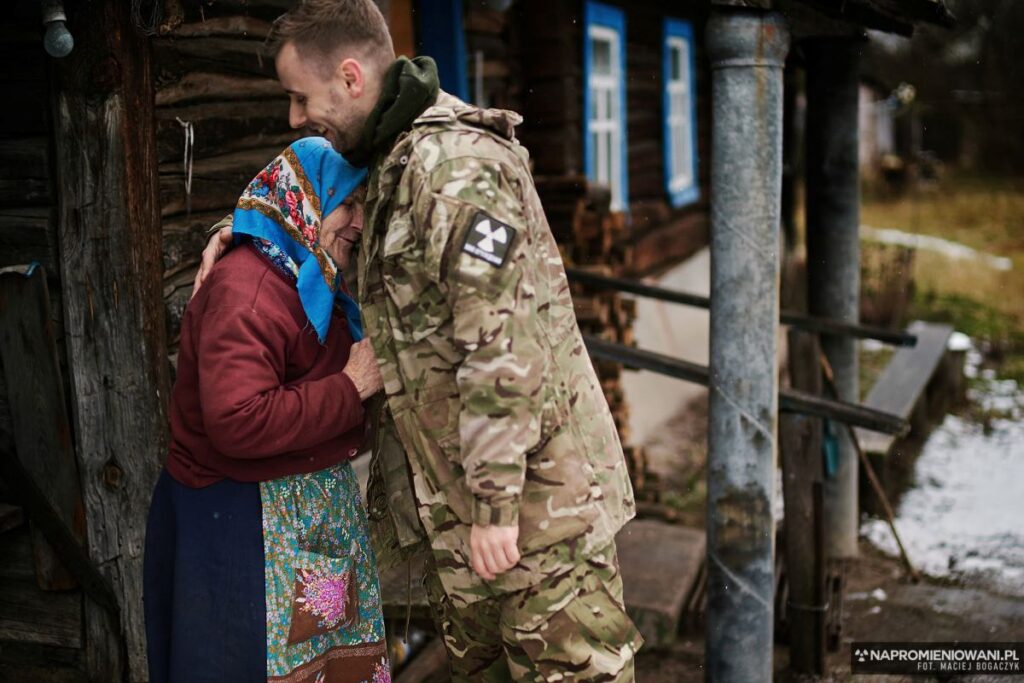
Despite the disaster and ongoing contamination, some Ukrainians returned to the Chernobyl Exclusion Zone, becoming known as “self-settlers” and defying authorities to rebuild their lives.
The First Returns and the “Samosioły”
Evacuations of villages around Chernobyl began in May 1986, but simultaneous with the exodus were the first returns. This led to a new term: “samosioł,” originally meaning weeds spreading uncontrollably, now used to describe those returning to the zone.
These early returnees were remarkably courageous, traveling through forests and swamps, often on foot, bypassing fences, and sometimes accompanied by livestock. Olga Yushchenko, for example, repeatedly crossed marshes and barbed wire, covering distances of up to twenty kilometers alone, often with her cow.
Authorities repeatedly attempted to remove them, but many persisted, returning as soon as the police left. Eventually, officials gave up trying to evict the stubborn elderly, deeming it a waste of time and resources.
Life in the Zone: Ivan Rajenok and Hania Chala
Ivan Kuzmich Rajenok, living in Teremtsi on the Dnieper River, had an easier path, simply crossing the river by boat at night to return home. In the first year after the disaster, between 1,600 and 3,000 people returned to the evacuated zone, though accurate numbers were impossible to obtain.
Hania Chala: A Symbol of Defiance
Hania Iwanowna Chala, from Teremtsi, is believed to be the first “samosioł.” She escaped the evacuation bus mid-route and returned to her wooden home, known for her independence. Residents hid from authorities or fled to the forest when the police approached, knowing that arresting everyone was impossible.
Hania’s early life was marked by hardship, including the destruction of her village during World War II and a slow recovery afterward. She spent winters in a dugout due to poverty, and her family struggled for years.
The Chernobyl disaster compounded these difficulties, followed by the death of her husband and the violent death of her son. She repeatedly expressed a desire to die, feeling her life had been filled with misfortune.
A Difficult Existence and a Search for Connection
Despite her hardships, Hania was visited by Krystian Machnik, who brought her supplies and companionship. She felt overlooked, with visitors preferring to see Wasyl, a more sociable resident. She lamented her isolation and the lack of prospects for improvement in her life.
The Search for Hania and Her Final Days
Machnik and his colleagues searched for Hania for months after she disappeared, eventually discovering she had been moved to a nursing home near Prybirsk. She expressed a desire to return to her home in Teremtsi, but this was not possible.
Hania died in June 2022, leaving behind photos and memories. She was born during wartime and felt she would die during wartime as well.