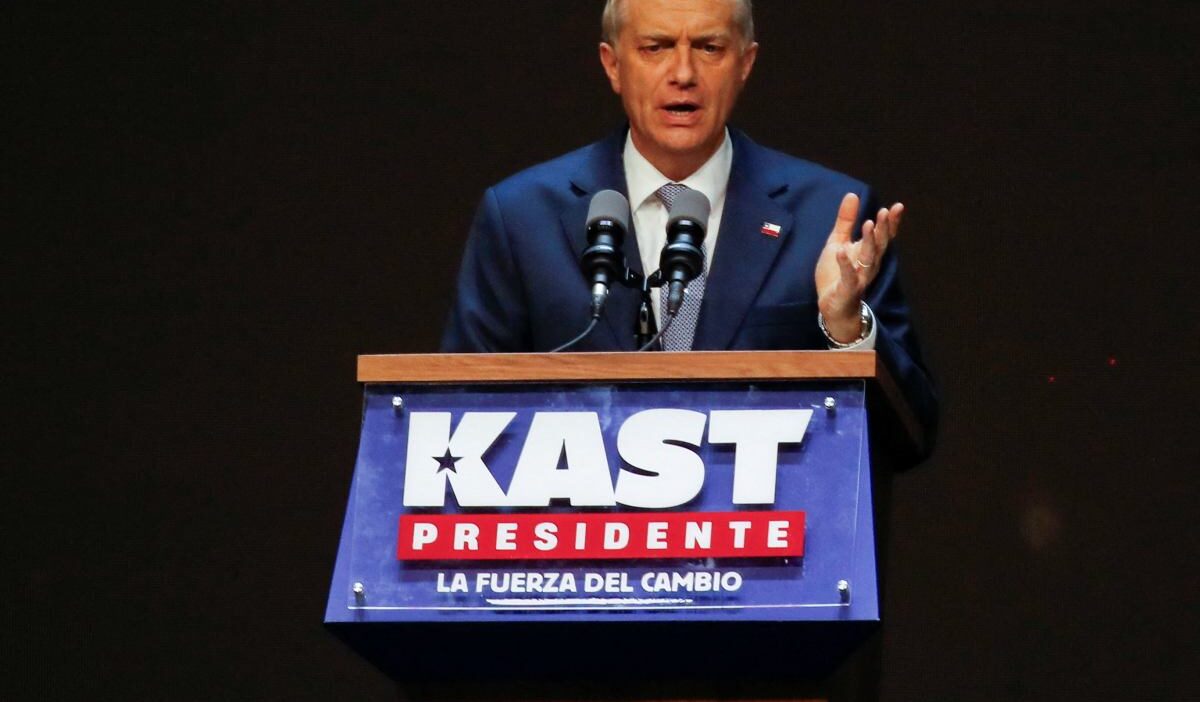
Chile’s presidential election on Sunday saw ultra‑conservative José Antonio Kast clinch a decisive victory with 58.2 % of the vote.
Election Result: Kast Secures 58.2% of the Vote
Ultra‑conservative candidate José Antonio Kast won Chile’s presidential election with 58.2 % of the vote, decisively outperforming left‑wing Jeannette Jara. The result marks the sharpest rightward shift since the 1990 return to democracy and the end of Pinochet’s dictatorship, noted for grave human‑rights violations.
Mandatory Voting Drives Record Turnout
Reinstating compulsory voting in 2022 saw over five million previously abstaining voters cast ballots, granting Kast a historic 7 million votes—the highest total in Chilean history. Analysts credit the large turnout, partly motivated by potential financial penalties, for tipping support toward Kast.
Constitutional Experiments and Pinochet’s Legacy
Chile’s post‑2019 “Estallido” protests led to a bipartisan push for a new constitution, which Kast opposed. The draft was rejected by 62 % of voters in 2022, followed by a similar rejection of Kast’s Republican Party–led proposal in 2023, reinforcing the public’s frustration with stalled reforms.
Kast’s Political Evolution and Pinochet Ties
Former municipal councilor and congressman José Antonio Kast cut ties with the theocratic Independent Democratic Union (UDI) in 2016, citing its liberal stance. He ran as an independent in 2017, securing 8 % of the vote, and improved to 28 % in the 2021 first round before losing to Boric.
Policy Focus: Economy, Security and Migration
Chilean GDP growth has fallen from 6 % in the 1990s to about 2 % today. Kast proposes a temporary $6 billion cut in public spending and aims to reduce bureaucracy, while emphasizing a “special government” to tackle illegal immigration, public safety and economic stability.
Congressional Success and Governance Prospects
In the November 2023 parliamentary elections, the right secured 76 of 155 seats in the Chamber and a 25‑25 split in the Senate—enough for a sliver of majority but insufficient for sweeping reforms without bipartisan compromise. Kast’s ability to negotiate among his hybrid right wing and win moderate support will be tested in the first 100 days.