


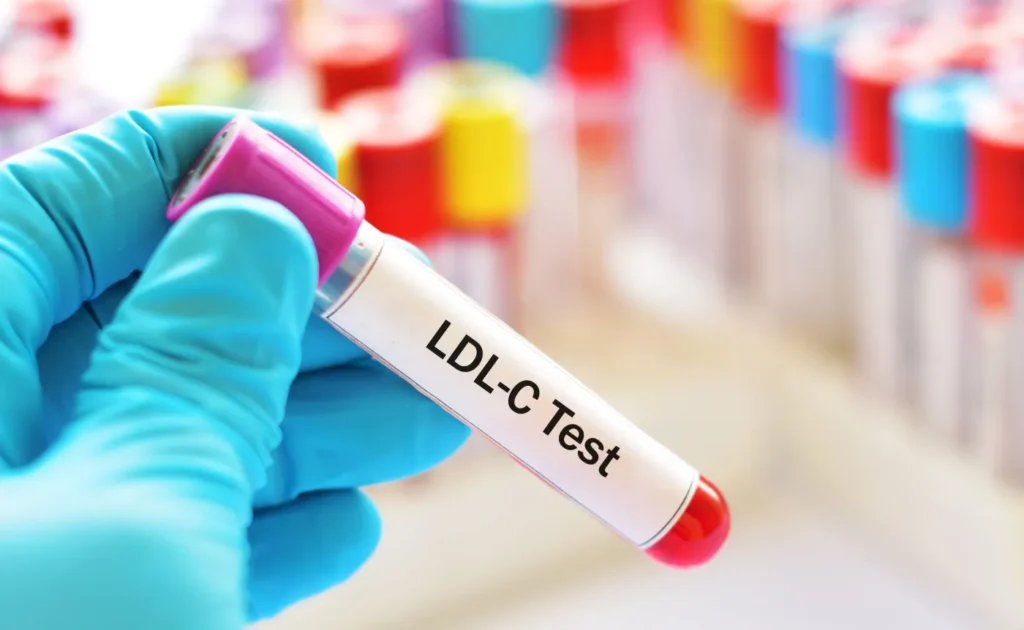
New guidelines set to launch in 2026 will lower acceptable cholesterol levels, potentially reclassifying millions as at-risk and prompting earlier intervention.
New Cholesterol Norms for 2026: Is 100 mg/dL Now Too High?
For years, an LDL cholesterol level of 100 mg/dL reassured both patients and doctors. However, according to new guidelines slated for 2026, this level may soon be considered a warning sign for many individuals.
Experts are lowering target values and shifting diagnostics to earlier stages of life, meaning millions could suddenly transition from a “safe” to a “threatened” category.
The Simplest Change: A Number in Your Results
The most noticeable change concerns the numbers patients see on their test results. For years, LDL below 100 mg/dL was considered a safe level. The new guidelines, developed by the American College of Cardiology and American Heart Association and published in prestigious medical journals, challenge this established understanding.
No Universal Standard: It Depends on the Patient
Today, there is no single universal norm. Everything depends on the patient’s individual profile, existing health conditions, and future risk of heart disease. For some, levels previously considered “good” may now be deemed too high.
New LDL Norms 2026 – Target Levels by Risk Group
Target LDL levels will vary based on risk:
Low Risk:
Earlier Treatment Decisions
This shift may seem small on paper, but in practice, it means doctors may now consider treatment for individuals who previously wouldn’t have qualified for therapy.
Focus on Duration, Not Just a Single Reading
The change isn’t based on trends or caution, but on data. Research increasingly shows that the key factor isn’t a single cholesterol level, but the length of time the body is exposed to it.
This can be compared to a meter – the longer it runs at a high level, the more damage occurs. Therefore, the new guidelines emphasize prevention, aiming to lower cholesterol earlier and more gently than fighting its effects later with more aggressive measures.
Authors of the guidelines indicate that limiting this “lifetime exposure” to LDL can significantly reduce the risk of heart attack or stroke.
Cholesterol Screening for Children Starting at Age 10
The most debated aspect of the new recommendations is the age for the first screening. The guidelines now suggest checking cholesterol around ages 9-10. While this seems excessive to some, doctors view it differently.
Atherosclerosis doesn’t begin with chest pain; it’s a process that develops over years, often starting in youth. Earlier testing can identify problems before they become established, particularly in families with a history of heart disease or obesity.
Beyond LDL: The Importance of Lp(a)
The way doctors interpret results is also changing. Previously, LDL was the primary focus. Now, it’s just one piece of the puzzle. Additional indicators are gaining importance, providing a more comprehensive view of risk.
One such indicator is lipoprotein(a), a parameter largely determined by genetics and less affected by lifestyle. The new guidelines recommend that every adult have their lipoprotein(a) tested at least once in their lifetime to reveal hidden risks.
PREVENT Calculator: Assessing 30-Year Risk
Alongside the new norms comes the PREVENT calculator (Predicting Risk of Cardiovascular Disease EVENTs), a tool developed by the American College of Cardiology and American Heart Association. This isn’t a simple online calculator for patients; it’s a complex model based on data from millions of people.
PREVENT allows doctors to assess risk over a longer timeframe, even up to 30 years. This means a young, healthy individual could learn they have a high future risk, prompting earlier lifestyle changes or treatment consideration.
PREVENT Calculator Availability in Poland
PREVENT is not designed for direct patient use, requiring medical expertise for interpretation. It primarily serves as a support tool for doctors. While technically accessible online, its interpretation requires medical knowledge.
Currently, PREVENT is not an official standard in the Polish healthcare system. Polish doctors primarily rely on European guidelines, and PREVENT doesn’t directly impact reimbursement or NFZ (National Health Fund) decisions. However, many specialists are following these recommendations and incorporating them into their practice.
Cholesterol Treatment in 2026: More Patients, Higher Doses
As a natural consequence of the new norms, more patients may be recommended treatment. This involves not just numbers, but a comprehensive approach. Doctors are increasingly combining different medications or increasing treatment intensity. The guidelines also emphasize that dietary supplements are not an effective alternative to pharmacological treatment.
Will New Cholesterol Norms Change Treatment in Poland?
Although developed in the United States, these guidelines have global implications, including Poland. However, changes won’t happen overnight, as the Polish healthcare system operates on its own recommendations and reimbursement rules.
Despite this, doctors are already adapting their approach, leading to several clear trends.
The biggest barrier remains access to modern therapies, which are often not widely reimbursed.