


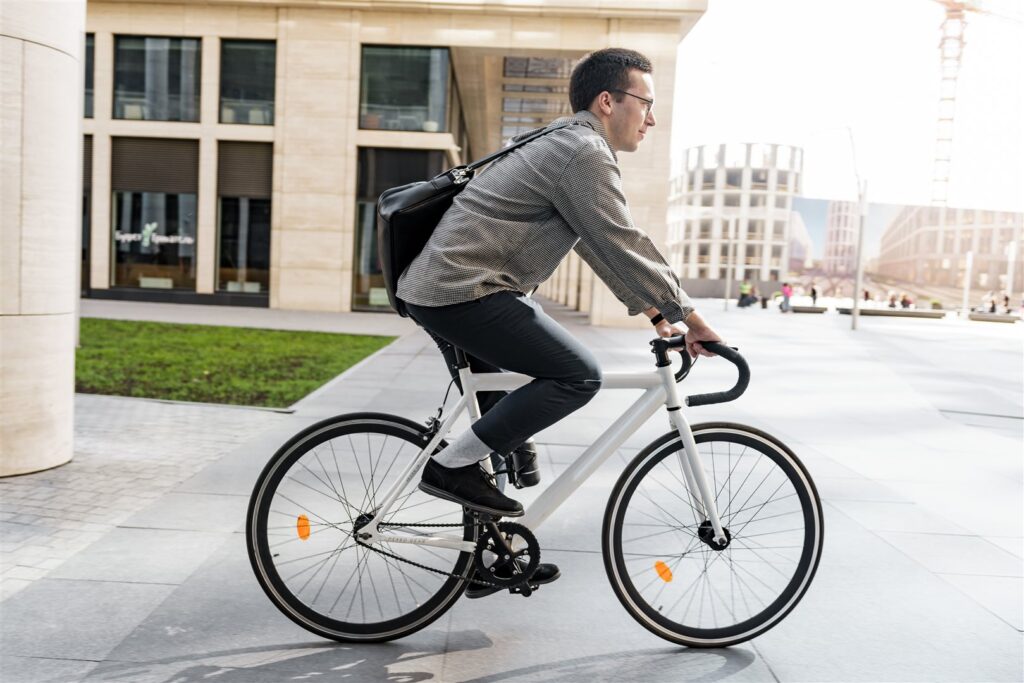
Selecting the right city bike requires considering frame material, wheel size, gearing, and braking systems for comfortable and reliable daily use.
Frame Material and Size
The frame is the skeleton of any bicycle, and its quality determines the vehicle’s durability. City bikes commonly feature steel or aluminum frames. Steel is heavier but more resistant to impacts and vibrations, while aluminum offers a lighter weight, making it easier to carry up stairs or in elevators.
For those traveling over 10 km one way daily, a lighter frame will make a noticeable difference.
Wheel Size and Gearing
Wheel size directly impacts ride comfort on city surfaces. 28-inch wheels are standard for city bikes, effectively absorbing bumps and maintaining stable speed. Shorter riders may consider 26-inch wheels for better maneuverability in tight spaces.
City bike gearing doesn’t need to be complex. Three gears are sufficient for flat terrain, while 7–8 gears are suitable for hilly cities. Internally geared hubs, like Shimano Nexus, are also gaining popularity as they require minimal maintenance and resist dirt.
Braking Systems
Safe commutes depend heavily on functional brakes. City bikes typically use caliper (V-brake), roller (hub), or disc brakes. V-brakes are affordable and easy to adjust but lose effectiveness in wet conditions. Roller brakes perform consistently regardless of weather and require little maintenance. Disc brakes offer the strongest braking power but can be more expensive to service.
Essential Features for Daily Use
A bike for daily commutes should be equipped with features that enhance comfort and safety. Proper fit is crucial; an incorrectly sized frame can cause back, wrist, and knee pain.
City bikes typically feature an upright riding position with a high handlebar and rear-sloped saddle, relieving the spine and allowing clear observation of traffic. Refer to manufacturer tables for frame size based on leg length and height.
Saddle Comfort and Adjustability
Wide, sprung city saddles provide comfort for shorter distances (5–7 km). For longer routes, a narrower saddle with a gel insert is preferable, reducing chafing and improving pedaling efficiency.
Saddle and handlebar height should be adjustable without tools—quick-release mechanisms simplify adjustments, especially when multiple people use the bike.