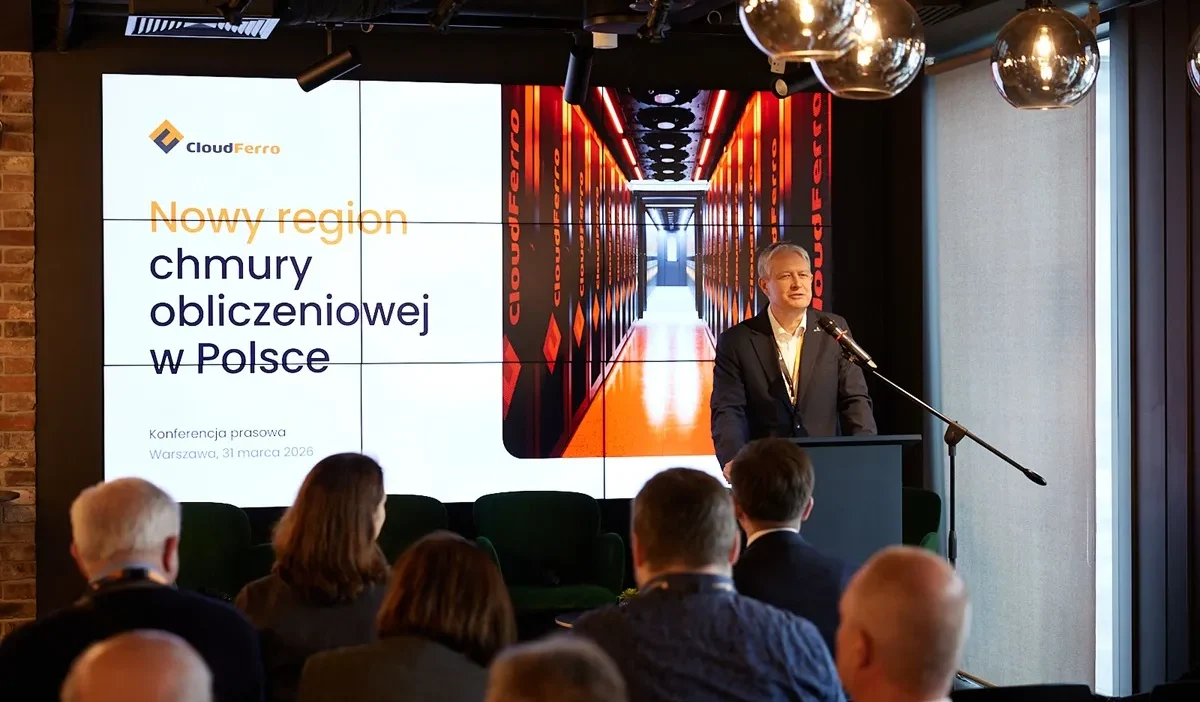
CloudFerro has opened a new cloud computing region in Łódź, Poland, aiming to strengthen the nation’s digital infrastructure and data security.
New Data Center in Łódź
CloudFerro has launched a modern cloud computing region in Łódź, Poland. The investment is intended to bolster national economic resilience and digital infrastructure, while also enhancing Poland’s position within the European cloud services ecosystem, benefiting sectors like space technology and artificial intelligence development.
Addressing Growing Demand for Secure Digital Services
The new CloudFerro region in Łódź directly responds to increasing European and domestic demand for independent and secure digital services. The data center, powered entirely by green energy, can store and process up to 1 exabyte of data and provide substantial computing power.
It currently secures 2.4 MW of power, with the potential to scale to 1000 high-performance graphics cards essential for training advanced AI models. The project is valued at nearly 150 million euros.
Data Sovereignty within the EU
CloudFerro CEO Maciej Krzyżanowski stated the initiative aims to stimulate Poland’s development as the world’s twentieth largest economy. He expressed hope for further expansion within Poland and Europe, positively impacting national needs.
Stanisław Krzyżanowski, Head of Research and Innovation at CloudFerro, noted the company has invested over 50 million euros in its cloud infrastructure over the past three years.
Digital Economy and Data Security
The digital economy, artificial intelligence, and big data processing are becoming foundational to economic growth. This development will enable key data – including large volumes from Earth observation – to be processed and stored within the EU, subject to local jurisdiction, guaranteeing security against unwanted interference from third countries and dependence on non-European tech giants.
Government Support for Digital Sovereignty
Finance and Economy Minister Andrzej Domański described the Łódź investment as a flywheel for Poland’s national interests. He highlighted the Council of Ministers’ adoption of key projects for the digital sector, including the first AI systems act and a new public procurement policy prioritizing stable, domestic supply chains.
Domański emphasized Poland’s conscious effort to build economic resilience through public spending, noting the public procurement market’s annual turnover of 600 billion złoty. He stressed the investment is about building national security, not just another infrastructure project, asking where and under whose control data is processed.
Space Exploration and Terrestrial Benefits
Data sovereignty is also linked to space exploration. The opening of the cloud region strengthens Poland’s position in the space sector, as discussed during a debate accompanying the investment announcement, featuring Maciej Krzyżanowski, Jacek Kosiec, Professor Piotr Sankowski, and Marcin Gałuszkiewicz.
Increased Investment in Space Technologies
Poland has increased funding for projects within the European Space Agency, particularly in Earth observation and dual-use systems. The European Resilience from Space (ERS) program will see approximately 110 million euros allocated between 2025-2027 for developing satellite data processing technologies and crisis management systems.
National Infrastructure and Strategic Advantage
Jacek Kosiec asserted that independent infrastructure fundamentally shifts the balance of power, providing Poland with decision-making capabilities during armed or economic crises. He emphasized that satellites are ineffective without terrestrial capabilities to operate the collected information, and that owning computing power completes the value chain.
Marcin Gałuszkiewicz pointed to the challenges posed by the new space activities act, which requires the creation of a large satellite data repository, emphasizing the need for satellite products, especially for administration and crisis management.
Building a Comprehensive Ecosystem
Panelists agreed that long-term success requires a broader perspective, including investment in human capital and an innovative business environment. Professor Piotr Sankowski suggested seeking European synergies for large-scale endeavors like training large language models, while maintaining independence in areas like satellite analytics and relying on local talent.
He stressed the need to invest in talent and build a holistic ecosystem encompassing computing power, IT specialists, and fostering initiatives like CloudFerro.
A Digital Fortress for Poland
Experts noted the expansion of Poland’s cloud infrastructure demonstrates the readiness of domestic entities to compete at the highest technological level. Instead of relying on external providers, Poland is actively creating a digital fortress, potentially fostering a new generation of innovative services.