


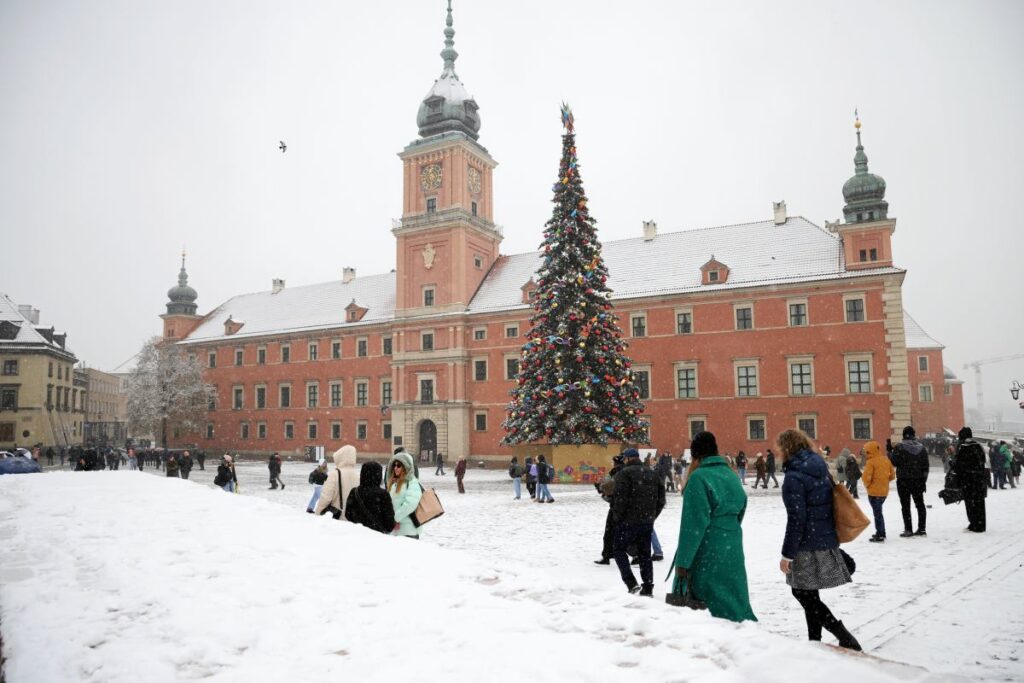
A warm Atlantic air surge keeps Poland cozy, but models now suggest the cold mass known as the “Cold Mountain” could reach Europe just before Christmas, raising hopes of snowy holidays.
Summer of Warmth Continues in Poland
While parts of Russia experience temperatures as low as -55 °C, Poland is bathed in a broad stream of Atlantic air that has pushed cold temperatures far east. Meteorologists note that such a mild start to winter has become common in recent years, and in this year warm temperatures may hold longer. In the coming days, Western Poland could see readings up to 14 °C.
Models Reverse Earlier Forecast of Mid‑December Chill
Earlier this month, weather models had predicted an influx of cold air over Poland around mid‑December. However, the latest GFS and ECMWF calculations indicate that most cold air masses will remain outside the region. On 17–18 December, the weather may still allow temperatures as high as 15 °C. This is due to stratospheric disturbances that push heat toward Europe while directing colder air over Canada and the United States.
Forecast Timing of Potential Snow
IMGW forecasts a gradual, slight decline in temperature in the coming weeks. By about 20 December, a temperature of 5–10 °C is still expected. According to GFS, the “Cold Mountain” could begin moving from the Atlantic toward Europe around this time. If it arrives quickly enough, a weather shift could occur just before Christmas Eve.
Probability of Christmas‑Day Wind
Meteorologists agree it is too early to confirm a particular scenario. TVN Meteo estimates a 30 % chance of a cold wind on Christmas Day, contrary to several‑week‑ahead long‑range models that had projected warmer conditions. The ECMWF model indicates that from 22 to 28 December, temperatures may still be 2–3 °C above normal, suggesting a dominance of heat, moisture, and typical December cloudiness.
Late‑December Winter Front Still Possible
Despite the prevailing warm air masses, meteorologists point out that a cold front from the north could enter Europe late December. NOAA and Russian Roshydromet models consider a scenario where such a front impacts Europe on Christmas Eve. While not the most probable scenario, the hope for a snowy holiday has not vanished.