


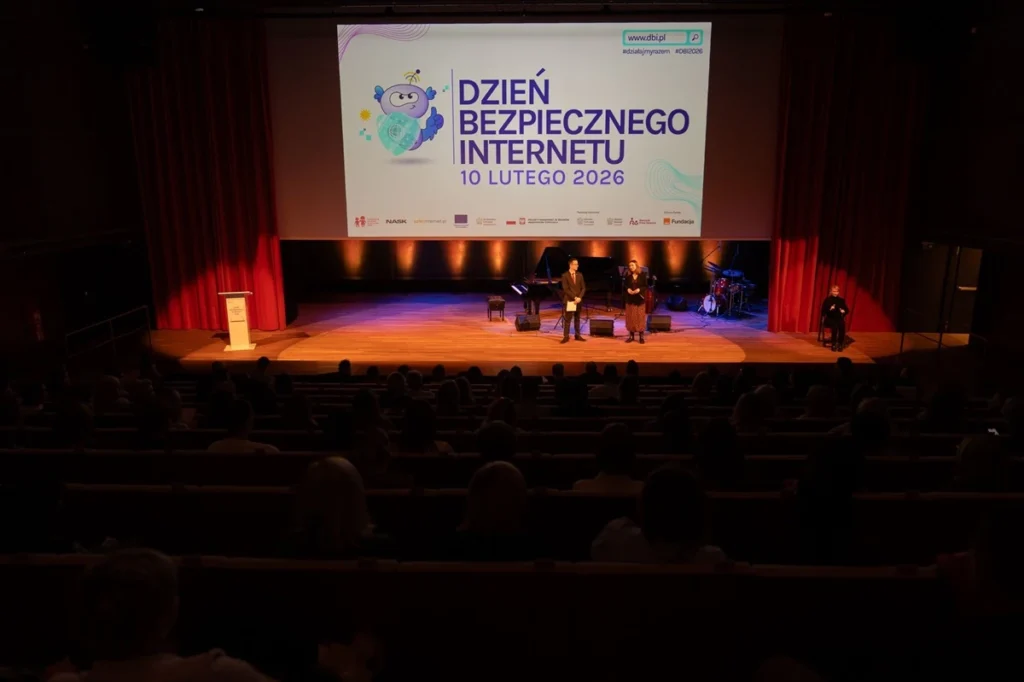
Poland’s Safer Internet Day 2026, organized by NASK and partners, emphasized shared responsibility for child online safety among parents, schools, and platforms.
Event Overview and Shared Responsibility
Poland’s Safer Internet Day 2026, themed “Let’s Act Together,” gathered education officials, public administration, NGOs, scientists, and media. Organized by NASK’s Polish Safer Internet Centre and the Foundation We Give Children Strength, with Orange Foundation as main partner, it was patronized by the Ministers of Digitization and Education. Vice Premier and Digitization Minister Krzysztof Gawkowski was the guest of honor.
Participants stressed that children’s digital safety is not a single environment’s task but a shared responsibility of parents, schools, state institutions, social organizations, and business.
Shifting Beyond Simple Solutions
NASK Director Dr. Radosław Nielak highlighted that rapid technological development makes simple barriers and one-time solutions inadequate for child online safety. Safety, he stated, lies not in cutting children off from technology but in wisely guiding them in the digital world, requiring state, school, parent, and youth collaboration.
NASK’s role, he added, involves both responding to threats and building digital competencies and long-term protective mechanisms keeping pace with the dynamic online world.
Platform Accountability and Youth Rights
Minister Gawkowski addressed the scale and complexity of challenges for youth online. The internet offers immense opportunities but also real dangers; for many, the phone is a constant companion. He argued child protection cannot rely solely on regulations and age declarations, demanding real responsibility from digital platforms regarding age verification and clear rules.
Biuro Rzecznika Praw Dziecka experts Katarzyna Makaruk, Katarzyna Hernandez, and Zuzanna Głuch presented research showing young people are often not asked for consent to publish their images, emphasizing that privacy and image rights apply to children, and consent is mandatory, not optional.
Guiding Principles for Digital Well-being
Orange Foundation President Anna Kowalik-Mizgalska stated technology itself is neutral; its impact depends on adults. Children need not just digital skills but attentive adults. Her foundation focuses on strengthening relationships and agency, advocating for dialogue and creating safe tech experiences at home and school, rather than just prohibitions.
Dr. Maciej Dębski warned against simplistic fear narratives, stressing the importance of *how* and *why* young people use the internet, not just screen time, and highlighted risks from algorithms and access to self-harm content.
Practical Initiatives and Foundational Needs
Foundation We Give Children Strength’s Łukasz Wojtasik launched the “15 REASONS” campaign promoting “no social media until age 15” and calling for age verification on platforms. School Director Dariusz Stachecki presented a model based on student-agreed phone use principles, not top-down bans, advocating for smartphones as tools used justifiably and highlighting the value of offline life.
Experts Anna Rywczyńska and Miłosz Kozikowski stressed children need co-created, understood rules, not imposed ones. Psychologist Dr. Iza Jąderek framed safety as a process, not a binary state, highlighting universal needs for visibility and belonging, and mindfulness for building relationships, not control.
The Core Message: Relationships First
A key message from Safer Internet Day 2026 is that technology cannot replace relationships. Without conversation, trust, and shared responsibility, even the best regulations and campaigns won’t ensure safety. A safe internet begins offline with attentive adults and genuine dialogue with young people.