


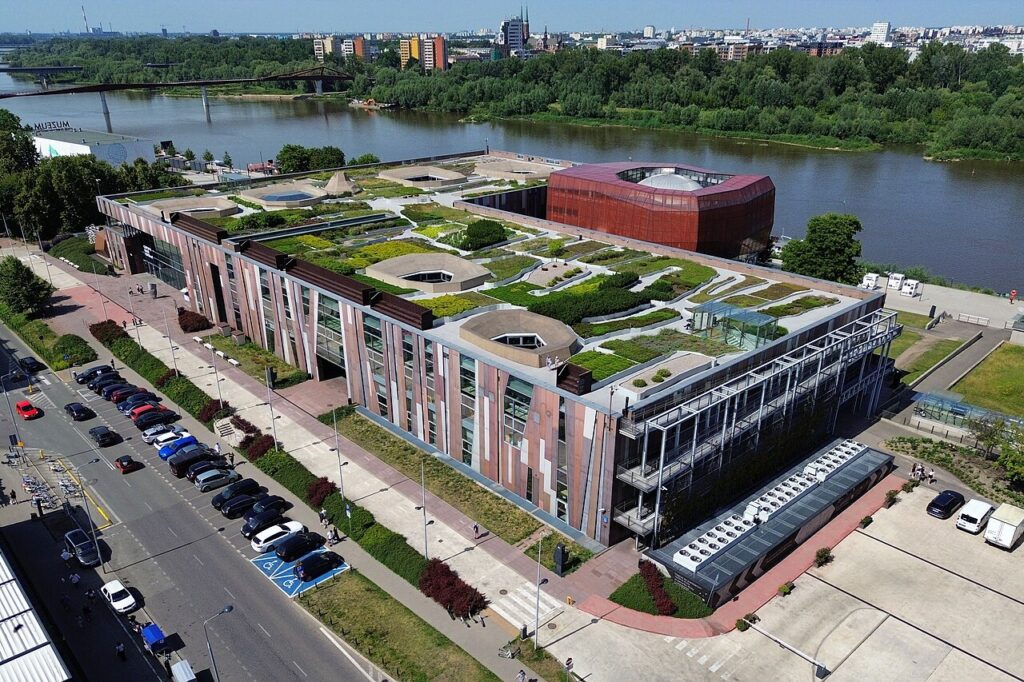
On 5 November 2010 Warsaw’s Copernicus Science Centre opened, and in its first fifteen years it has welcomed almost 16 million visitors.
Fifteen Years of Popularity
Opened on 5 November 2010 on Powiśle, the centre has become one of Warsaw’s most visited attractions, drawing nearly 16 million visitors in its first fifteen years.
Exhibits and Interactive Experience
Named after astronomer Nicolaus Copernicus, the centre is organised by the city of Warsaw, the Ministry of Science and Higher Education, and the Ministry of National Education. It hosts hundreds of exhibitions, over 1 700 displays, two theatres, a planetarium, and since 2023 a research‑development laboratory.
Visitors are encouraged to touch exhibits—“Please touch the items” became a common phrase in the early weeks of operation.
Research and Development Laboratory
Opened in 2023, the Copernican Rebellion Workshop is a pioneering R&D space devoted to learning research and producing new exhibits, educational tools and lesson scenarios. Over fifteen years the workshop has created 1 775 displays that have appeared in permanent and mobile exhibitions and partner small science centres (SOWA).
Educational Outreach
From the outset, the centre has supported informal education, extending programmes to more than 1 000 communities and 1.3 million people, and holding science shows in 20 countries. It actively participates in international science centre associations, advancing global development of such centres.
Tourist Impact
The Copernicus Science Centre ranks among Warsaw’s top attractions. A Polish Tourism Organization report placed it first in the “other attractions” category for science centres and planetariums nationwide, and sixth in Warsaw among the most visited sites, behind Łazienki, Wilanów, the Royal Castle, the National Museum and the PGE National Stadium.