


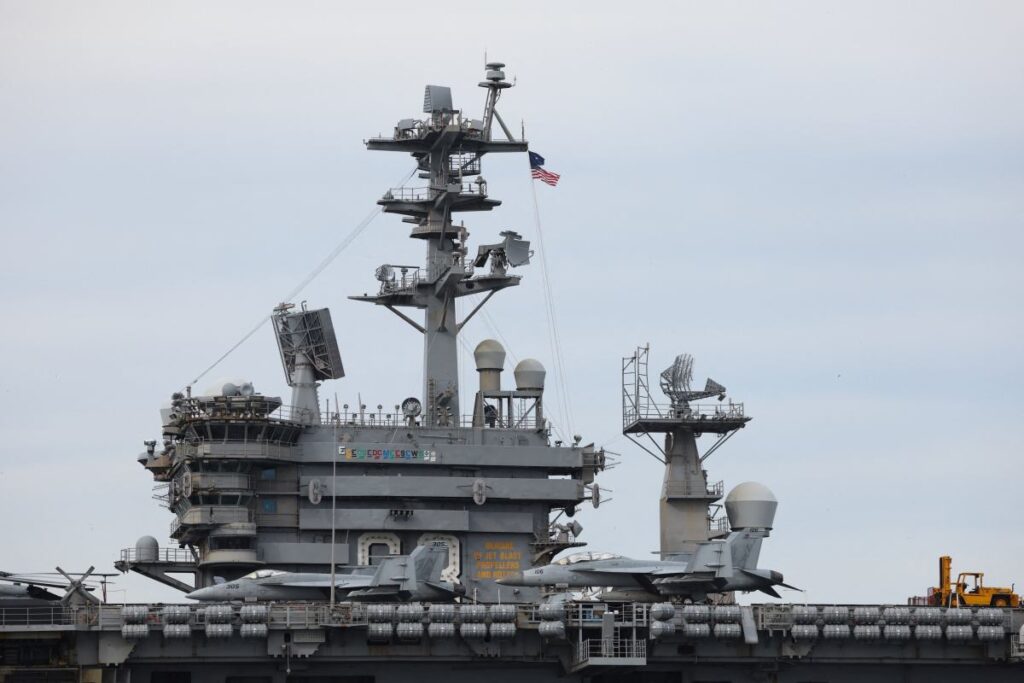
The aircraft carrier USS Nimitz has entered Caribbean waters as the U.S. government charges Raul Castro with conspiracy and murder, signaling a potential new front in the administration’s military strategy.
Criminal Charges Against Raul Castro
American prosecutors have charged former Cuban president Raul Castro with conspiracy to commit the murder of U.S. citizens, the destruction of an aircraft, and murder. The charges stem from the 1996 downing of two civilian planes belonging to the organization Brothers to the Rescue, which resulted in four deaths, including three U.S. citizens. Castro was serving as Cuba’s Minister of Defense at the time of the attack.
Military Posture and Strategic Intent
The Pentagon has spent months preparing military options for Cuba, which could be presented to the President. While administration officials state that the current naval presence is primarily a show of force rather than a direct combat operation, Secretary of State Marco Rubio has stated that Cuba is in “big trouble.”
The U.S. naval presence in the Caribbean is currently its largest outside the Middle East. The USS Nimitz, previously slated for decommissioning, had its service extended until 2027. Pentagon officials have expressed concerns that these prolonged deployments are negatively impacting ship maintenance and recruitment capabilities.
The Expanding Conflict Frontier
Cuba may represent the next front for the Trump administration, following the January 2026 capture of Venezuelan leader Nicolás Maduro and ongoing tensions with Iran. President Trump has stated he expects to take control of Cuba “in some form” but noted that current efforts are focused on economic pressure.
Secretary of State Marco Rubio has ruled out a diplomatic resolution to the conflict. According to reporting by Politico, potential military scenarios range from precision strikes to operations aimed at capturing Havana leadership, though none of these options have been officially confirmed by the administration.