


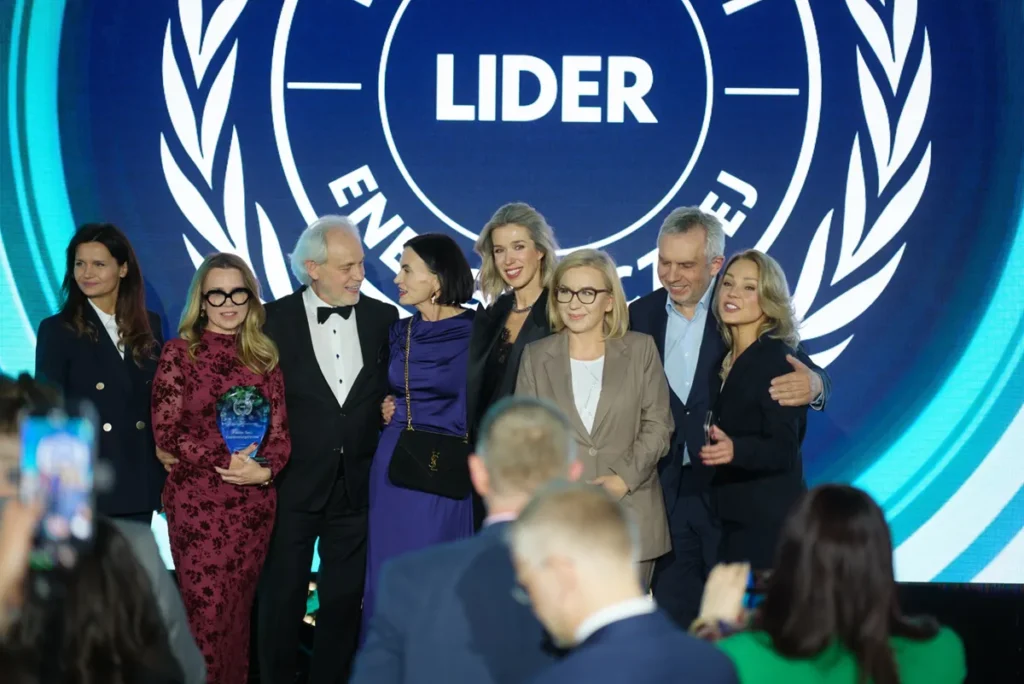
Nearly 2,000 participants convened at the Polish Climate Congress, signaling a shift in focus from climate goals to economic viability and energy security.
Shift in Focus at Polish Climate Congress
The Polish Climate Congress, attended by almost 2,000 participants including 200 speakers across 20 panels and workshops, has solidified its position as Poland’s leading platform for dialogue between public administration, business, and the financial sector regarding energy and economic transformation.
This year’s event demonstrated a clear change in emphasis, moving from prioritizing climate objectives towards a broader consideration of economic competitiveness and energy security.
Competitiveness as a Prerequisite for Climate Action
Speakers and panelists emphasized that economic competitiveness is now a necessary condition for effective climate transformation. Without stable economic foundations, achieving ambitious decarbonization goals will be impossible.
Poland faces a more complex and prolonged transformation process due to its geographical conditions, resource structure, and starting point compared to countries that have invested in green technologies for decades.
Green Transformation: An Inevitable Investment Opportunity
Despite the challenges, a strong consensus emerged that the green transformation remains unavoidable and strategically justified. Beyond its impact on economic development and innovation, improving public health and quality of life are key arguments for continuing this path.
Participants agreed that reversing course is not an option, as the green transformation represents the largest investment market globally, extending beyond environmental agendas to become a global capital megatrend encompassing energy, industry, construction, technology, infrastructure, and finance.
Government Prioritizes Energy Security and Renewables
Minister Miłosz Motyka stated that, given current geopolitical realities, the Polish Climate Congress is evolving into an energy-economic congress, where climate issues are secondary to energy security and market stability.
He affirmed that the development of renewable energy sources will be a key pillar of state policy, both from a climate and economic perspective, stressing that energy transformation does not contradict economic competitiveness but is a condition for it and an opportunity to lower energy costs for citizens and businesses.
Wind and Solar Power Gain Traction
Minister Motyka highlighted the growing role of investment in renewable energy sources, particularly onshore wind power, which, alongside offshore wind farms and photovoltaics, is gaining increasing social acceptance and importance in the energy mix.
He noted that the development of these technologies is driven by sound economics and the experiences of European countries where a greater share of renewable energy translates to lower energy prices.
Infrastructure Investment is Crucial
The Minister also underscored the importance of parallel investments in infrastructure – network modernization and energy storage development – to enable the effective integration of renewable energy sources into the system.
Poland should consistently create equal competitive conditions for all technologies, but renewable energy sources, in cooperation with nuclear energy, already form the foundation of a modern energy system.
Delaying Transformation Risks Competitiveness
Motyka warned that delaying the transformation carries a real risk of losing economic competitiveness, noting that investments in green technologies are accelerating worldwide – in Europe, the United States, and China.
He also reminded that energy transformation is not only an economic issue but also concerns public health and quality of life, emphasizing the need to consider environmental and health costs in public debate.
Cross-Sector Collaboration and Strategic Partnerships
The congress saw participation from key representatives of administration and business, including Deputy Ministers Zielińska, Karnowski, and Rosiński, Senator Szejnfeld, and CEOs from Tauron, Azoty, Energa, and Orlen. Their involvement underscored the importance of inter-sectoral cooperation.
Wody Polskie (Polish Waters) was a strategic partner, emphasizing the growing importance of water as a strategic resource in the context of energy transformation and climate change, offering nearly 4,000 locations for hydropower development.
Congress Focus Areas and Innovation Recognition
The event’s program encompassed five key thematic tracks: industry, energy, finance and regulations, local government investments, and technology. Discussions centered on topics such as the competitiveness of the European Union, the Clean Industrial Deal, energy digitalization, transformation financing, and the development of innovative technologies.
The Congress included the Leaders of Energy Transformation Gala, recognizing companies and institutions implementing the most innovative and scalable solutions supporting energy transformation in Poland. Minister of Climate and Environment Paulina Hennig-Kloska received the title of Ambassador of the Green Transformation.
Key Partners and Integrated Approach
Partners included ORLEN S.A., KGHM, Enea, Tauron, Deloitte, Wroclaw University of Technology, Veolia term, Wody Polskie, Santander Leasing, Bank Ochrony Środowiska, Polish Power Grids, and others.
The Polish Climate Congress confirmed that effective transformation requires not only ambitious climate goals but, above all, an integrated approach combining economic, energy, and social policy.