


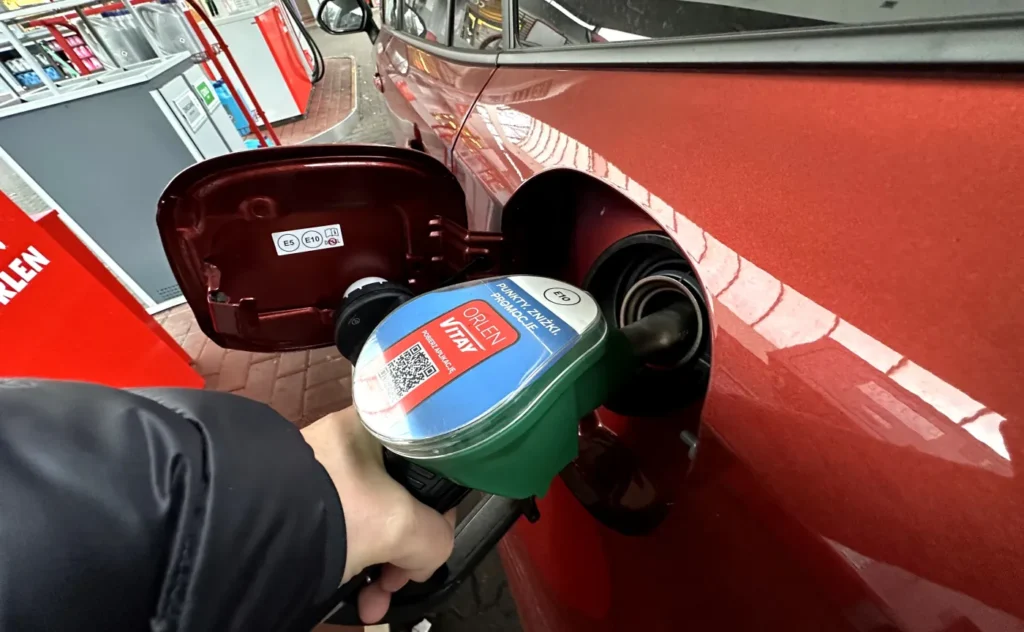
Polish drivers face renewed fuel price increases, with diesel nearing 8 zł per liter despite government intervention, driven by global factors.
Diesel Prices Surge, Approaching 8 zł Limit
Diesel prices in Poland are rising again after a brief decline, with analysts predicting the fuel could soon reach 8 zł per liter. Government measures under the “CPN” package offer only partial relief, as global factors remain decisive.
Business Insider reports that the average price of diesel could reach 7.85–7.97 zł per liter in the first week after the holidays, returning to levels that recently caused significant driver dissatisfaction.
Gasoline and LPG Prices Also Increasing
Gasoline prices are also expected to rise, with Pb95 forecast between 6.18–6.27 zł per liter and Pb98 between 6.79–6.89 zł. LPG prices are expected to remain within the range of 3.68–3.79 zł per liter, but are trending differently than regulated fuels.
Global Market and Geopolitical Factors Drive Prices
Experts emphasize that the increase in diesel prices is particularly dynamic. Fluctuations in the global oil and petroleum product markets are quickly reflected in retail prices. Rising oil and middle distillate prices, especially diesel, could push prices above 8 zł per liter.
The increases are primarily due to international factors, including a recent rebound in oil prices coinciding with geopolitical tensions and political decisions in the United States. This has led to immediate increases in wholesale fuel prices, directly impacting gas stations.
European Diesel Market and Currency Weakness Contribute
The situation in the European diesel market also plays a role. Limited supply and growing demand for diesel, used in both transport and industry, make this fuel more sensitive to oil price fluctuations than gasoline. Additionally, the weakening of the złoty against the dollar increases the cost of importing energy resources, as oil is priced in US currency.
Government Intervention Offers Limited Relief
Government mechanisms designed to limit fuel price increases have had a short-term effect. Reductions in excise duty and VAT, along with the introduction of maximum retail prices, led to a noticeable price decrease last week.
The average price of Pb95 gasoline fell to 6.16 zł per liter, a decrease of 98 groszy. Diesel prices fell even more, by 1.15 zł to 7.54 zł per liter. However, a new announcement from the Minister of Energy has set new price limits.
From Great Saturday, the maximum price for diesel was set at 7.87 zł per liter, Pb95 at 6.21 zł, and Pb98 at 6.82 zł. The height of these limits indicates strong upward pressure. Experts point out that price controls do not eliminate the problem, but only delay its effects, potentially leading to market tensions and even fuel shortages.
Regional Price Differences Minimal Due to Controls
The introduction of maximum prices has almost completely leveled fuel prices across the country, with minimal differences between regions, amounting to only a few dozen groszy per liter. The highest diesel prices were recorded in the Świętokrzyskie Voivodeship (around 7.63 zł per liter), and the lowest in the Opole Voivodeship (around 7.52 zł per liter).
This unprecedented uniformity is a direct result of administrative price controls, offering greater predictability for drivers but limiting natural competition among gas stations.
LPG Prices Not Regulated
Autogas (LPG) stands out as it is not subject to the “CPN” package and its price is determined solely by market mechanisms. As a result, LPG prices rose by 5 groszy last week, reaching around 3.69 zł per liter. Experts suggest that the lack of regulation could lead to further price increases in the long term, especially if pressure on the European liquefied gas market persists.