


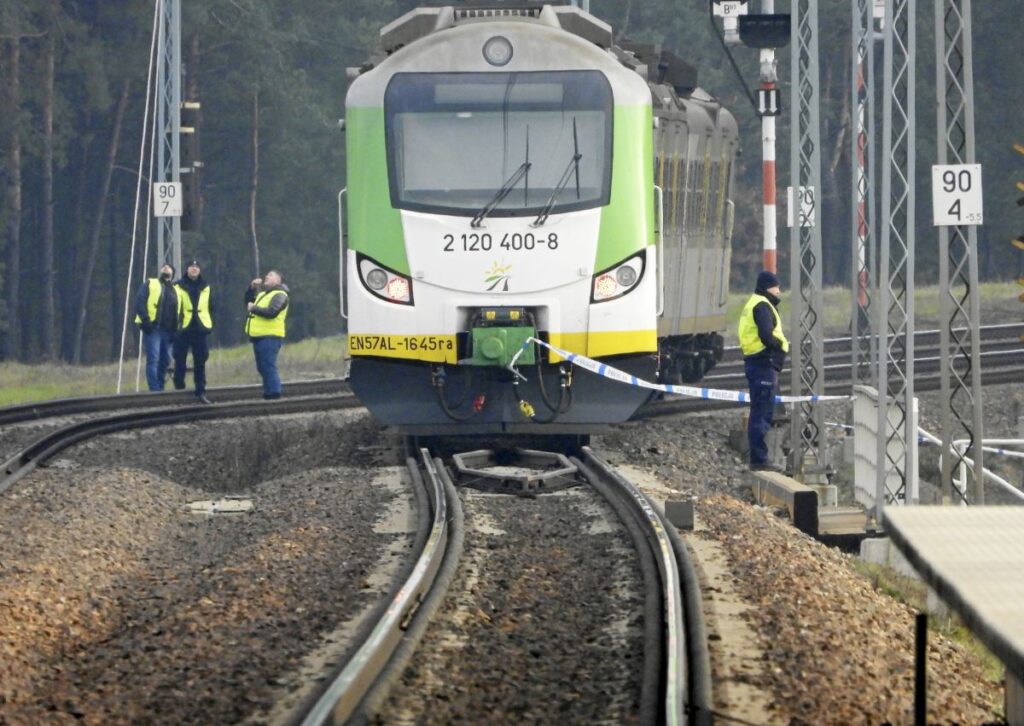
Polish Prime Minister Donald Tusk announced on November 18 that two Ukrainian citizens had crossed through the Belarus border to conduct sabotage on Polish railways, prompting experts to identify warning signs.
Disruptors’ Route to Poland
On November 18, Polish Prime Minister Donald Tusk announced in the Sejm that two Ukrainian nationals had crossed from Belarus into Poland and were linked to sabotage of rail tracks. The incident prompted questions about how the agents avoided detection at the border.
Border Security and Data Sharing Challenges
There are still open border crossings between Poland and Belarus, and no fully centralized database exists for suspect data exchange. Recent opening of two crossings and the lack of automatic data flows from Ukraine—especially because it is not an EU member—make verification of individuals more difficult, allowing forged documents to be used.
Rising Threat of Attacks on Infrastructure
Experts warn that current events may be part of a broader plan to destabilise Poland, targeting not only trains but also other infrastructure components such as energy grids. They describe repeated sabotage attacks as possible terrorist acts aimed at disrupting the network.
Alarm Level “Charlie” and Civilian Alerts
The government has introduced a third civil‑alert level, ‘Charlie’, and urges citizens to report any odd behaviour near railways. Unusual activities—such as photographing trains, probing schedules, or projecting suspicious objects—are listed as red flags that should be filed with authorities.
Military Support for Railway Protection
Prime Minister Tusk authorised the Territorial Defence Forces to assist the Railway Protection Service, citing their role in protecting national infrastructure. The support is intended to bring additional manpower and equipment, including unmanned aerial vehicles, to patrol the rail lines.
Recent Incidents on the Warsaw‑Lublin Line
On Sunday, November 16, media reported two incidents on the Warsaw‑Lublin route: an explosion at the village of Mików damaged tracks, and a train with 475 passengers at the Gołęb station had to brake suddenly after a traction failure. Investigators reviewed surveillance footage within ten kilometres, collected fingerprint samples, and involved foreign agencies before announcing the first arrests on November 19.