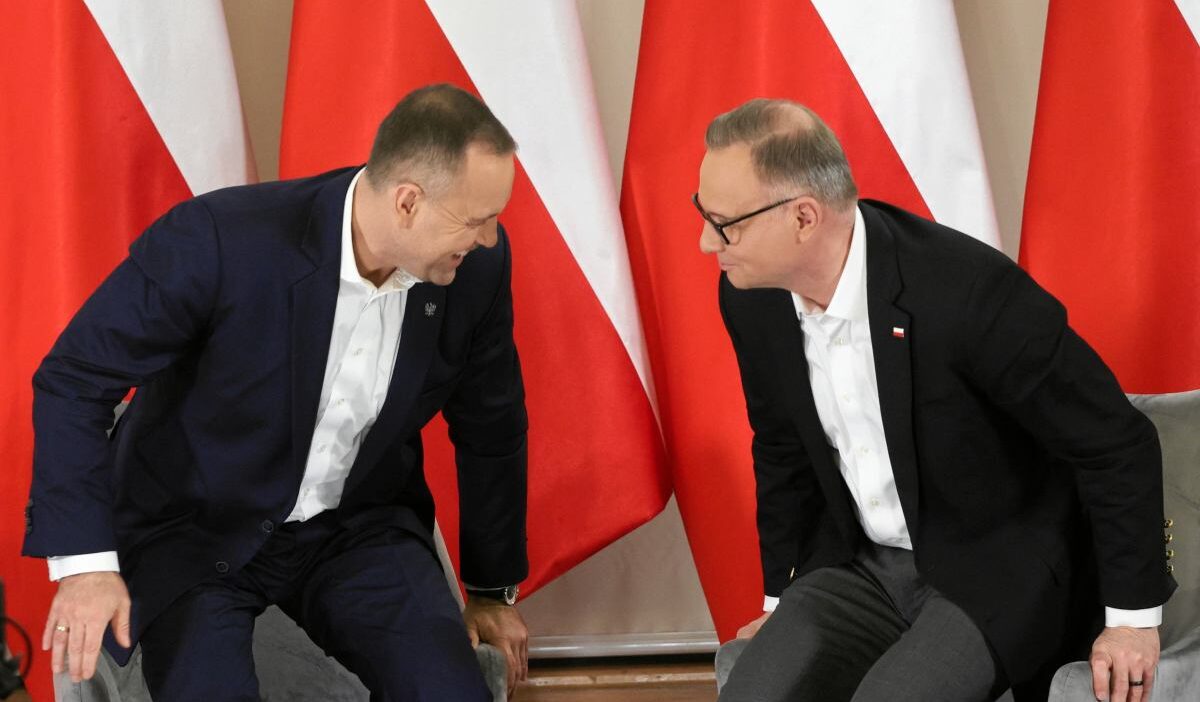
Former Polish President Andrzej Duda discussed the current controversy surrounding the oath-taking of Constitutional Tribunal judges, asserting the president is obligated to follow the Sejm’s decisions.
Oath-Taking and Vacancies
Last week, Karol Nawrocki administered oaths to two judges selected by the Sejm – Magdalena Bentkowska and Dariusz Szostek. Zbigniew Bogucki, head of the Presidential Chancellery, justified this action by stating that two vacancies existed within the Constitutional Tribunal during the current presidential term.
Taking the oath from these two individuals, according to the justification, would fulfill the statutory requirement of having a full composition of 11 members on the Tribunal.
Duda’s Assessment of Presidential Discretion
Former President Andrzej Duda weighed in on the matter, stating that a president has the right to administer the oath after thoroughly considering the situation, examining the selection process, and assessing the candidate’s qualifications for the Constitutional Tribunal. He expressed no doubt about this right.
Duda added that a president could expect to engage in discussions with candidates if requested for additional clarification or meetings.
Presidential Constraints and Sejm Resolutions
Duda argued that the question of whether an oath-taking can be refused altogether is debatable. He emphasized that the president is bound by the Sejm’s resolution and cannot selectively administer oaths to some candidates but not others.
He explained that the constitutional norm operates in both directions: if the Sejm deems a previous resolution invalid and adopts a new one with different candidates, the president is then bound by that new decision. The president cannot claim the Sejm has not made a decision, though challenging that claim could lead to a significant constitutional battle.
Timing and Ambiguity of “Without Delay”
Andrzej Duda pointed out that the Constitution does not specify a timeframe for making such a decision, while debate continues regarding how quickly the president should act. He questioned the meaning of “without delay.”
He added that if doubts exist, the president has the right to clarify them, acknowledging the legal matter is ambiguous. He also questioned what constitutes “unnecessary delay,” stating the topic will always be subject to legal discussion.
Duda noted that while a president could theoretically delay, someone might attempt to hold them accountable constitutionally, but acknowledged the challenges associated with such accountability in Poland.
Precedent: Duda’s Previous Delays
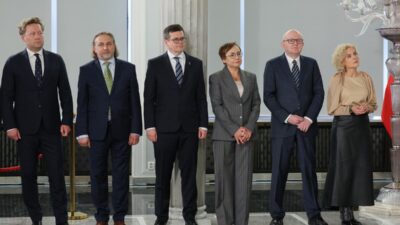
Four judges from whom Karol Nawrocki did not accept oaths invited the president to their oath-taking ceremony on April 9th, intending to organize the event independently in the Sejm.
Duda himself delayed administering oaths to five judges selected for the Constitutional Tribunal in 2015, waiting until after parliamentary elections. The Sejm subsequently annulled the selection of those judges and chose new candidates, whom Duda then swore in. The Tribunal later ruled that the selection of three of the original five judges was constitutional.