


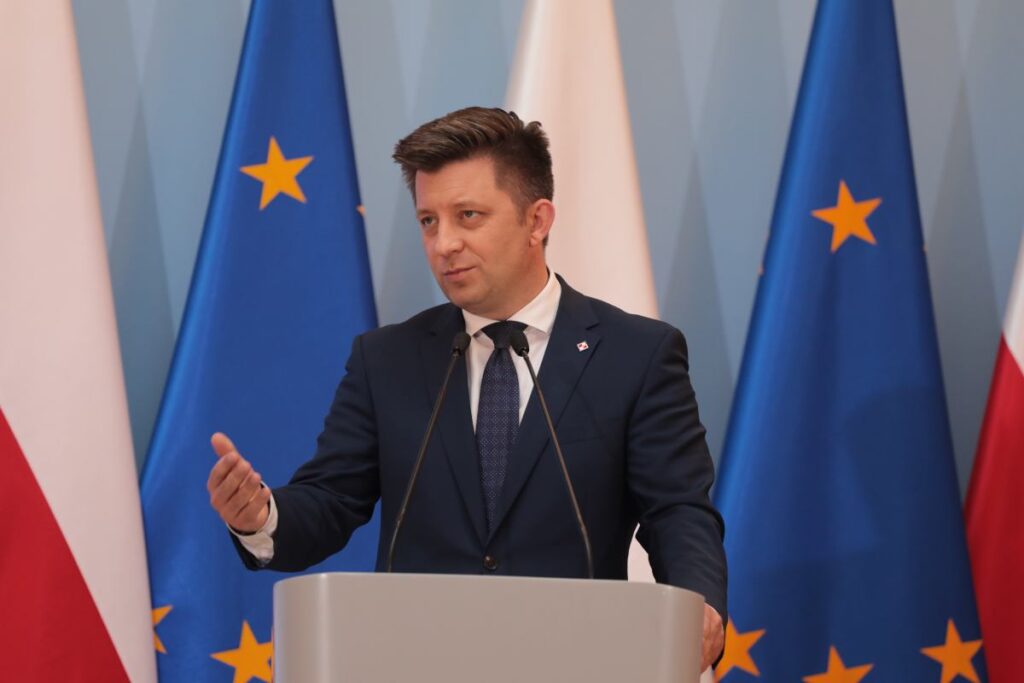
Former Polish Chancellery Chief Michał Dworczyk called for the immediate return of mandatory military training and expressed significant reservations regarding the European Union’s SAFE program during a Radio ZET interview.
The SAFE Program and Defense Funding
PiS MEP and former Head of the Prime Minister’s Chancellery Michał Dworczyk discussed the EU’s SAFE program during an interview with Radio ZET on May 6. The program could provide Poland with €43.7 billion for military equipment via low-interest loans featuring a 10-year payment deferral and a 45-year repayment period. While 89% of the funds are intended for over 12,000 Polish companies, the agreement is set to be signed despite a veto from President Karol Nawrocki.
Dworczyk noted that while any financial instrument strengthening the defense potential of the Polish armed forces should be viewed positively, the SAFE program contains more flaws than advantages.
Limitations on Domestic Spending
The MEP argued that the program suffers from an extremely short timeframe for signing and implementing contracts. Furthermore, Dworczyk warned that Poland’s limited manufacturing capacity means only a small portion of the funds will be spent domestically. He also highlighted significant concerns regarding intellectual property rights and the critical importance of production capabilities during conflicts.
Mandatory Military Training
During the discussion, Dworczyk called for the immediate return of short but intensive mandatory military training for all men. He specified that this practice should operate under different principles than the old conscription model, which he criticized based on the pathologies he witnessed during his own service in 2002.
Resource and Infrastructure Deficiencies
The MEP emphasized that reinstating mandatory training would be difficult due to the current lack of infrastructure and resources. He noted that preparing even a few dozen thousand people annually requires rebuilding catering services, instructor availability, tactical gear, combat equipment, training fields, and uniforms, all of which have been lost over the years.