


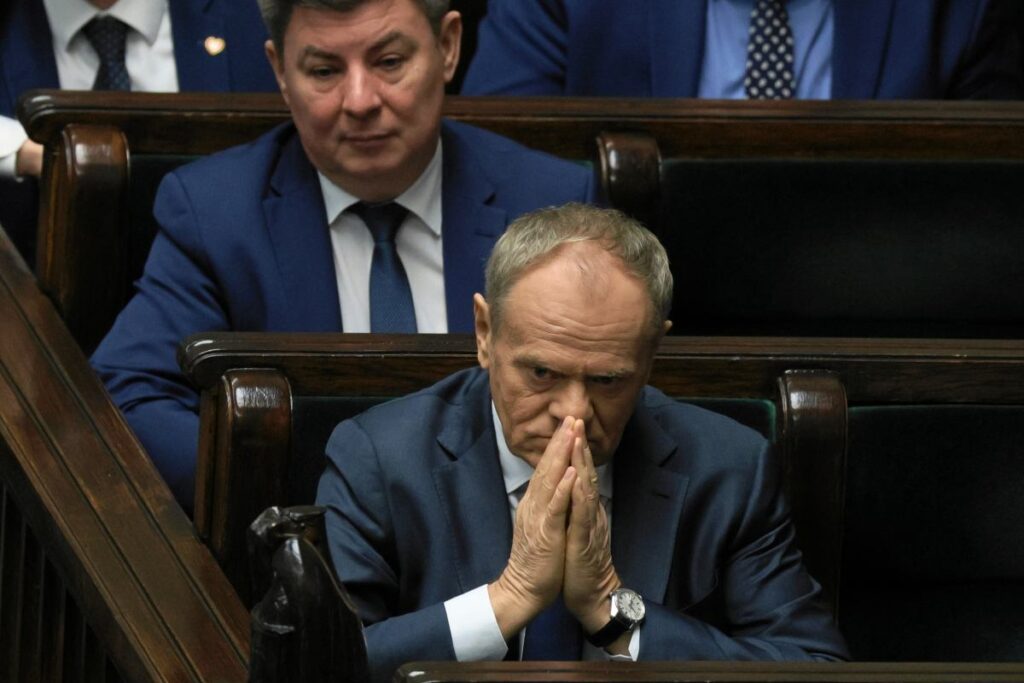
A survey of readers from Gazeta.pl indicates over half oppose early parliamentary elections in Poland, despite political instability within the ruling Law and Justice party.
Law and Justice Instability and Potential Political Shifts
On April 20th, Gazeta.pl reported on the situation within the Law and Justice (PiS) party and potential reshuffles on the political scene. Political scientist Dr. Maciej Onasz discussed the possibility of earlier elections. A reader poll was conducted following this article to gauge opinion on shortening the Sejm’s term.
Over Half of Readers Oppose Early Elections
The majority of votes rejected the idea of early elections. 52.13% of respondents answered “definitely not,” while 20.28% chose “rather not.” Positive responses were less frequent, with 17.02% selecting “definitely yes” and 5.13% choosing “rather yes.” A relatively small group remained neutral, with 5.44% declaring no opinion. The poll received 1598 responses as of April 23, 2026.
Parliamentary Election Rules and Timelines
Polish parliamentary elections involve the election of representatives to the bicameral parliament, consisting of the Sejm and Senate. The elections choose 460 deputies and 100 senators, and the entire process is regulated by the Constitution of the Republic of Poland and the Electoral Code of 2011.
According to current regulations, elections are held every four years, with the next scheduled for 2027. The date must be set no later than 30 days before the end of the Sejm’s term, with the exact date determined by the President.
Scenarios for Early Elections in Poland
The Constitution outlines specific situations allowing for early parliamentary elections. One is the inability to form a government. If a Council of Ministers cannot be formed after successive attempts, the President can shorten the Sejm’s term and call new elections.
Budget Failure and Parliamentary Decision-Making
Another trigger is the failure to pass the budget law within a specified timeframe. If parliament does not adopt the budget within four months of its presentation, the President can dissolve the Sejm. The Sejm can also decide to shorten its term, requiring a majority of at least two-thirds of the statutory number of deputies. In all these cases, shortening the term triggers elections for both the Sejm and Senate.